DAXSERV, "THE ACCUSED'S" — REGISTERED AT THE ACCUSER'S HOME
Apolozan case · ERDF fraud (Bilbao / Alicante / EU)
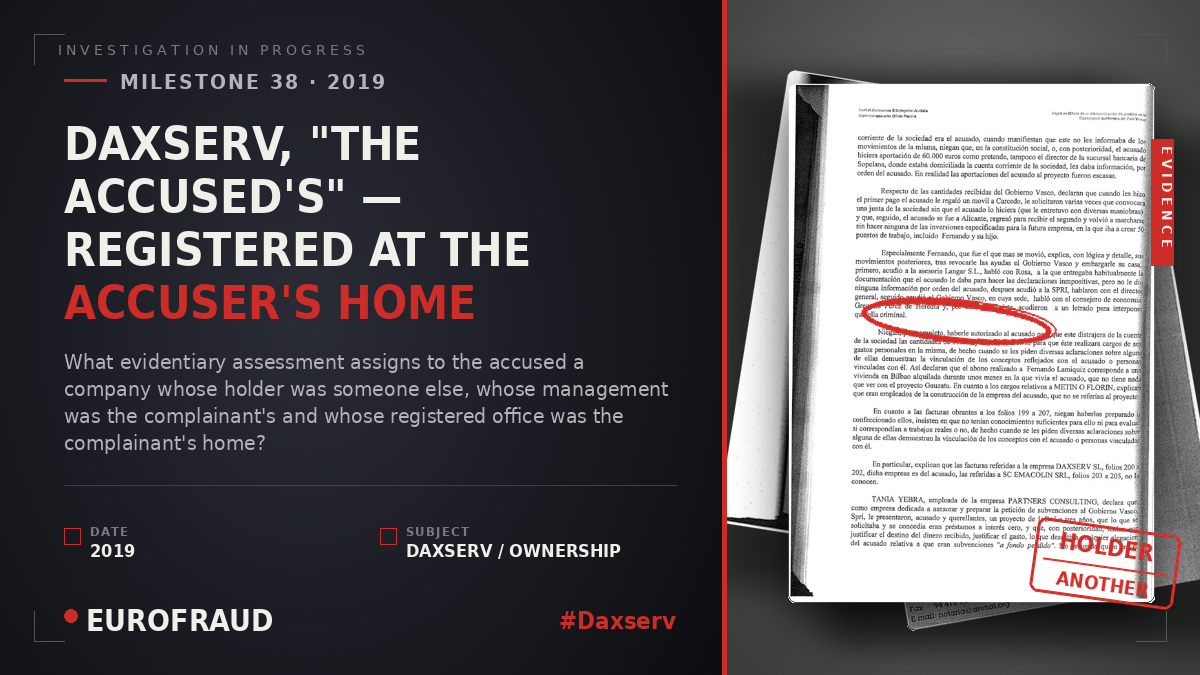
Among the pieces with which the conviction was built there is an attribution that deserves slow examination, because it condenses the way all the evidence in this case was assessed.
The judgment accepts the explanation that certain invoices are linked to the accused because the issuing company, DAXSERV SL, "that company belongs to the accused" (the passage appears in the case file, DOC-0146, p. 86, and is replicated in the later resolutions). On that ownership, Daxserv's invoices were charged to Apolozan.
Now, what appeared in the file itself: Daxserv's bank account identifies Metin Rasim as its representative. Metin himself, in his recorded testimony (A.39.1), declares that the company was set up in his name, that it was made for him by Fernando Carcedo and that it was managed by Carcedo and Iriarte. And the fact that closes the circle: the case documentation records that Daxserv shared its registered office at the Caserío Larrakoetxe 13 in Lezama (A.36) — Fernando Carcedo's personal home, the same house this Story mentioned in its first milestone.
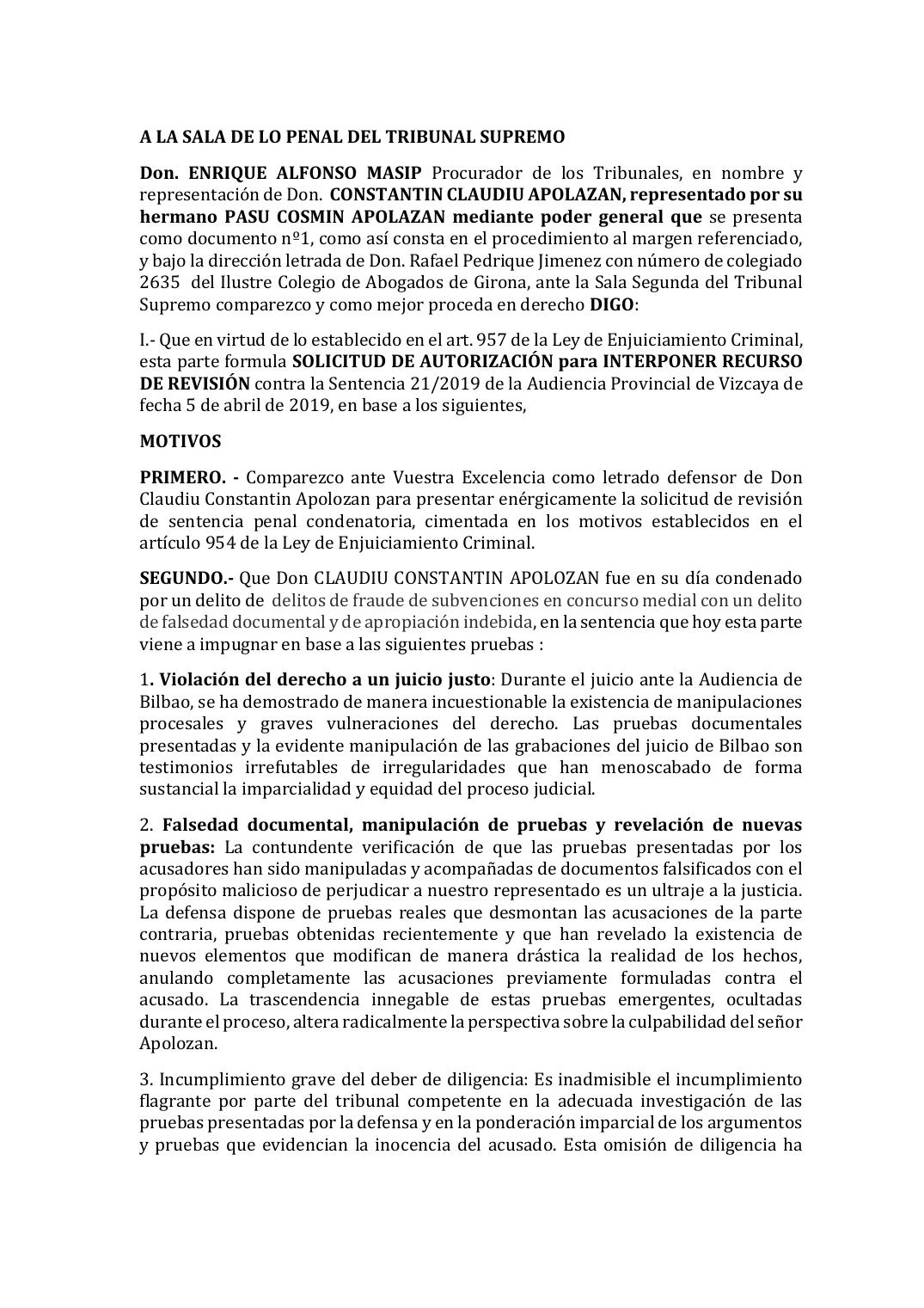
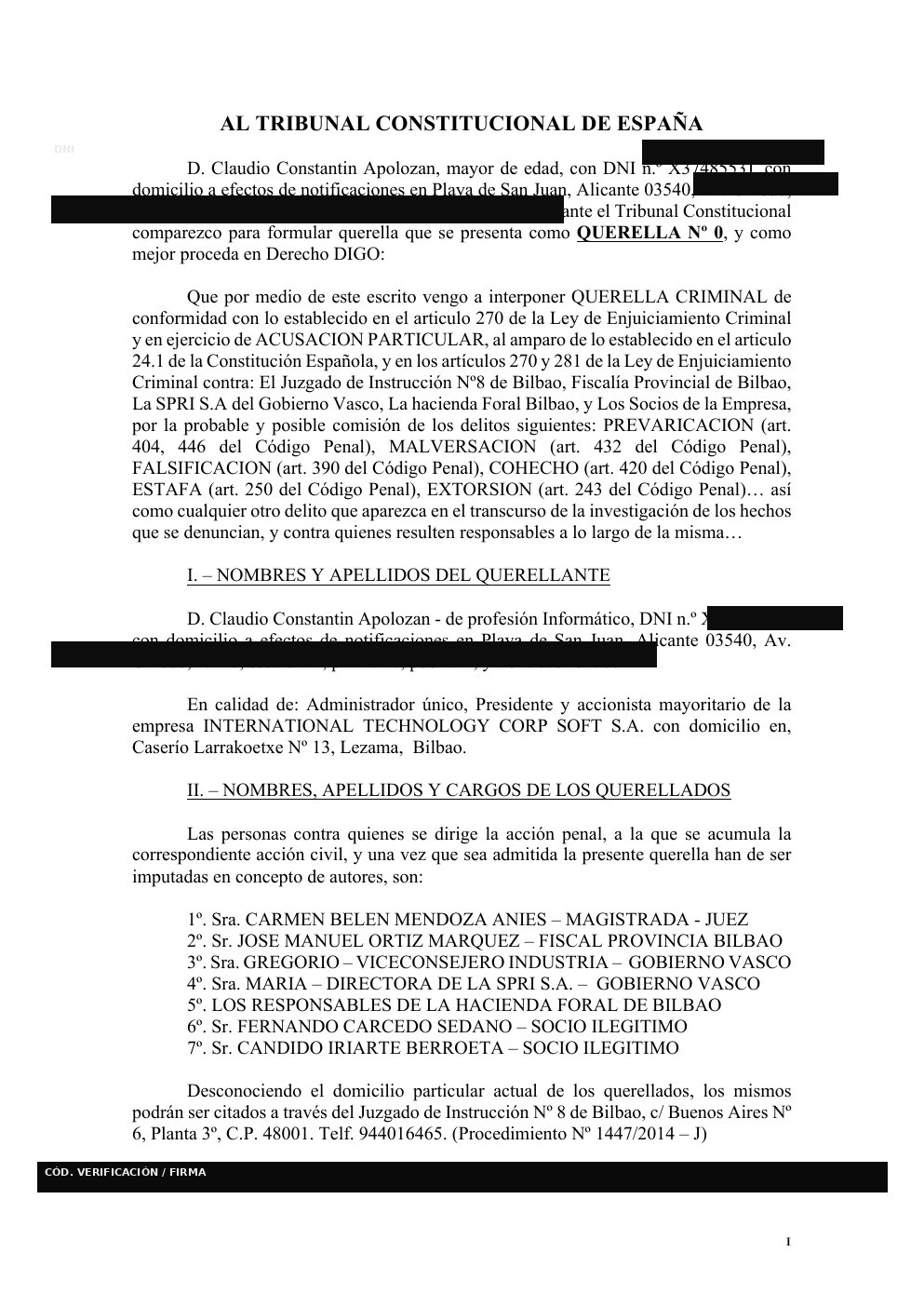
Three companies appear in this case with the same mould: one in Iriarte's name renamed for the subsidy; another in Metin's name, registered at Carcedo's house; the invoices of both, charged to the same man. The court had the complete mould before it. It chose to read that the Romanian holder's company, manufactured by the complainant and registered at his house, was "the accused's" — because the accused was also Romanian. By that yardstick everything else was measured.
EuroFraud case file · every statement links to its document (A.X / DOC-XXXX). Evidentiary material; every person named is presumed innocent.