THE COMPLAINANT ACKNOWLEDGES THE INVESTMENT
Apolozan case · ERDF fraud (Bilbao / Alicante / EU)
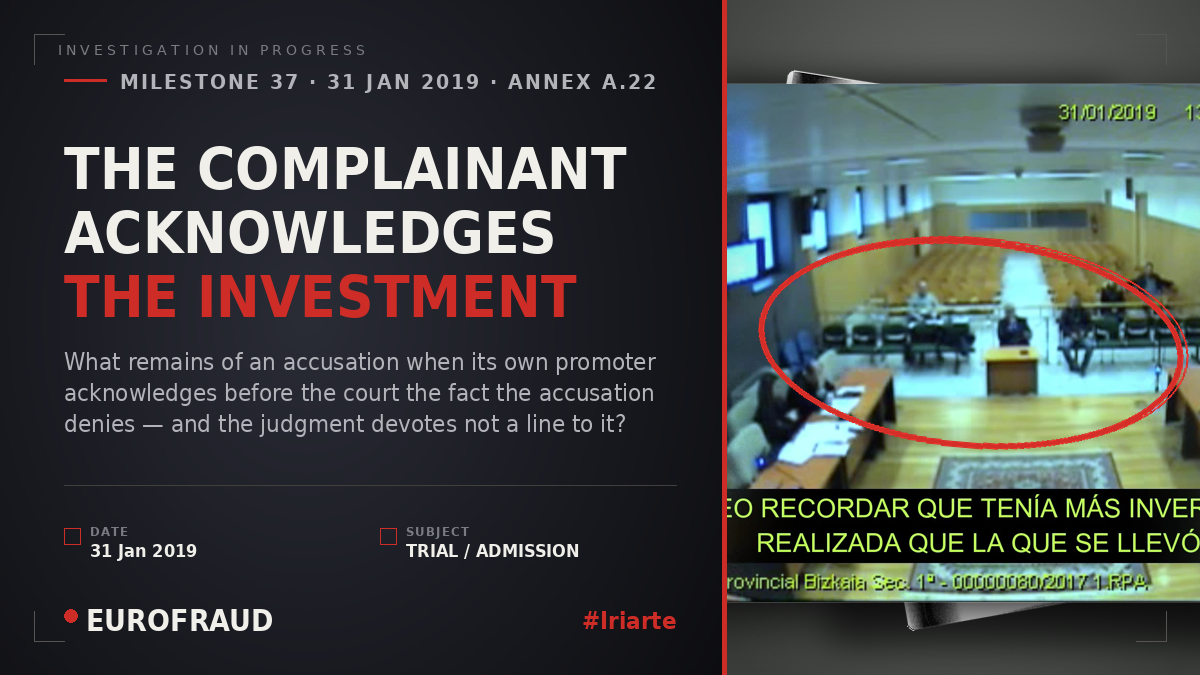
Of all the pieces of the trial, this is the one a procedural-law textbook would use as an example: the moment the accusation dismantles itself, aloud, within the record.
It is recorded on the audiovisual medium of the trial (A.39.3; the passage, excerpted in this portal's clips). He is questioned about the investments made and their justification before the Basque Government — "because they required it, correct?" — and Cándido Iriarte, complainant, replies: "I think I recall that there was even more investment made than what was taken, I think I recall."
More investment made than what was taken. The core thesis of the case — sustained by Iriarte and Carcedo's complaint, by the prosecution and by the administration since the resolution of the zero — was that the technological investment did not exist, that the project was a fiction of the accused. And here is the very promoter of the complaint acknowledging before the court that the materialised investment exceeded what the administration paid.
An accusation can survive almost anything: weak evidence, a doubtful witness, a disputed expert report. What it should not survive is its own complainant refuting it on the faith of the record. The judgment that arrived nine weeks later records no consequence of this acknowledgement. Like the registry pages, like the audits, like the recorded testimonies: it was in the case; one only had to weigh it.
EuroFraud case file · every statement links to its document (A.X / DOC-XXXX). Evidentiary material; every person named is presumed innocent.