THE PARALLEL TRIAL: THE SINGLE VERSION IN THE MEDIA
Apolozan case · ERDF fraud (Bilbao / Alicante / EU)
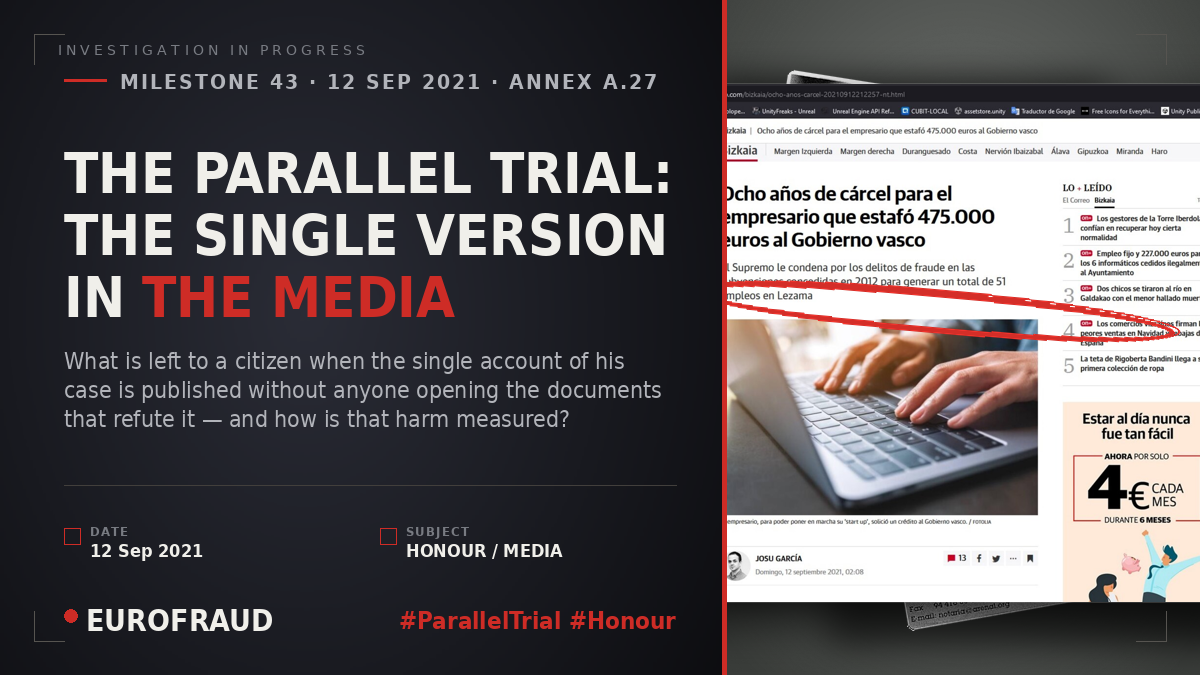
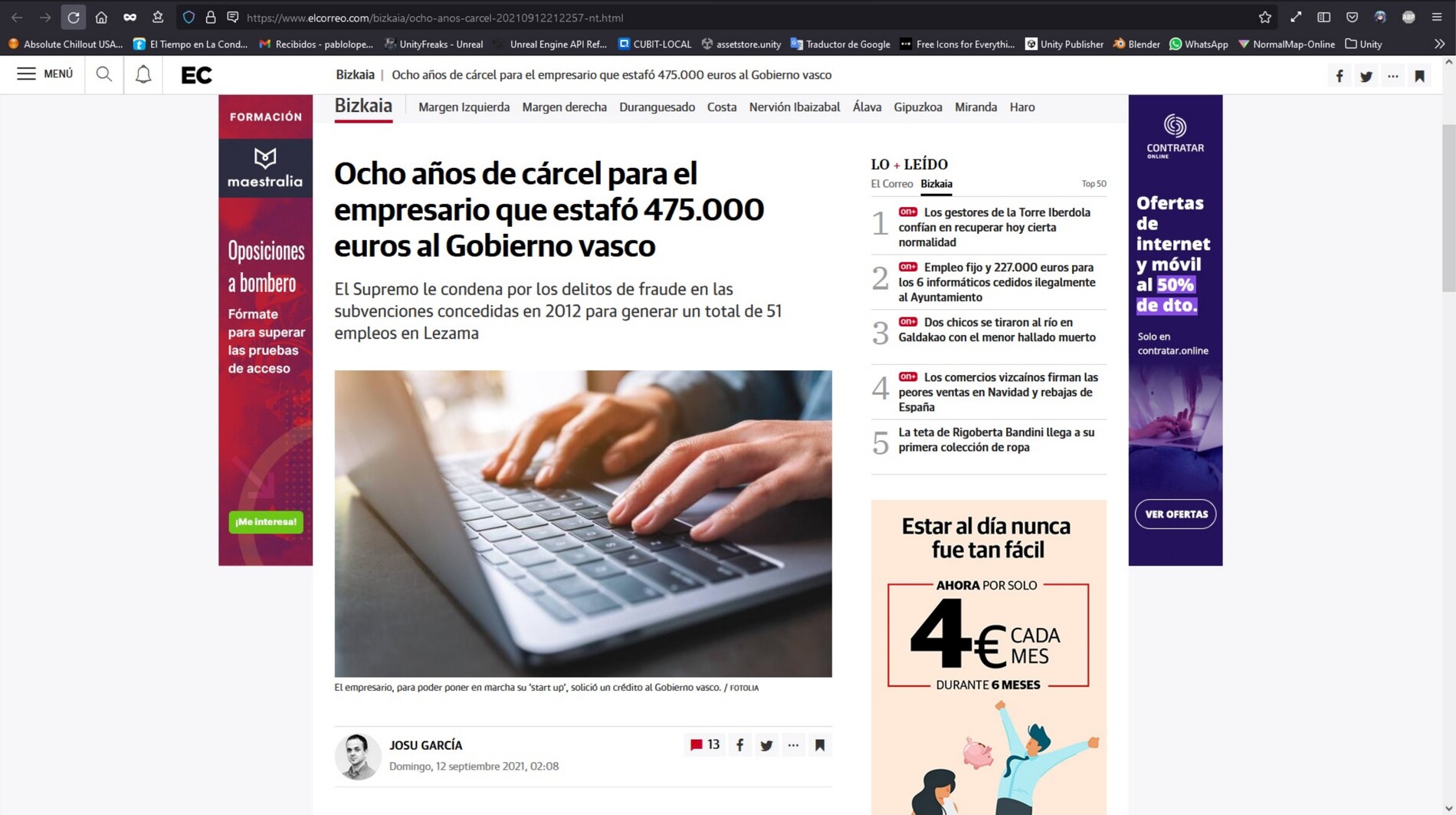
On 12 September 2021 — three months after the Supreme Court closed the cassation appeal — the official version of the case reached the press (A.27). The published account reproduced, without nuance, the prosecution's thesis: the foreigner convicted of defrauding public funds.
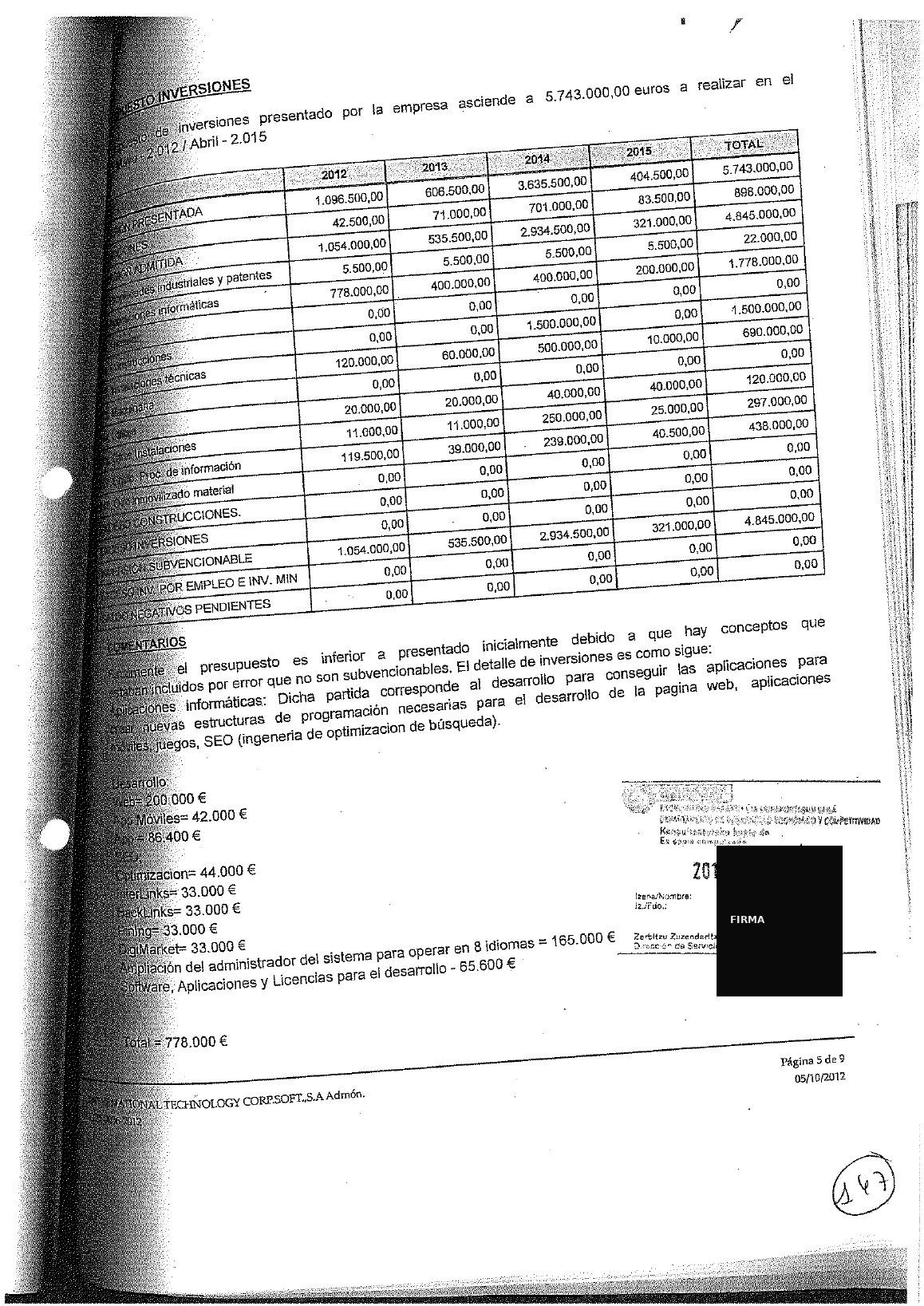
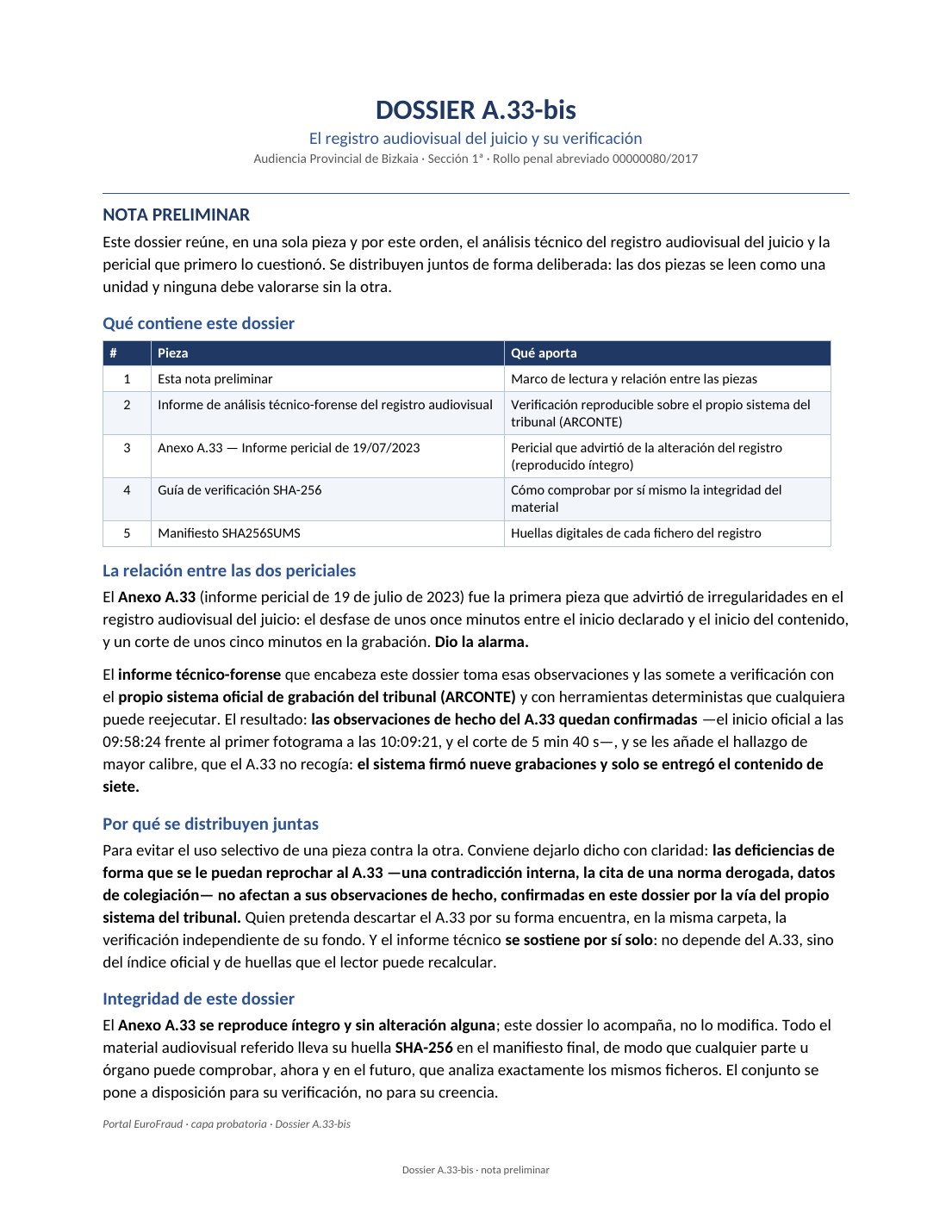
What the piece did not tell is precisely what the case file records. It did not mention that the administration itself had valued and certified the convicted man's software at €1,778,000 —a figure recognised in favour of the very man branded a fraudster— without any later report disproving it (A.5). It did not mention that the file's folios attributed the company to another holder and to the complainant's own management, not to the accused (DOC-0146, p. 86; A.39.1). It did not mention that this same complainant acknowledged before the court that «he still had more investment made than what he took away» —his statement at the plenary hearing, captured in the extract «The complainant acknowledges the investment» (DOC-0228)—, refuting in his own voice the non-existence of investment the prosecution claimed. And it did not mention what the official trial recording let be seen —and stopped recording—: the order «Do not record the taking of the evidence» (A.22), the court's indifference towards the accused —«What this man says to me is absolutely all the same to me», captured in the plenary's impartiality sequence (A.19)— and the seventeen full minutes vanished from the medium, alongside other stretches the forensic report documented as missing (A.33-bis). None of these facts, all in the case file, appeared in the publication.
A final conviction gives formal cover to whoever reproduces it. But the harm of a single narrative is not legal — it is social and irreversible: for employers, banks, partners and neighbours, the man in the newspaper is no longer a litigant disputing a file riddled with documented contradictions; he is "the subsidy fraudster". The presumption of innocence ends where the headline begins.
This portal exists, in part, because of that piece. Against the single narrative, the answer was not another narrative: it was the file — the two hundred and nineteen documents, the videos, the transcripts, the registry-stamped dates that any reader can open and verify. Where the 2021 article asked for credulity, this Story asks for exactly the opposite: verification.
The difference between the two methods is the difference between reporting and convicting twice.
EuroFraud case file · every statement links to its document (A.X / DOC-XXXX). Evidentiary material; every person named is presumed innocent.