JUDGMENT 21/2019: EIGHT YEARS AND A HALF
Apolozan case · ERDF fraud (Bilbao / Alicante / EU)
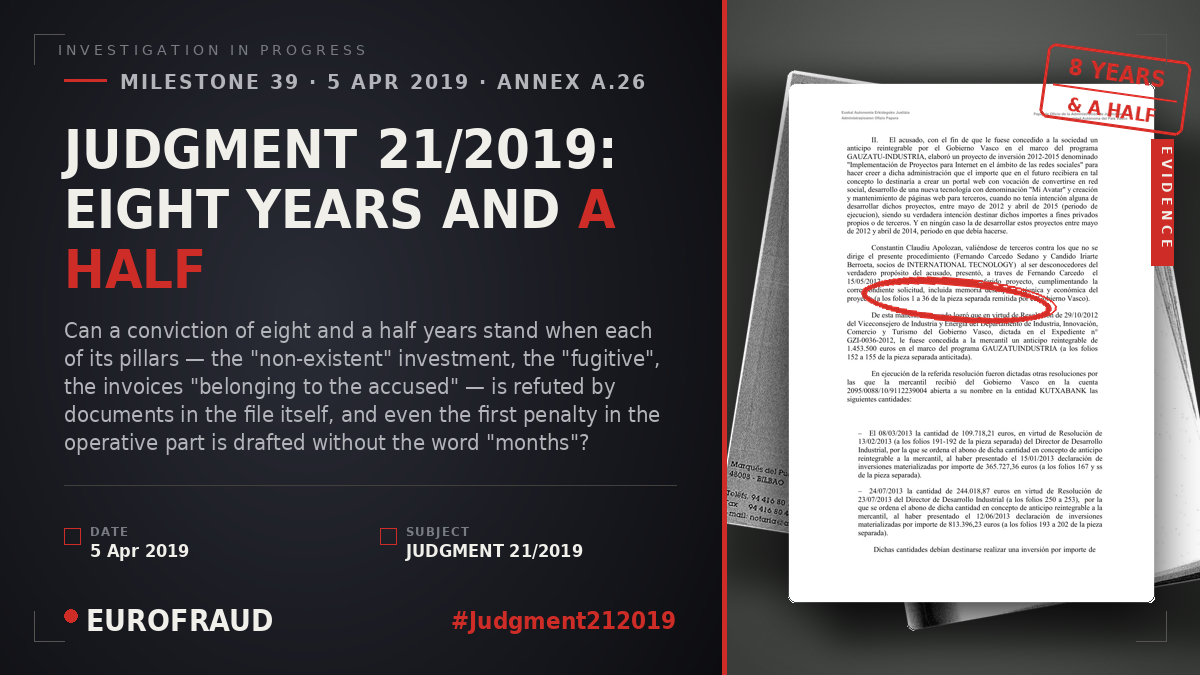
On 5 April 2019, the First Section of the Provincial Court of Bizkaia delivered judgment 21/2019 (A.26): it convicts Constantin Claudiu Apolozan to a total of eight years and six months in prison — three years and six months for subsidy fraud in conjunction with documentary forgery, and five years for continued misappropriation in conjunction with continued forgery — plus a €400,000 fine, disqualifications and compensation of €360,254.11 to the Basque Government. It is the conviction for the fraud whose documentary story this portal has travelled milestone by milestone.
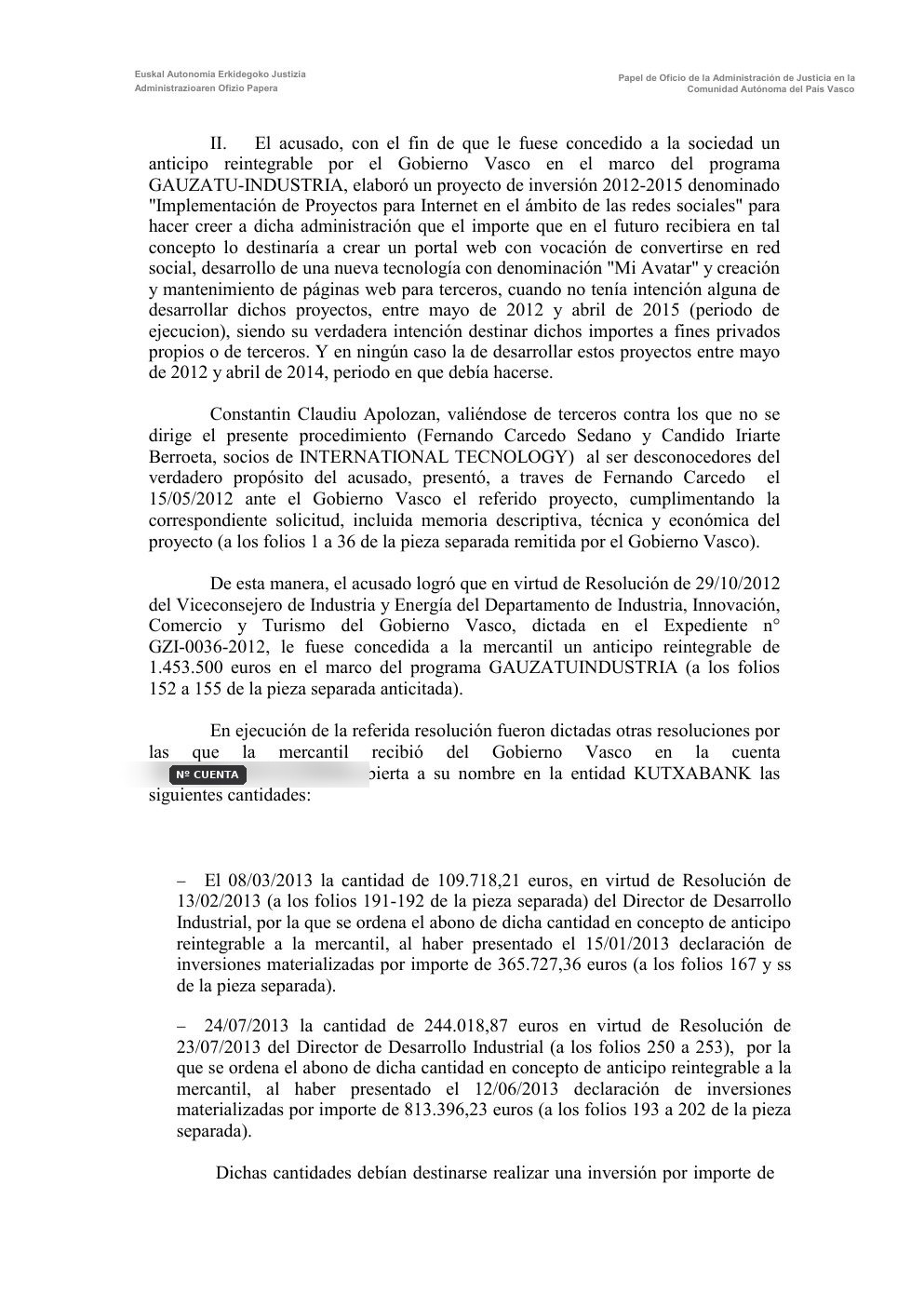
A judgment is measured by what it weighs and by what it silences. This one does not confront the registry pages that established the calendar impossibility — the May application in the name of the company born in September. It does not confront the official audits or the appraisal of 1,778,000 euros that the administration itself signed and paid. It draws no consequence from the complainant's trial acknowledgement — "more investment made than what was taken". It does not examine the Daxserv mould against its own bank pages. And it rests, as a record of what happened at the trial, on a recording that began late, was cut after the judge's sentence and received the order not to record the taking of evidence.
The conviction came, moreover, at the end of the path this Story has dated: the man entered that room preceded by an INTERPOL notice manufactured on a non-location his own arrest report refuted, after twenty-eight days of remand in custody ordered by the same court that sentenced him.
With judgment 21/2019 the trial ends, but not the story. Something else begins: the chain closure of every avenue of review — cassation, constitutional appeal, complaints, nullities — that will occupy the coming milestones. And there also begins the stage in which each of the pieces silenced here will return, one by one, with an expert report, with a transcript and with a page number.
A note that belongs to the operative part itself: in its literal wording, the first penalty is imposed as "three years and six of prison" — the word "months" is not there. The main penalty for the first offence was drafted incompletely in the pronouncement closing the procedure. In a file where the audiovisual record has cuts and the exculpatory evidence went unweighed, even the operative part confirms the standard of rigour with which a man's life was decided.
EuroFraud case file · every statement links to its document (A.X / DOC-XXXX). Evidentiary material; every person named is presumed innocent.