Video 2 - Violation of Judicial Impartiality through disinterest
Apolozan case · ERDF fraud (Bilbao / Alicante / EU)
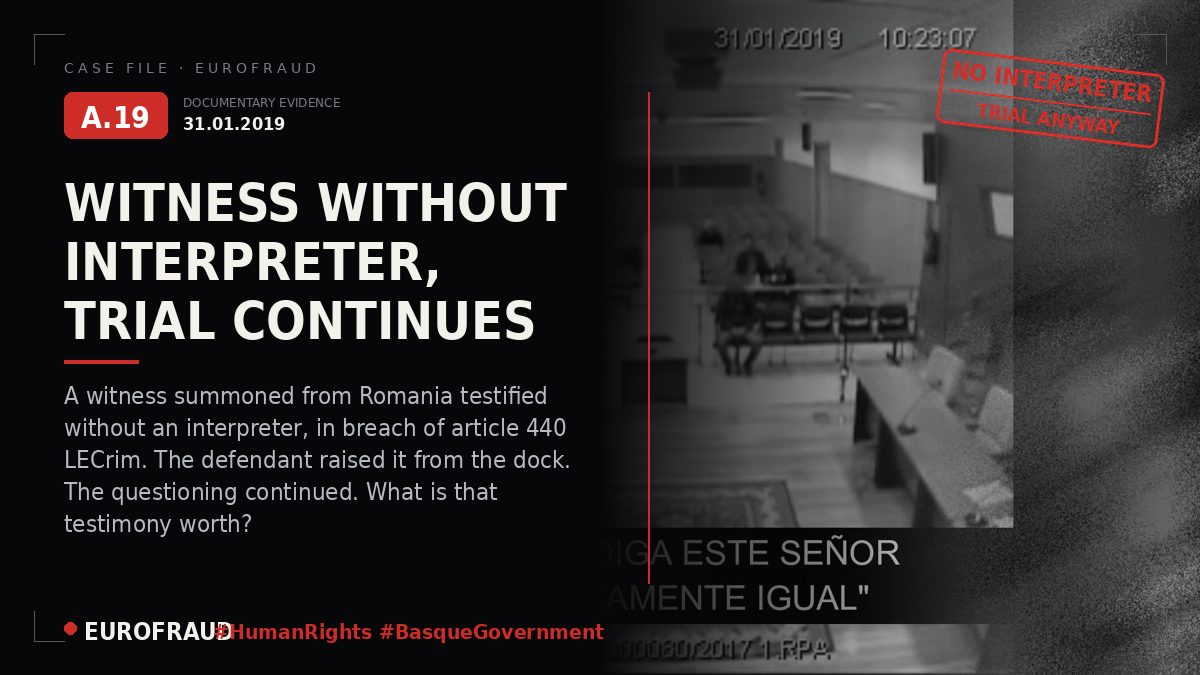
What this annex documents is not asserted by the defence: the courtroom's own system recorded it. And it can be seen right here.
First scene: the court's disinterest
The recording of the sessions of 31 January and 18 February 2019 (A.39.3) captures the court's expressions of disinterest towards the accused's statements during their taking. Article 6.1 of the European Convention on Human Rights requires impartiality also in its appearance; the court's external manifestations towards the person it judges are part of that examination.
Second scene: the witness without an interpreter
- A defence witness, compulsorily summoned from Romania, is questioned without the appointment of an interpreter, without speaking Spanish.
- The sequence shows his difficulty: questions he does not understand, halting answers, the visible discomfort of someone testifying in a language he does not master.
- It is on the recording itself that the accused notified the bench that the witness did not understand because he did not speak Spanish. The questioning continued.
The framework governing the second scene
Article 440 of the Criminal Procedure Act orders, with no margin of appreciation, the appointment of an interpreter for a witness who does not understand or speak Spanish. The omission compromises the fidelity of what is declared and the accused's right to question witnesses under useful conditions (Article 6.3.d ECHR): a witness who does not understand may seem imprecise or contradictory without his testimony being false — and that appearance stays in the record while the cause of the distortion is not noted.
The immediate context
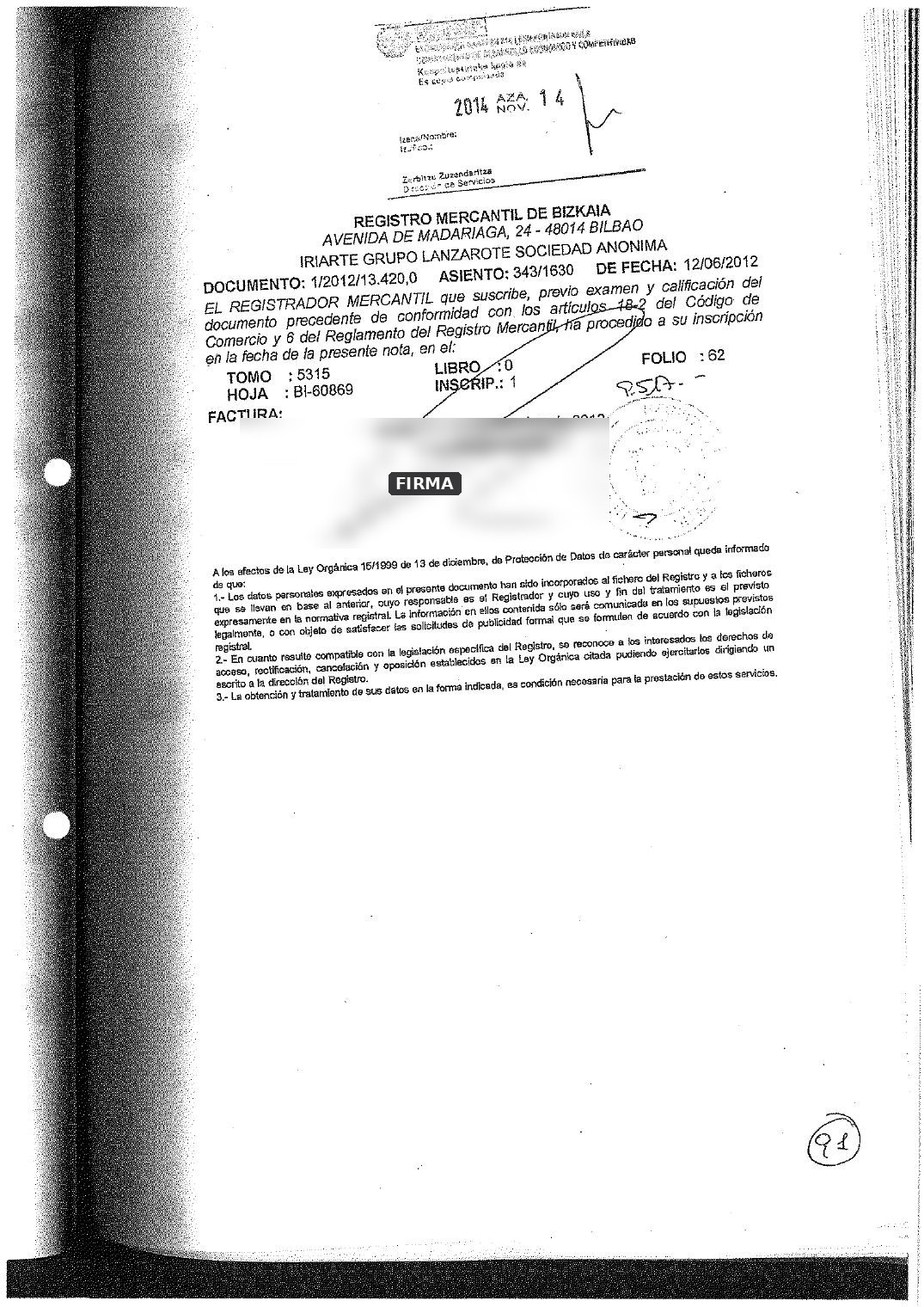
The court before which both scenes occur is the same one that had ordered, weeks earlier, the accused's imprisonment for a non-location the police report contradicted — a measure later set aside (A.16) — and the one that will hand down the conviction (A.26) without examining the registry documentation (A.1, A.3) or the administrative valuations (A.10).
How to verify it
Both sequences play from this same card: press the buttons and observe — in the first, the court's tone; in the second, the questions the witness does not understand and the accused's warning to the bench. Then look in the records for the appointment of the interpreter that Article 440 of the Criminal Procedure Act requires. What is seen and what is not on record: that pair is the annex.
Documentary evidence · A.19 · 31 January 2019 · Audiovisual and expert evidence
EuroFraud case file · every statement links to its document (A.X / DOC-XXXX). Evidentiary material; every person named is presumed innocent.