Claim 2 before the National Court, Madrid
Apolozan case · ERDF fraud (Bilbao / Alicante / EU)
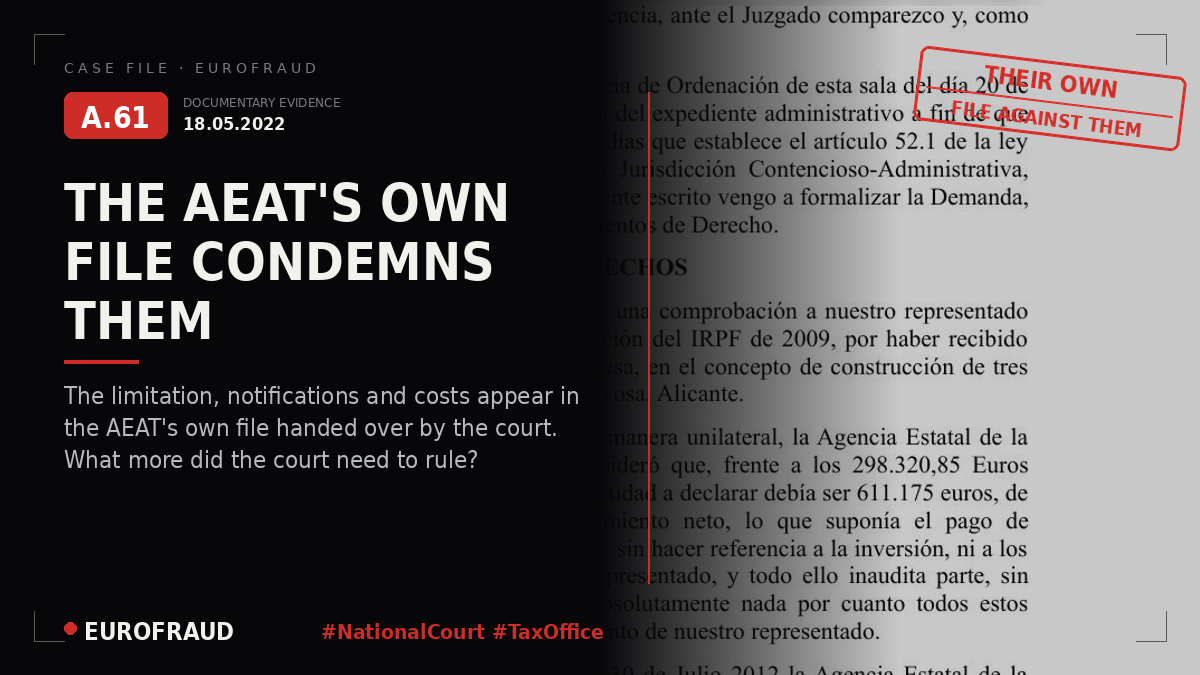
The formalisation of a contentious claim has an evidentiary particularity: it is drafted on the administrative file that the Administration itself delivers. What this brief asserts, it asserts with the defendant's papers before it.
The procedure and its dates
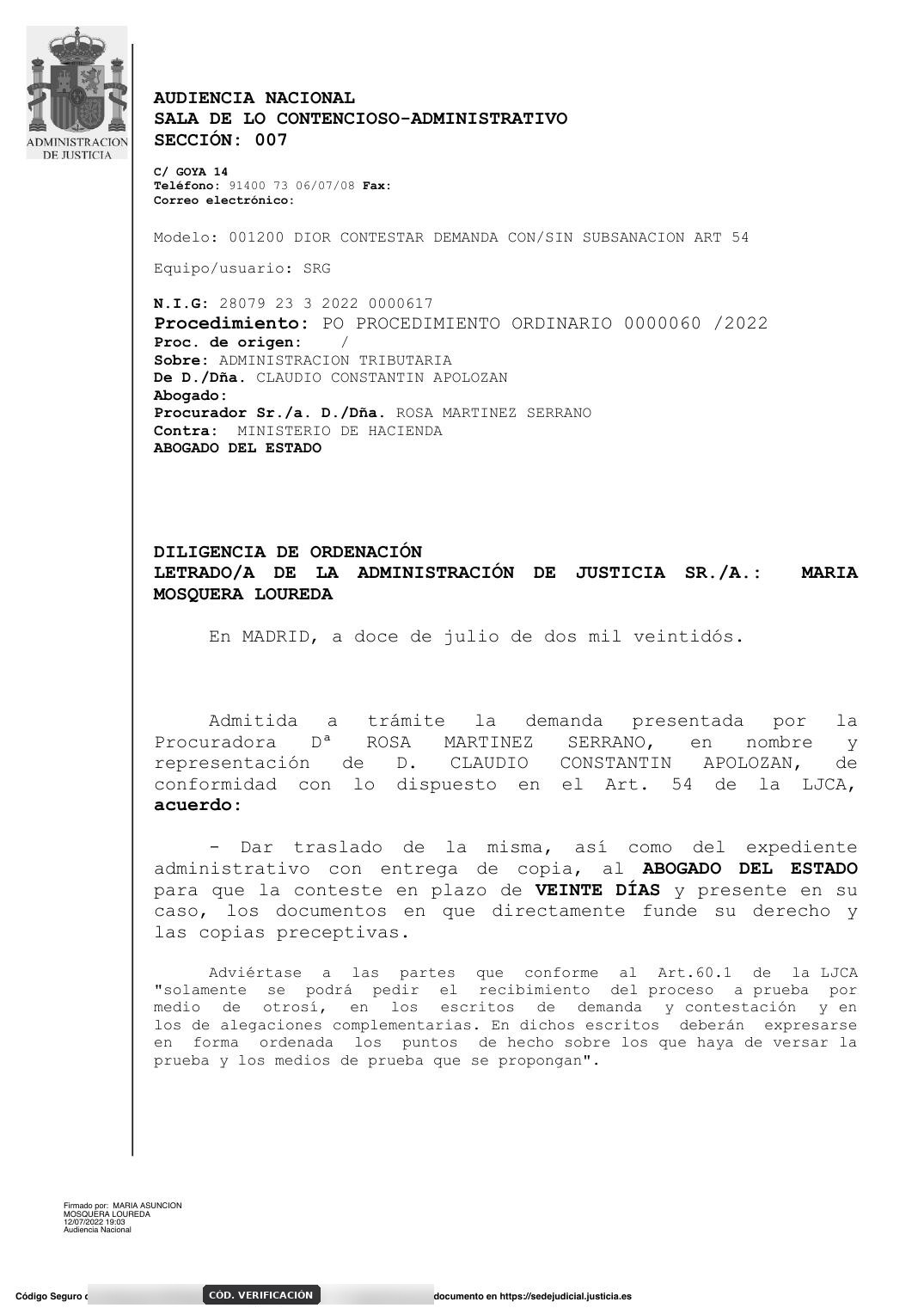
- 20 April 2022: Ordering Measure of the Chamber — delivery of the administrative file to formalise the claim within the time limit of twenty days (Article 52.1 of Law 29/1998).
- 18 May 2022: claim formalised within time, against the State Tax Administration Agency.
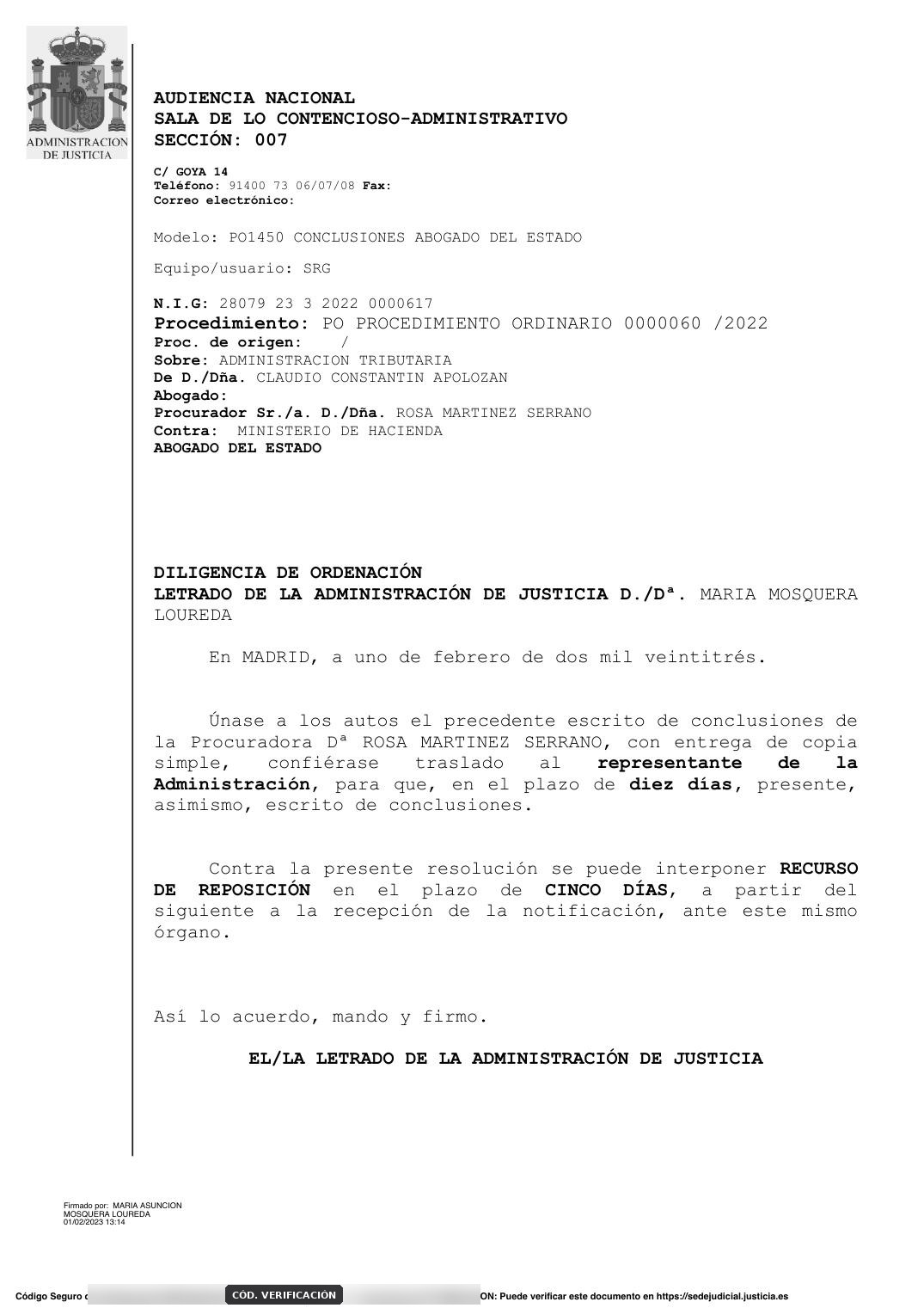
- Procedure: ordinary 60/2022, 7th Section, NIG 28079-23-3-2022-0000617 — the reference that links all the briefs of this stretch (A.62, A.63, A.64).
What the claim builds on the file
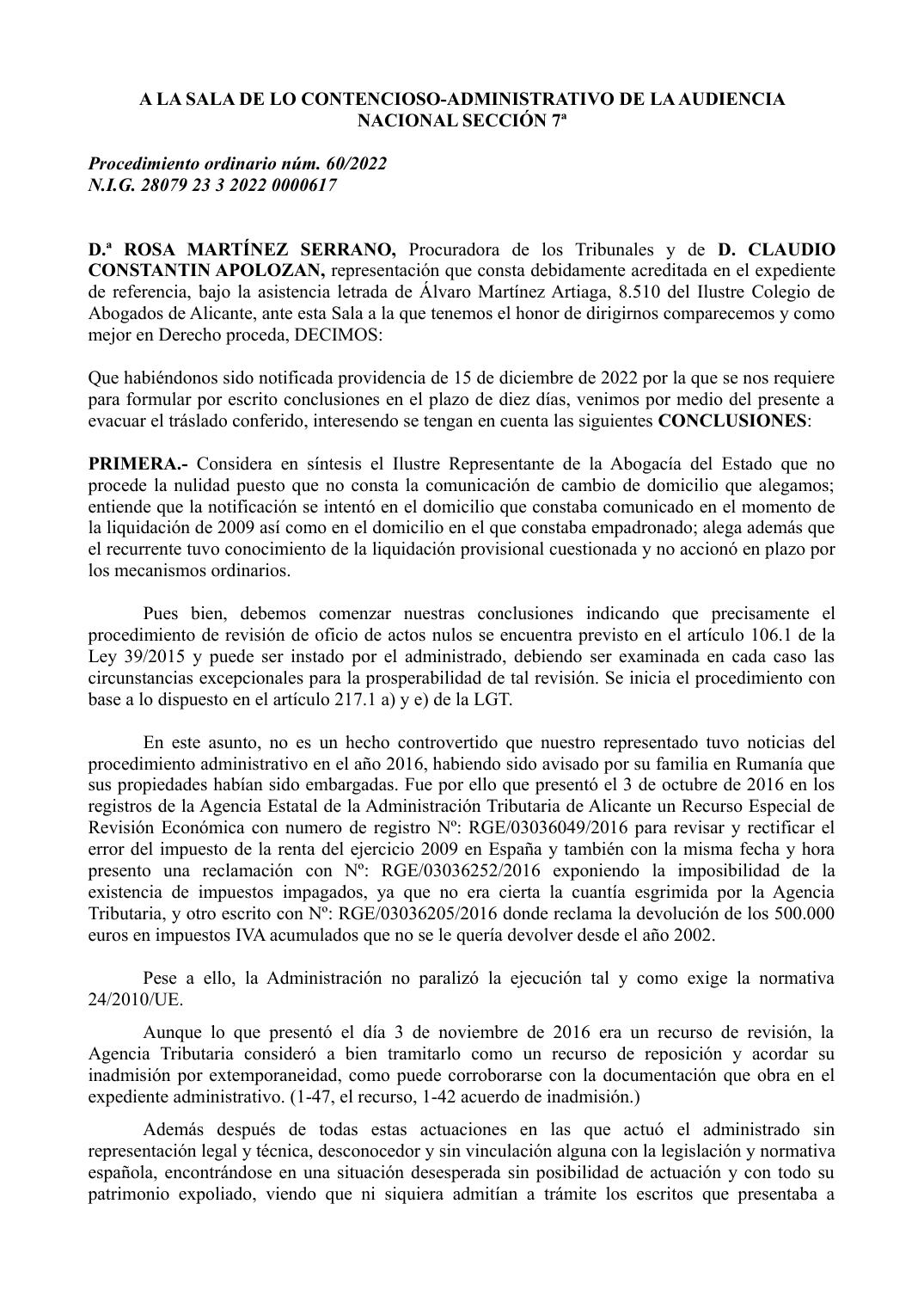
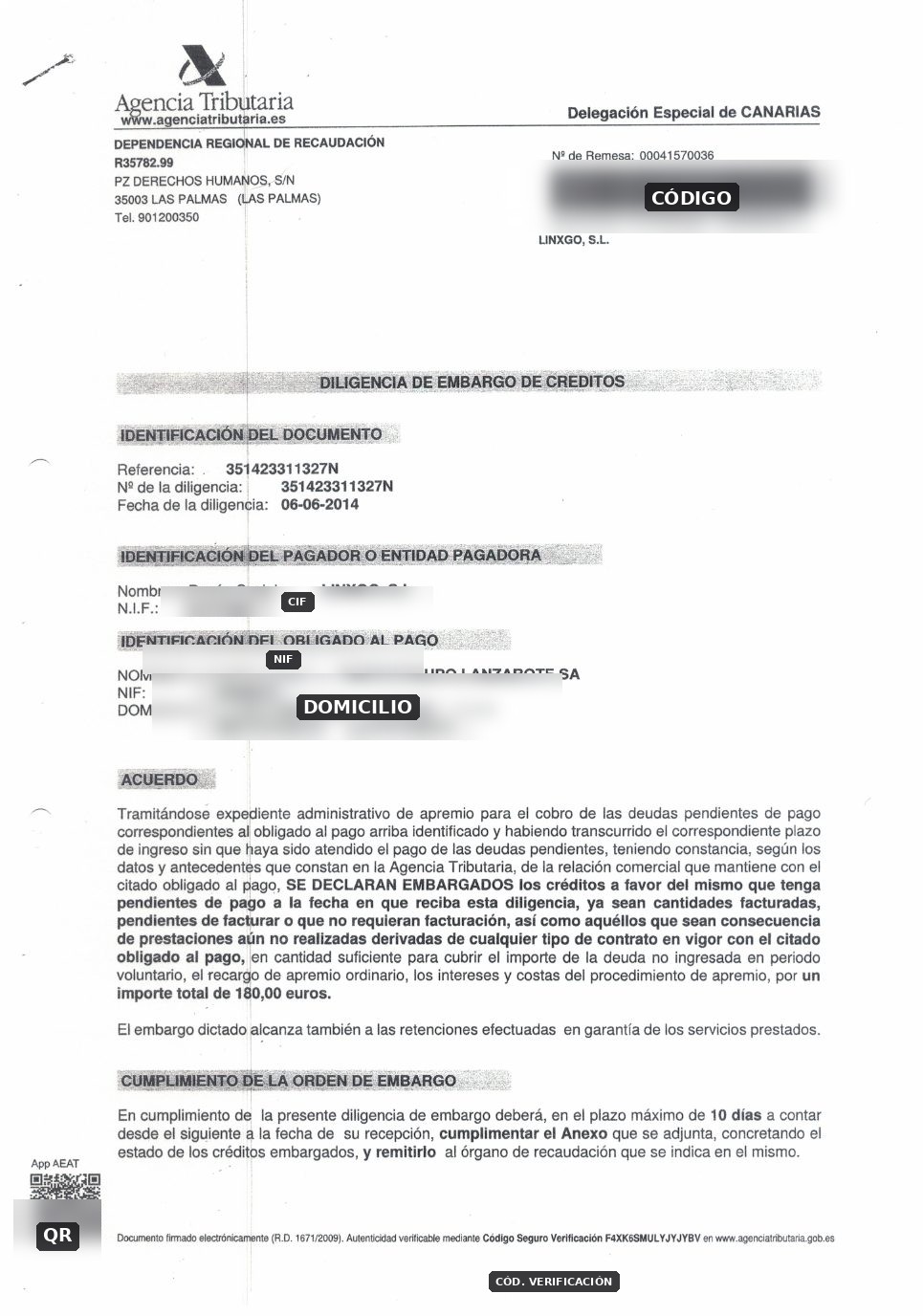
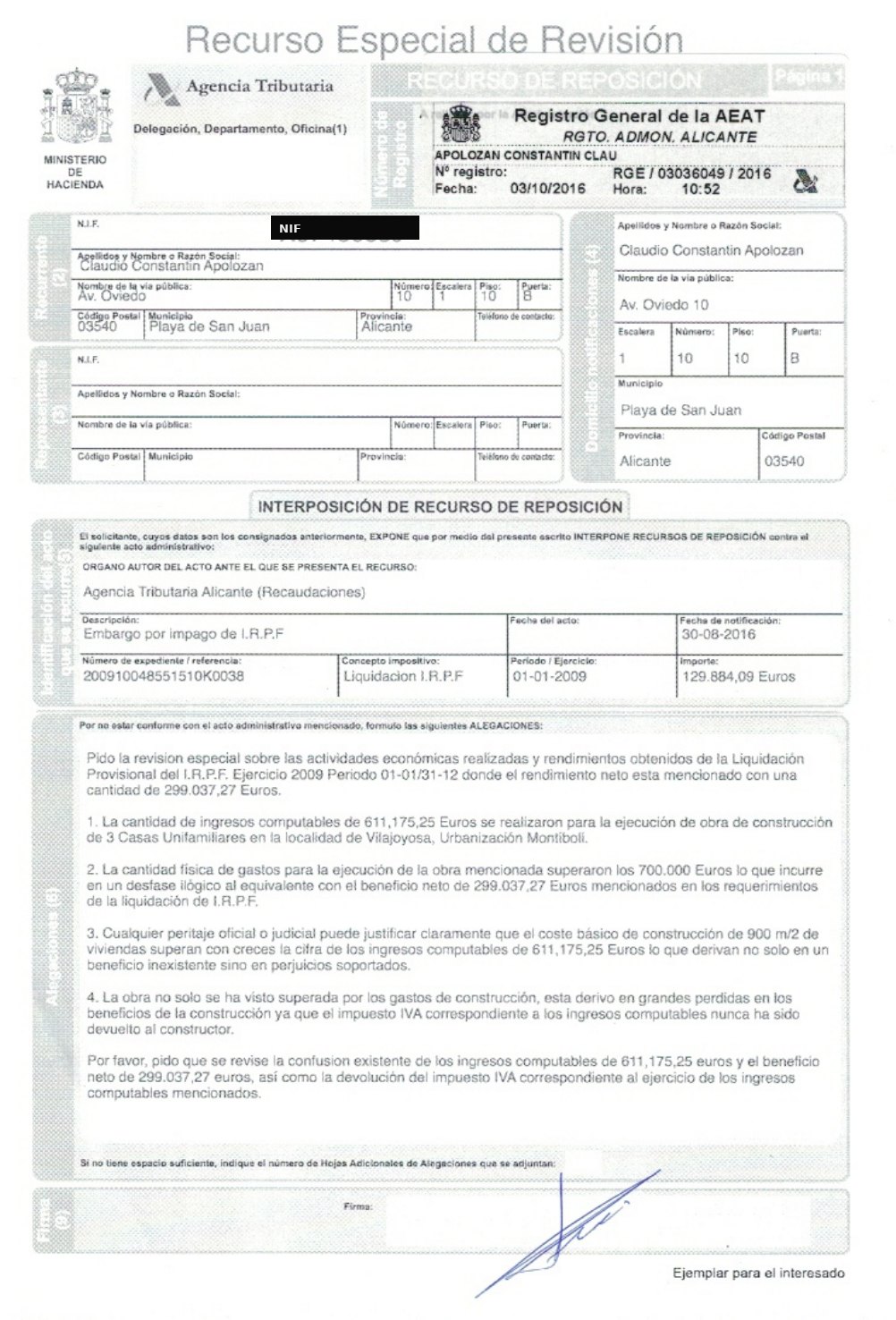
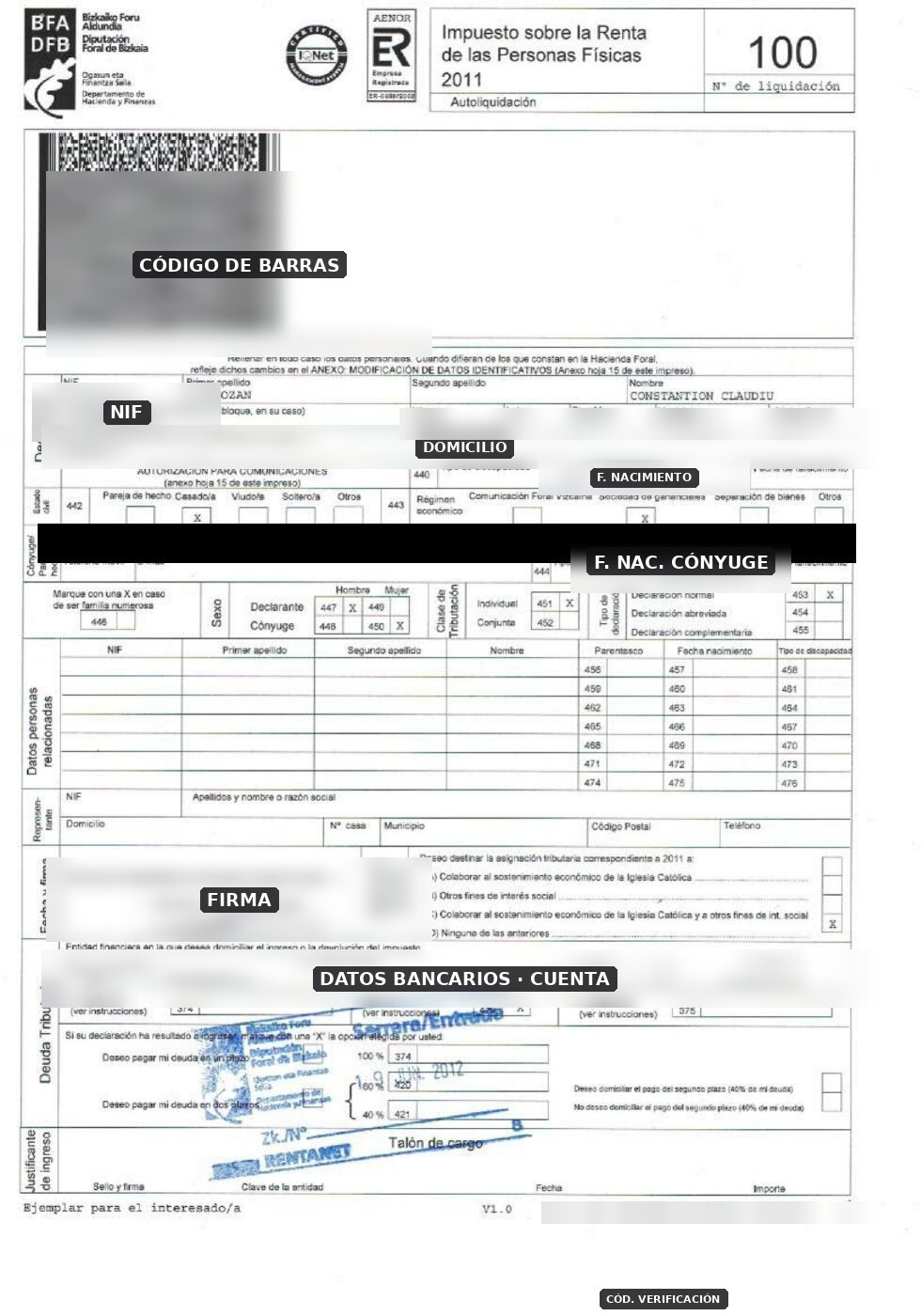
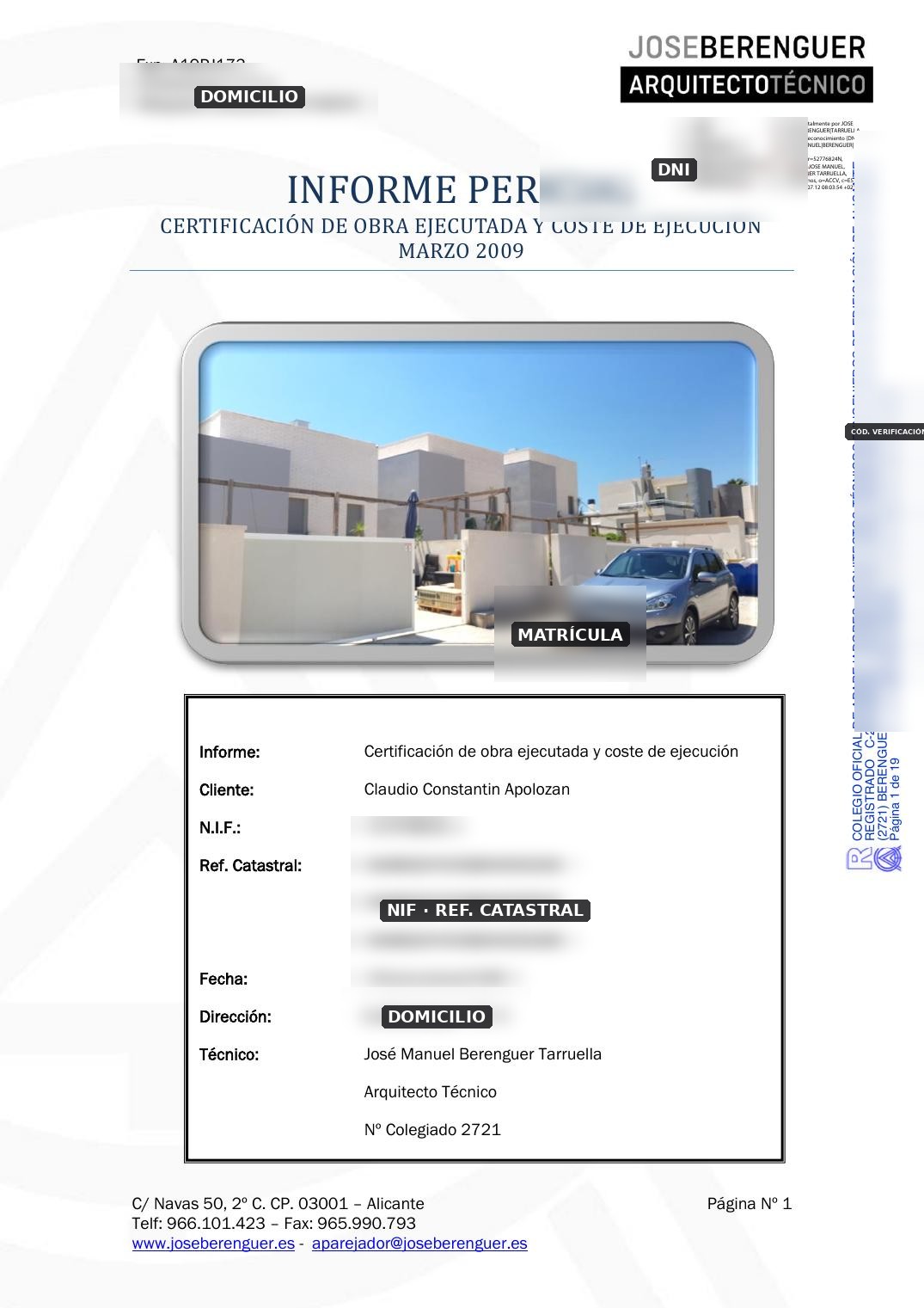
With the official record in view, the brief documents: that the 2009 tax year was activated in 2014, outside the four years of Article 66 of the General Tax Act (A.40); that the file's notifications did not reach the interested party when his address was on record in the Administration's own registries (A.42, A.65); and that the assessment ignored the costs that the Villajoyosa expert report quantifies (A.49). None of the three assertions requires believing the claimant: all three are verified in the file the defendant delivered.
The place of this brief in the case
It is the last complete exposition of the tax front before an internal court. What the State Legal Service replies (A.62, A.64) and what the Chamber resolves will be measured against this text — and against the common file on which both parties write.
How to verify it
Take any factual assertion in the claim and look for it in the administrative file delivered on 20 April. The source of each charge is the defendant's own record.
Documentary evidence · A.61 · 18 May 2022 · Tax and contentious action
EuroFraud case file · every statement links to its document (A.X / DOC-XXXX). Evidentiary material; every person named is presumed innocent.