Damage caused in Romania - The 630-dwelling project destroyed by the attachment
Apolozan case · ERDF fraud (Bilbao / Alicante / EU)
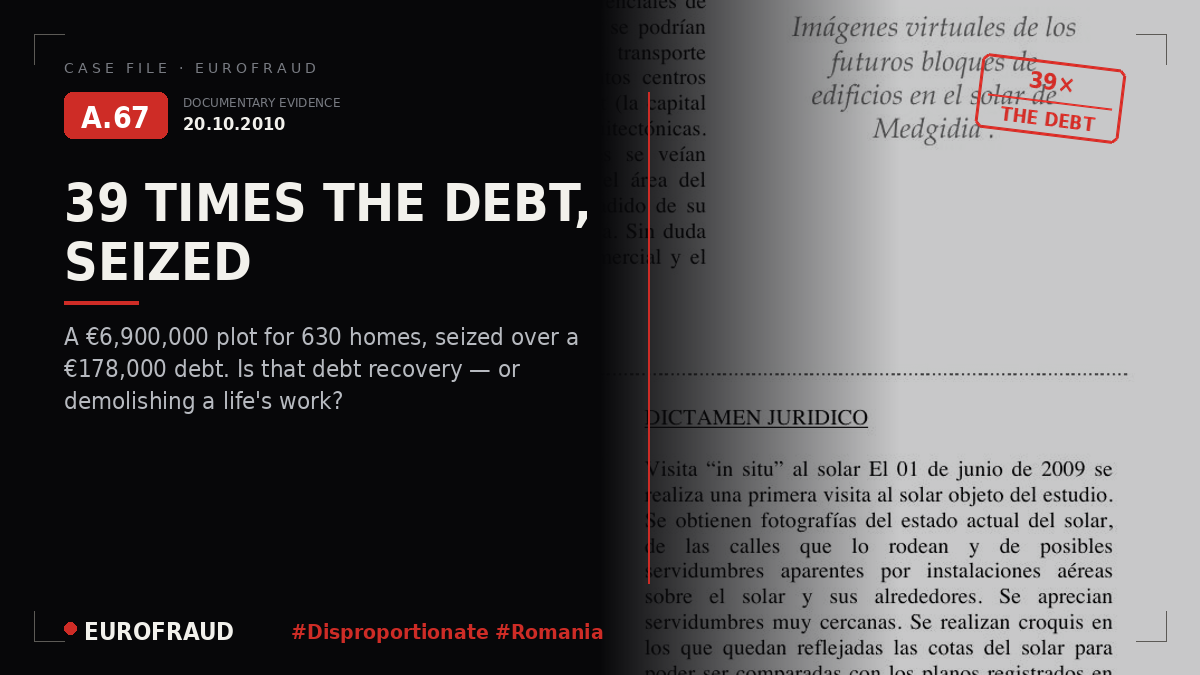
The project, in its own figures
Feasibility Study — Sale of Plot for the construction of 630 dwellings and premises in Romania.
— Cover of the study, 20 October 2010 (A.67, p. 1; original in A.41, p. 54)
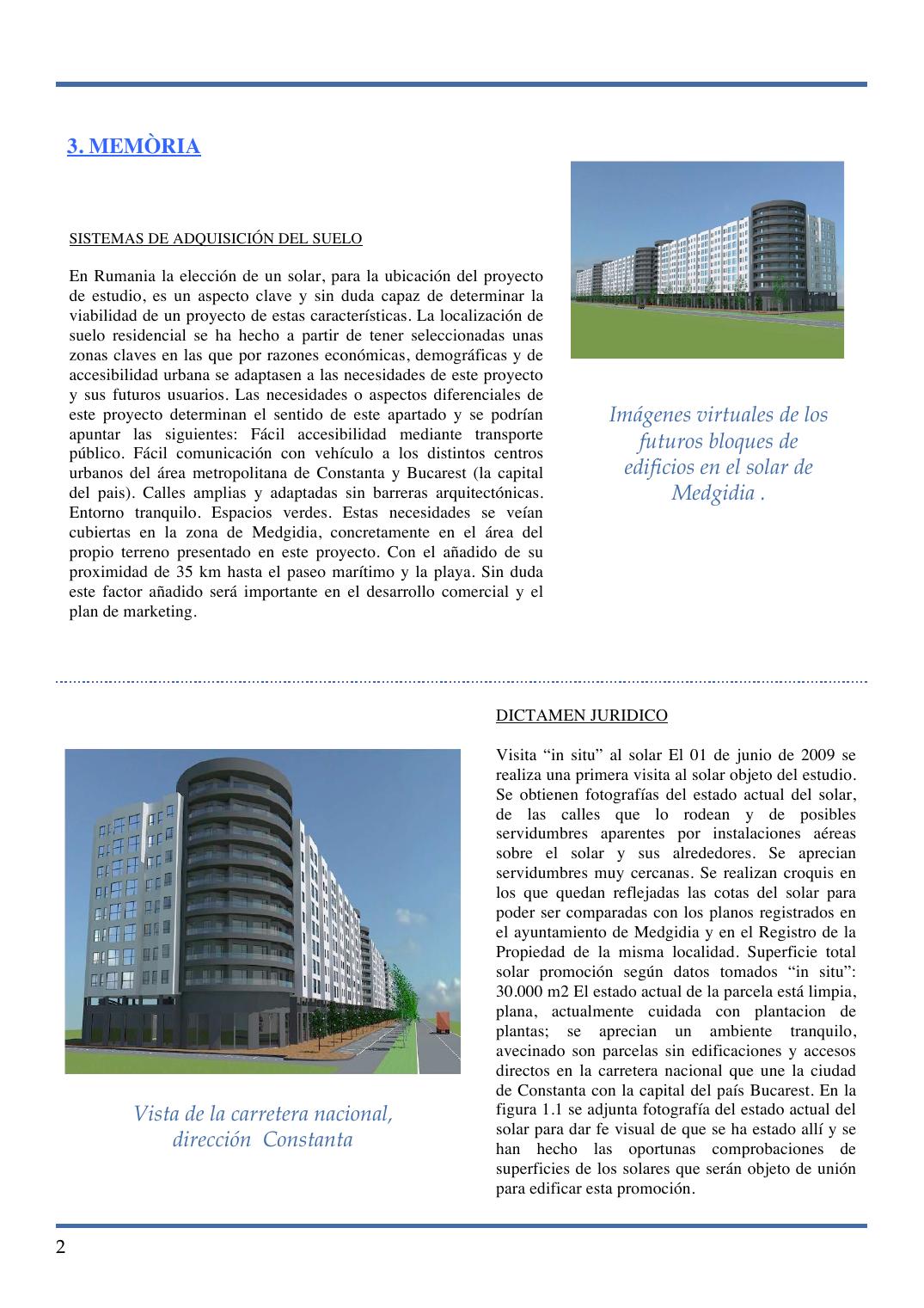
- Plot: 30,000 m² in Medgidia, valued at 6,900,000 euros according to the study incorporated into the attachment file itself.
- Projected development: 630 dwellings, premises and parking; expected sales of 43.8 million euros at average area prices of €700/m².
- Date: October 2010 — prior to the Sopelana works, to GAUZATU and to every action of the case. The asset existed before any reproach.
What fell upon it
- Enforcement of 4-8-2016 for 178,000 euros (A.41) — the main land alone is worth, according to the file's own study, 39 times the enforced debt.
- The attachment reached 21 properties (A.41), not the proportional portion that Article 169.1 of the General Tax Act requires.
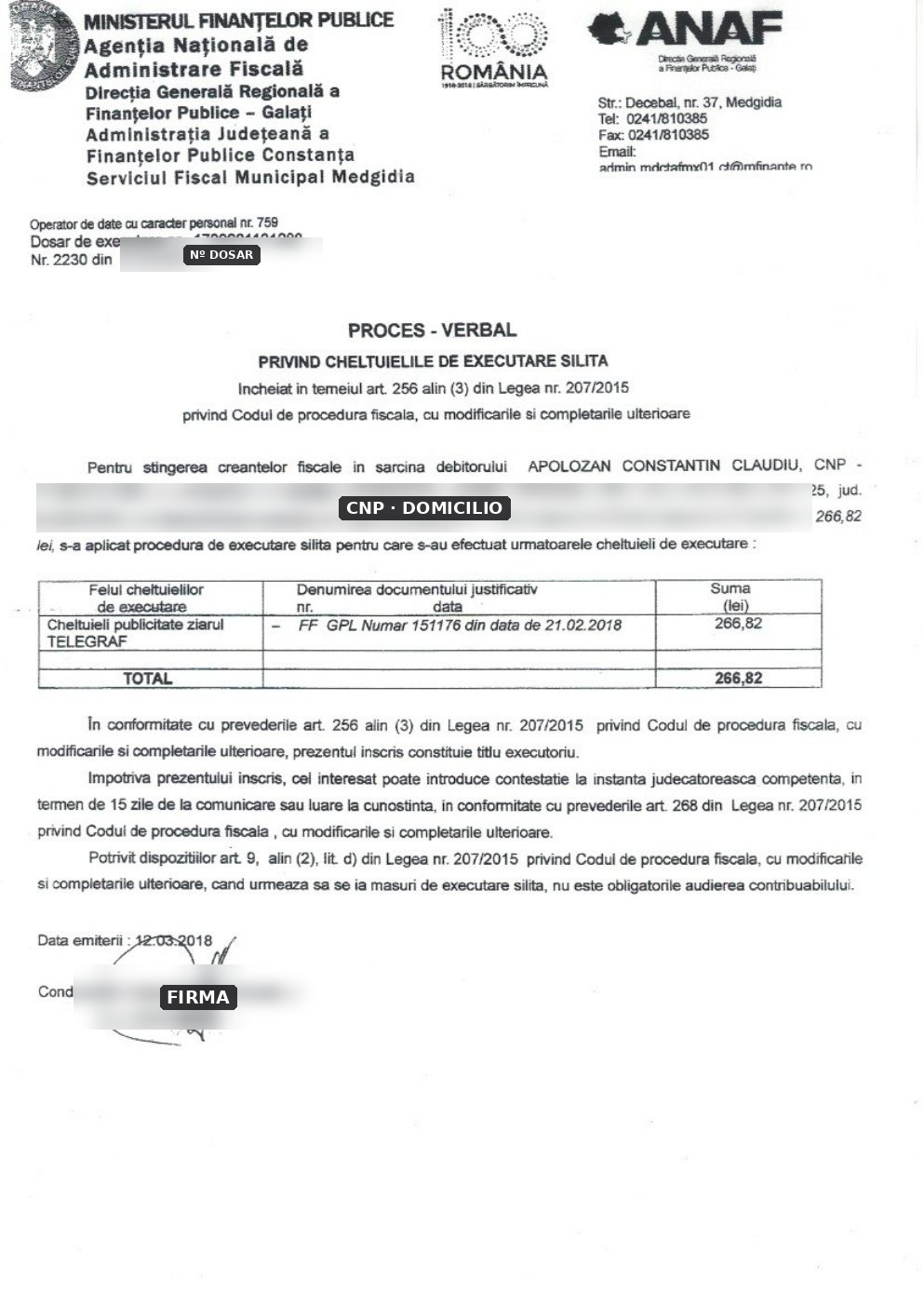
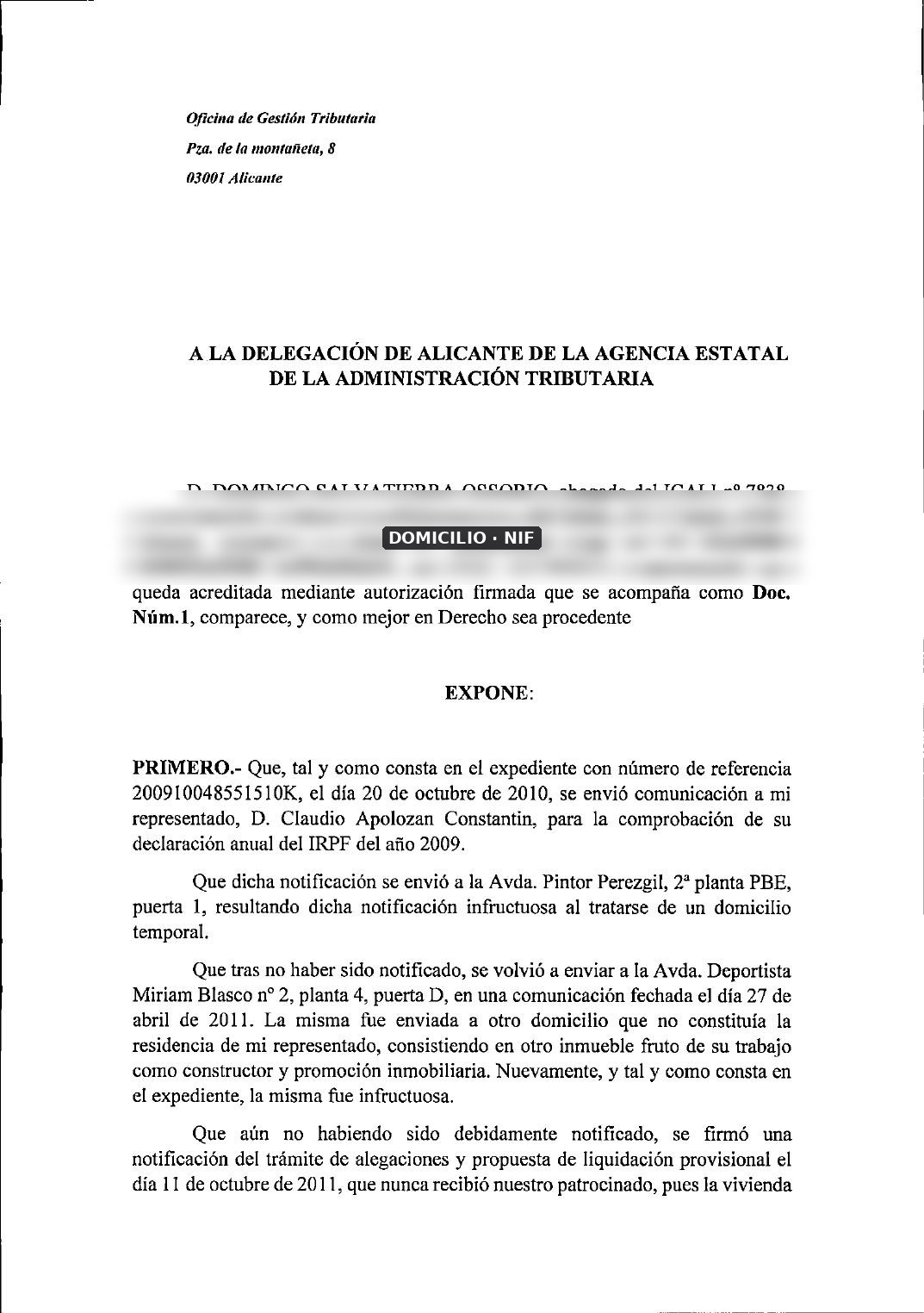
- The origin debt is on record as built on notifications that did not reach the interested party (A.50, A.59) and by computing works income without its costs (A.49).

The harm that accumulates
An attachment is not a photograph: it is an open tap. Each year of immobilisation adds interest on a disputed debt, keeps an appraised development paralysed, consumes the useful life of the licences and projects, and turns the lost profit into consolidated damage. The review avenues that should have closed that tap were resolved late (27 months for a nullity of 6, A.59) or were not resolved — and administrative silence does not stop the harm: it capitalises it.
Is there an ordinary explanation?
A prudent precautionary excess? The law rules it out: the attachment must be proportionate to the debt (Article 169.1 of the General Tax Act) and property is protected against disproportionate enforcement (Article 1, Protocol 1, ECHR). A final debt that would justify forcefulness? Its notification circuit is the one documented in A.50 and A.59. What remains, both ruled out, is an enforcement 39 times greater than what is claimed, sustained over time by procedures that do not examine what they have before them — the exact mould of the patrimonial liability of the State (Articles 32 et seq., Law 40/2015). Check it for yourself: open the study (A.67), locate the plot's valuation and the cover date — 20 October 2010 — and compare them with the debt and the date of the attachment (A.41). The four figures fit on a napkin. The disproportion does not.
Documentary evidence · A.67 · 20 October 2010 · Damages and quantification of harm
EuroFraud case file · every statement links to its document (A.X / DOC-XXXX). Evidentiary material; every person named is presumed innocent.