Complaint before the Prosecutor's Office against Investigating Court No. 2 and the Provincial Court
Apolozan case · ERDF fraud (Bilbao / Alicante / EU)
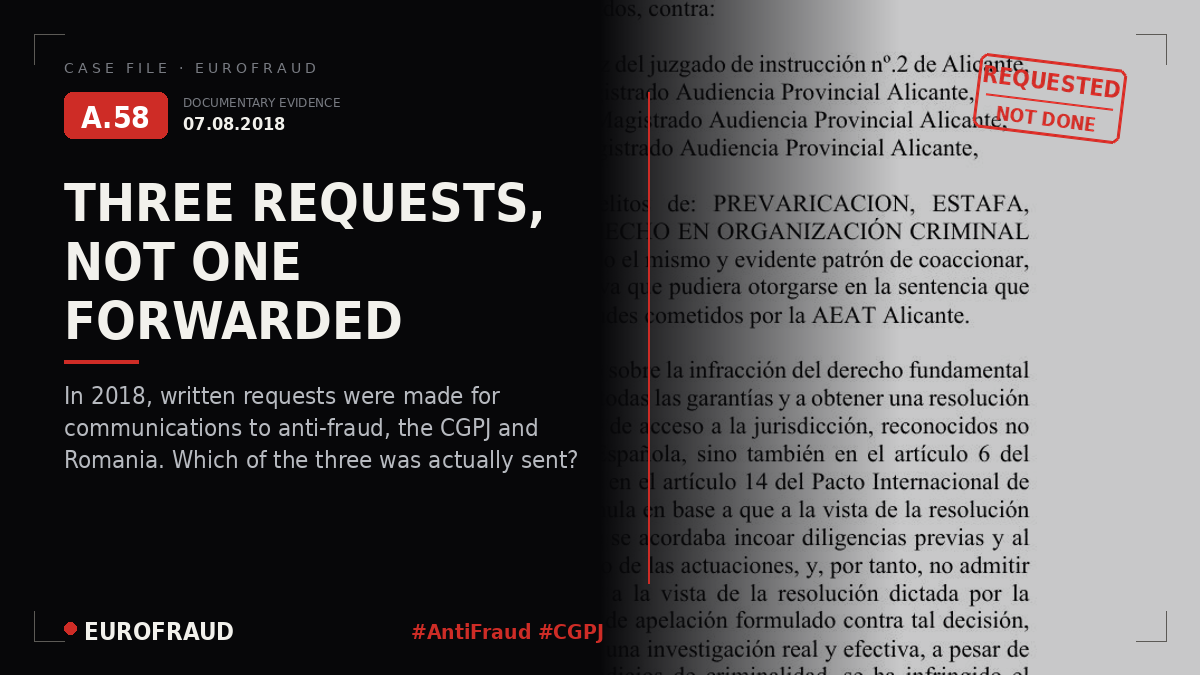
This complaint has a particularity: besides denouncing, it requested something very concrete and very cheap — three official letters.
The three requests
- Communication to the anti-fraud authorities: the facts affected funds and procedures with a European dimension (A.39.4).
- Communication to the General Council of the Judiciary: for the action of the judicial bodies indicated (A.47, A.48).
- Communication to the authorities of the country of origin: Romania, where the expropriations on the defective title were being enforced (A.41, A.44).
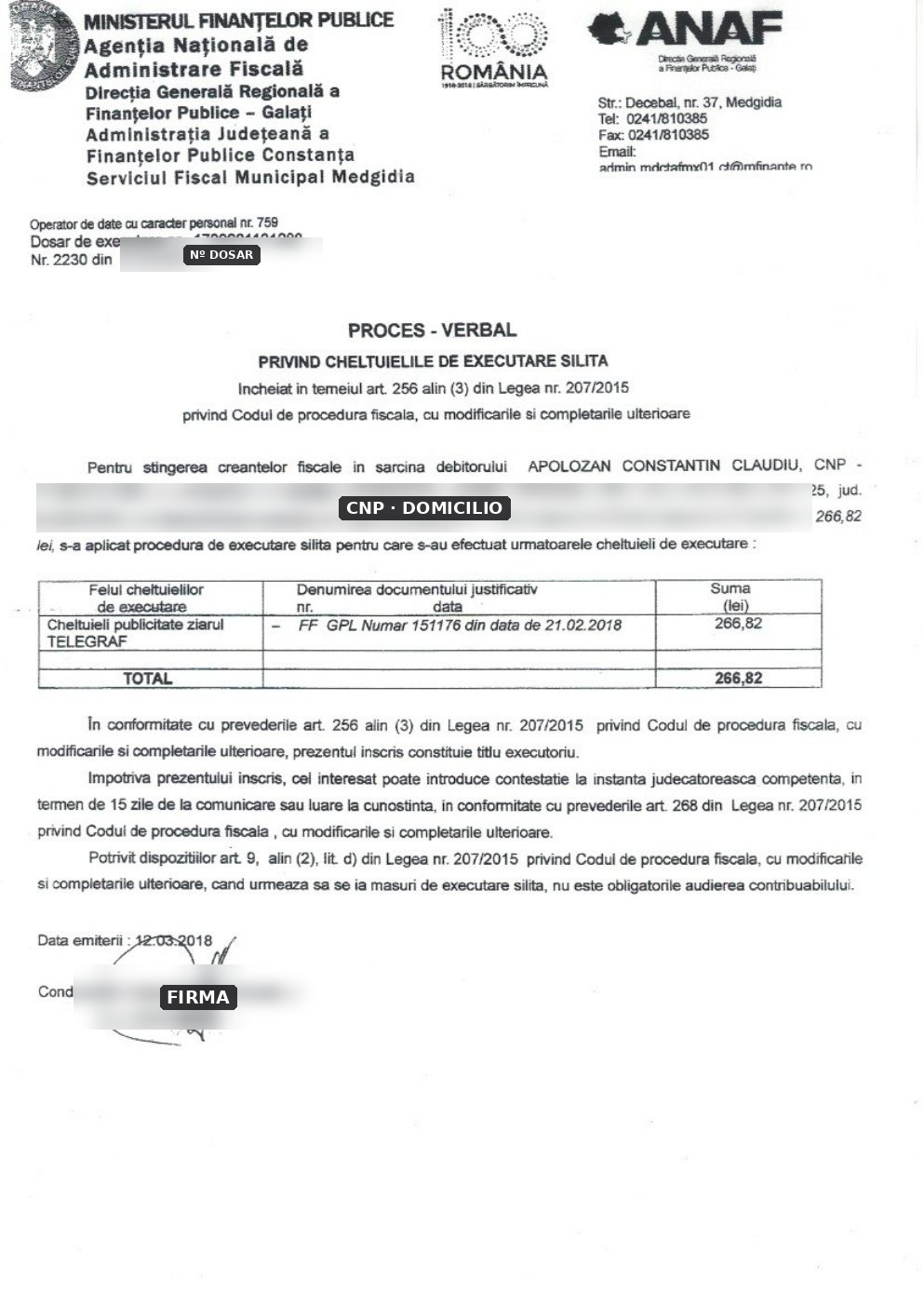
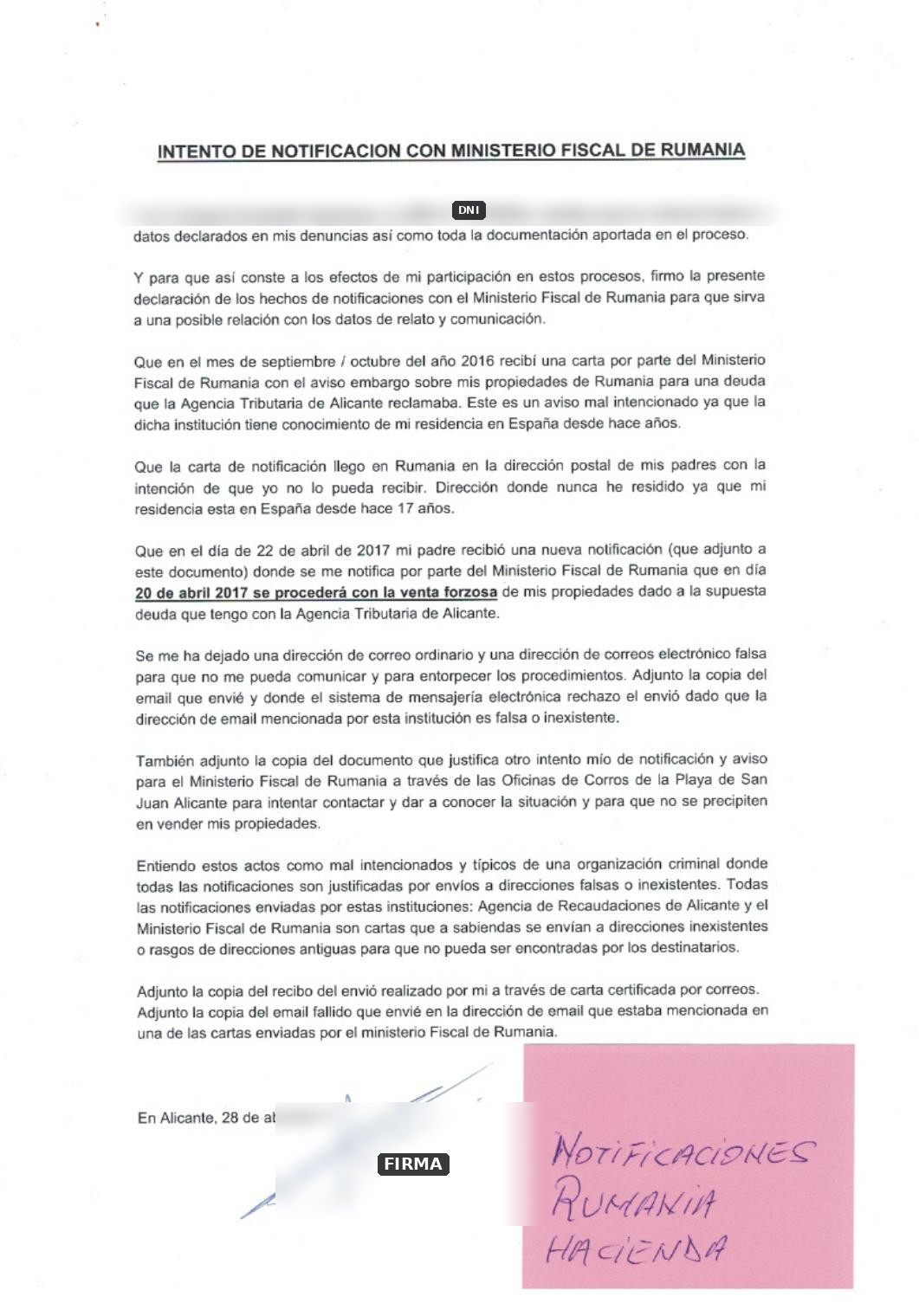
The framework of the duty to communicate
Article 262 of the Criminal Procedure Act imposes on those who by reason of their office have knowledge of a public crime the duty to report it; the Statute of the Public Prosecutor's Office (Article 5) and the European institutional architecture articulate precisely the channels requested. No costly investigation was sought: three referrals were sought.
What is on record
None of the three communications is on record as carried out. Each would have taken the case out of the local circuit: the anti-fraud one towards Europe, the General Council of the Judiciary one towards judicial governance, Romania towards interstate verification. The three doors requested in writing in 2018 remained closed — and the case, inside.
How to verify it
Look for the three official letters in the proceedings: anti-fraud, General Council of the Judiciary, Romania. Three searches, three absences — the annex is that result.
Documentary evidence · A.58 · 7 August 2018 · Accusatory impulse or complaint
EuroFraud case file · every statement links to its document (A.X / DOC-XXXX). Evidentiary material; every person named is presumed innocent.