QUESTIONED IN A LANGUAGE THAT WAS NOT THEIRS
Apolozan case · ERDF fraud (Bilbao / Alicante / EU)
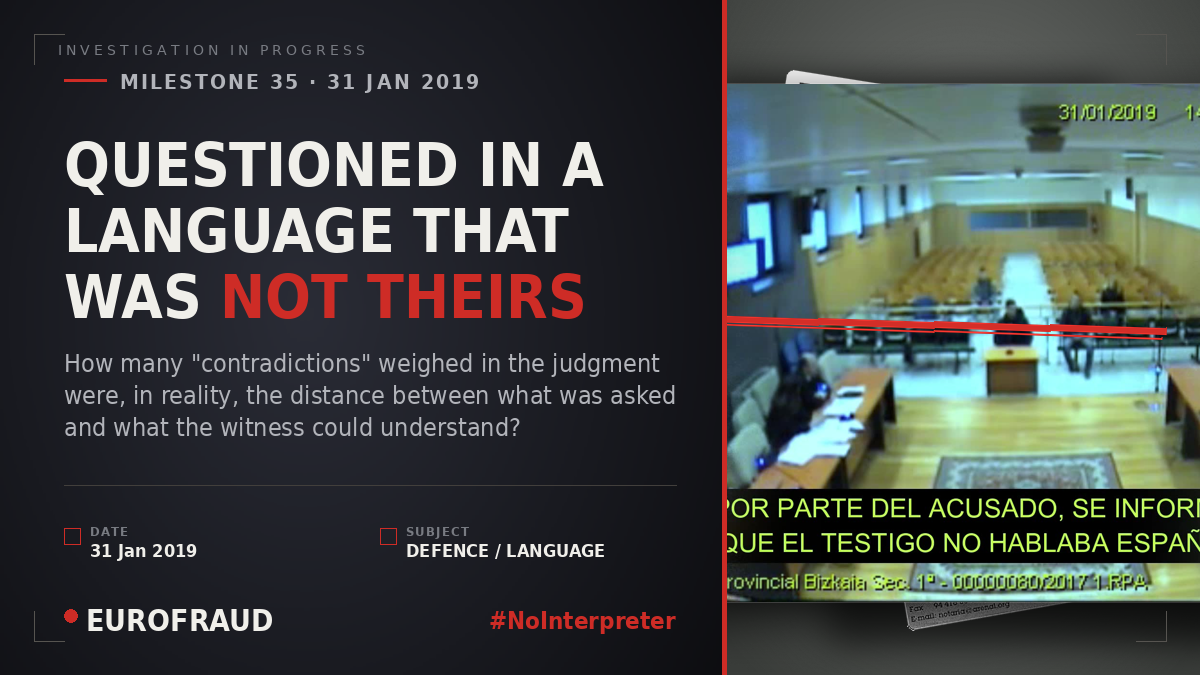
The case turned on corporate structures, cross-accounting, European subsidies and software development — difficult matter even for a native jurist. Several of the protagonists of the proceedings were foreigners. And the trial recordings show questioning conducted in Spanish, without constant and guaranteed linguistic assistance during the taking of evidence.
The official medium records it matter-of-factly: technical questions — "Were you contracted by him?", "What was the name of the company that hired you?" — directed at foreign witnesses who answered as best they could, in a language they did not master, on matters on which a man's liberty depended.
European law has been categorical on this since 2010: interpretation and translation in criminal proceedings are not a courtesy, they are an essential safeguard — because answering is not the same as understanding. A witness who does not fully understand the question may seem hesitant, contradictory or unreliable without being so; and a court assessing those answers is assessing, without knowing it, the language barrier and not the testimony.
In a trial where stretches of recording were already missing, where the taking of evidence had been ordered not to be recorded and where what the accused said mattered "absolutely not at all", the linguistic fragility of the witnesses completes the picture: the voices that could sustain the defence reached the room weakened — when they reached it at all.
EuroFraud case file · every statement links to its document (A.X / DOC-XXXX). Evidentiary material; every person named is presumed innocent.