EIGHT SECONDS: "DO NOT RECORD THE TAKING OF EVIDENCE"
Apolozan case · ERDF fraud (Bilbao / Alicante / EU)
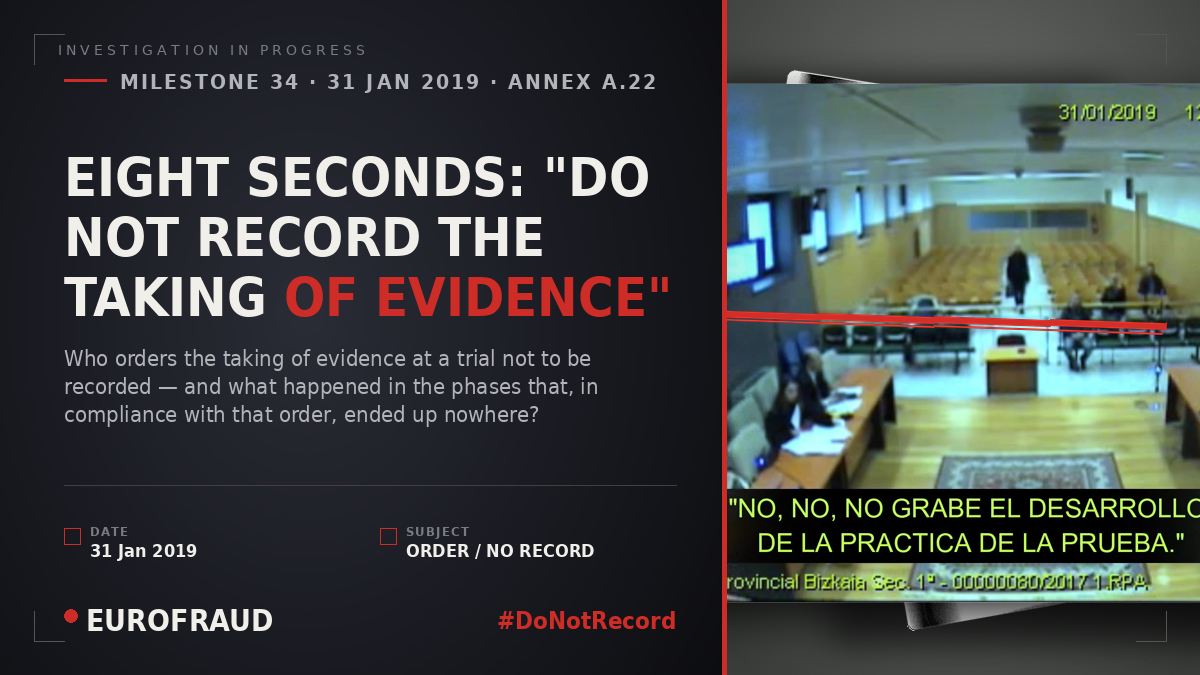
At 12:09:02 that morning, the courtroom recording system produced a file of 8.87 seconds. Eight seconds and eighty-seven hundredths. All the other blocks of the session last around 45 minutes exactly — the system's automatic cut-off. This is the only one that breaks the pattern: it starts, stops almost immediately, and the recording resumes in a new block 17 seconds later.
Within those 8.87 seconds, at second zero, an instruction was recorded (A.22; own transcription): "…do not record the taking of evidence."
The taking of evidence is the heart of the trial: the moment when witnesses testify, documents are examined, an accusation is built or destroyed. It is exactly what Article 743 of the Criminal Procedure Act orders to be recorded, because it is what the higher courts will need to review. An instruction to exclude it from the medium is not a technical incident: it is the deliberate suppression of the official memory of the proceedings at its decisive phase.
The fragment survived — one may suppose — because stopping a recording takes longer than regretting having started it. And its evidentiary value is twofold: it proves the order, and it explains the other silences. After listening to these eight seconds, the initial 11 minutes, the 5.7-minute cut after the judge's sentence and the absent stretches the expert report would detect years later cease to look like malfunctions. They begin to look like obedience.
EuroFraud case file · every statement links to its document (A.X / DOC-XXXX). Evidentiary material; every person named is presumed innocent.