Audits carried out by the SPRI and payments made
Apolozan case · ERDF fraud (Bilbao / Alicante / EU)
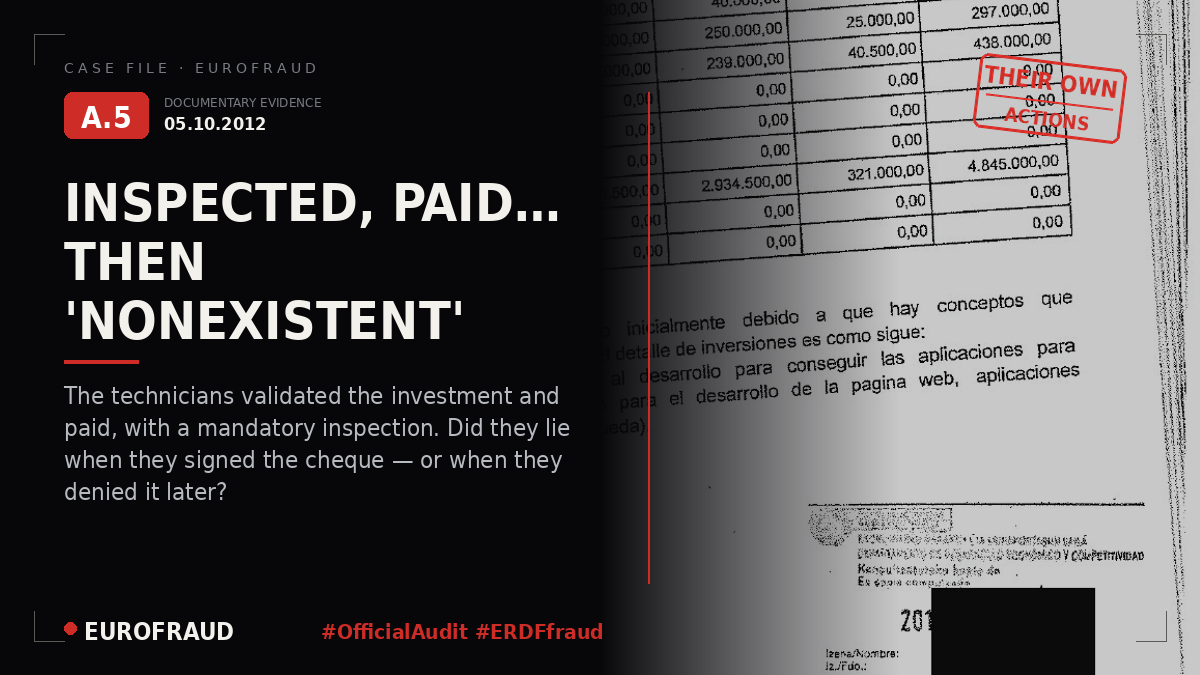
This annex collects the Administration's own acts of verification and payment — the part of the file that the case's later version needs not to mention.
The administrative acts it contains
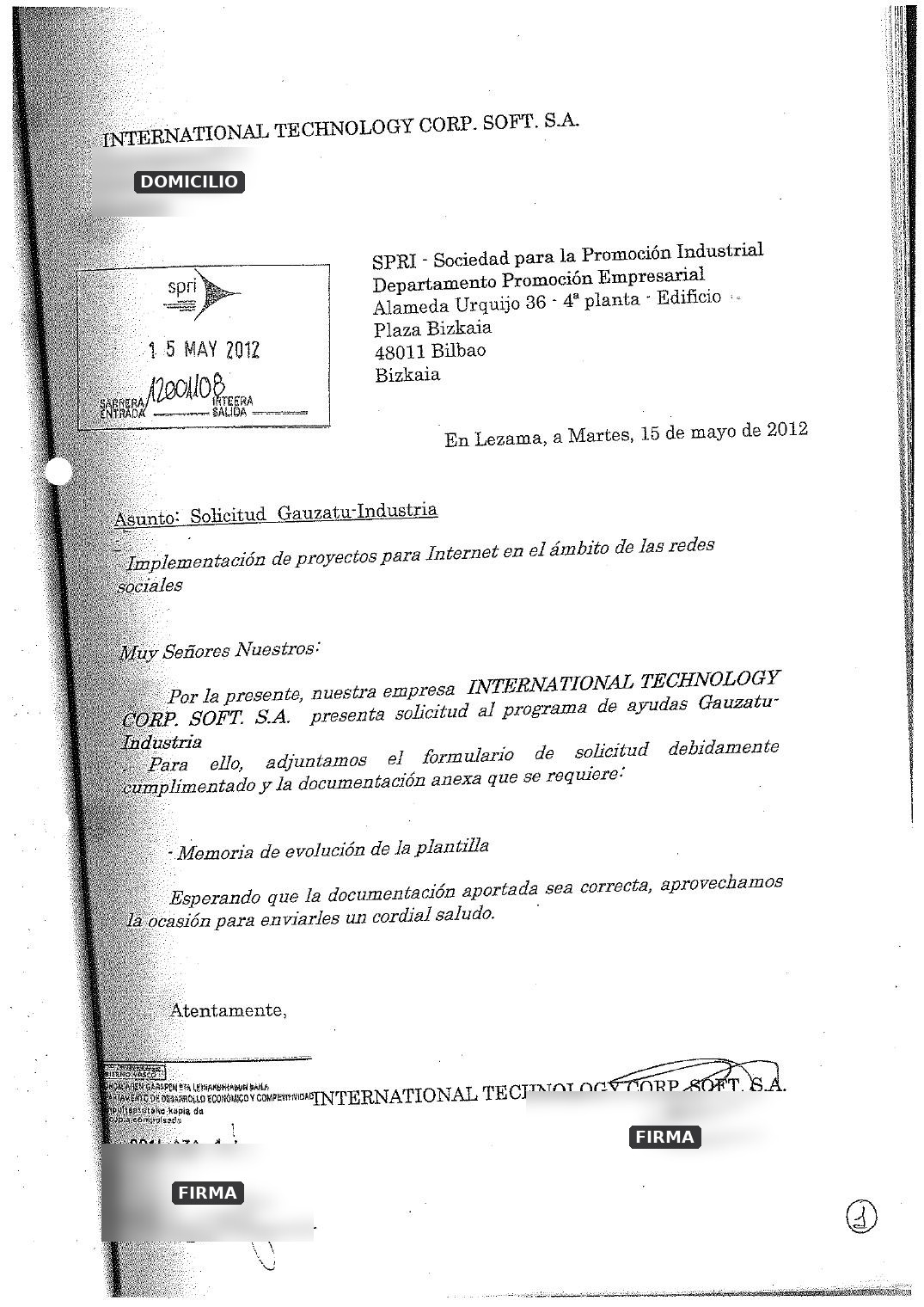
- The technicians' Report-Proposal (pages 143 and following), which validates the valuations submitted to the file.
- The validated figures: 680,000 euros in software applications for 2012 according to the initial report (page 4, A.10), raised to 778,000 euros by the consultancy's correction (page 125, A.10), within a total technical recognition of 1,778,000 euros.
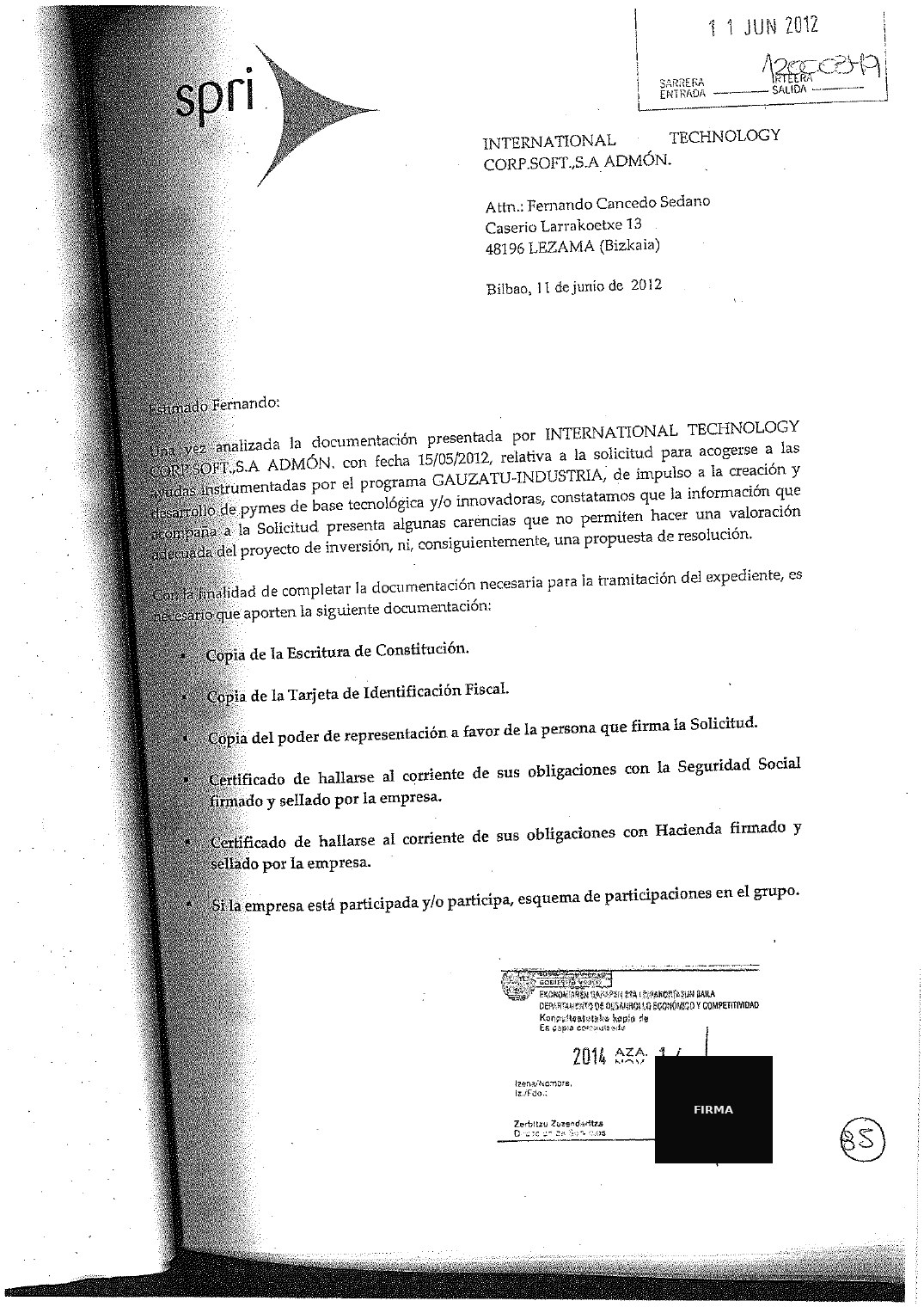
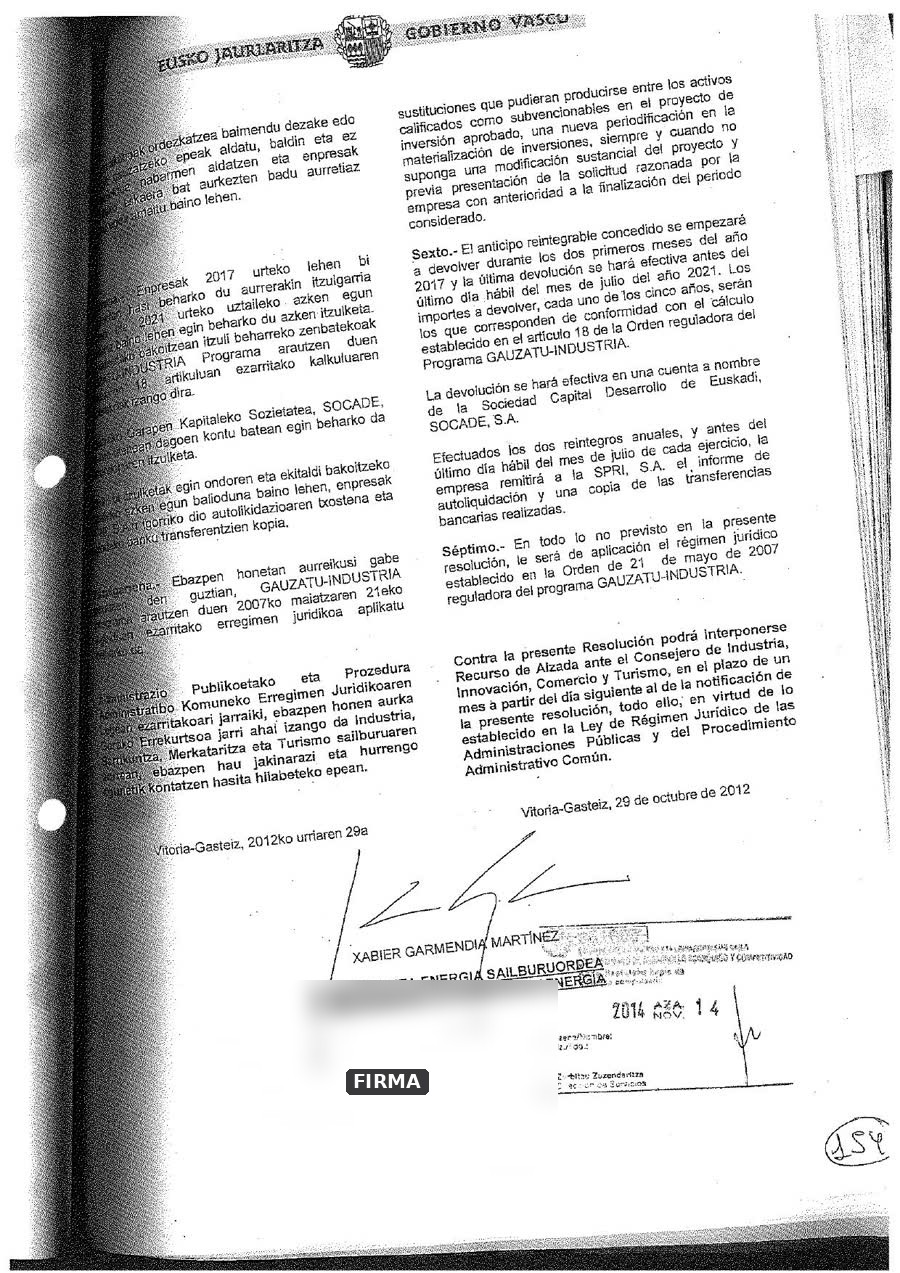
- The record of two payments executed over an eight-month interval, each preceded by an inspection of the materialised investments.
Why the inspections were not optional
The programme's regime did not leave payments to the manager's discretion: the Order of 21 May 2007 (GAUZATU-Industria) required an inspection of materialised investments and an audit before releasing funds; Article 32 of Law 38/2003, the General Subsidies Act, imposes verification of effective performance; and Article 60.b) of Regulation (EC) No 1083/2006, by virtue of ERDF co-financing (A.39.4), obliges verification of the actual delivery of the co-financed goods and services. To pay was to certify: each payment in this annex presupposes, by legal mandate, an investment verified on the ground.
The order of the facts
Verify, validate, pay: that is the order these pages document, and the only one the rules permitted. The one who paid was the same Administration that later maintained there was nothing to pay.
The chain, in dates
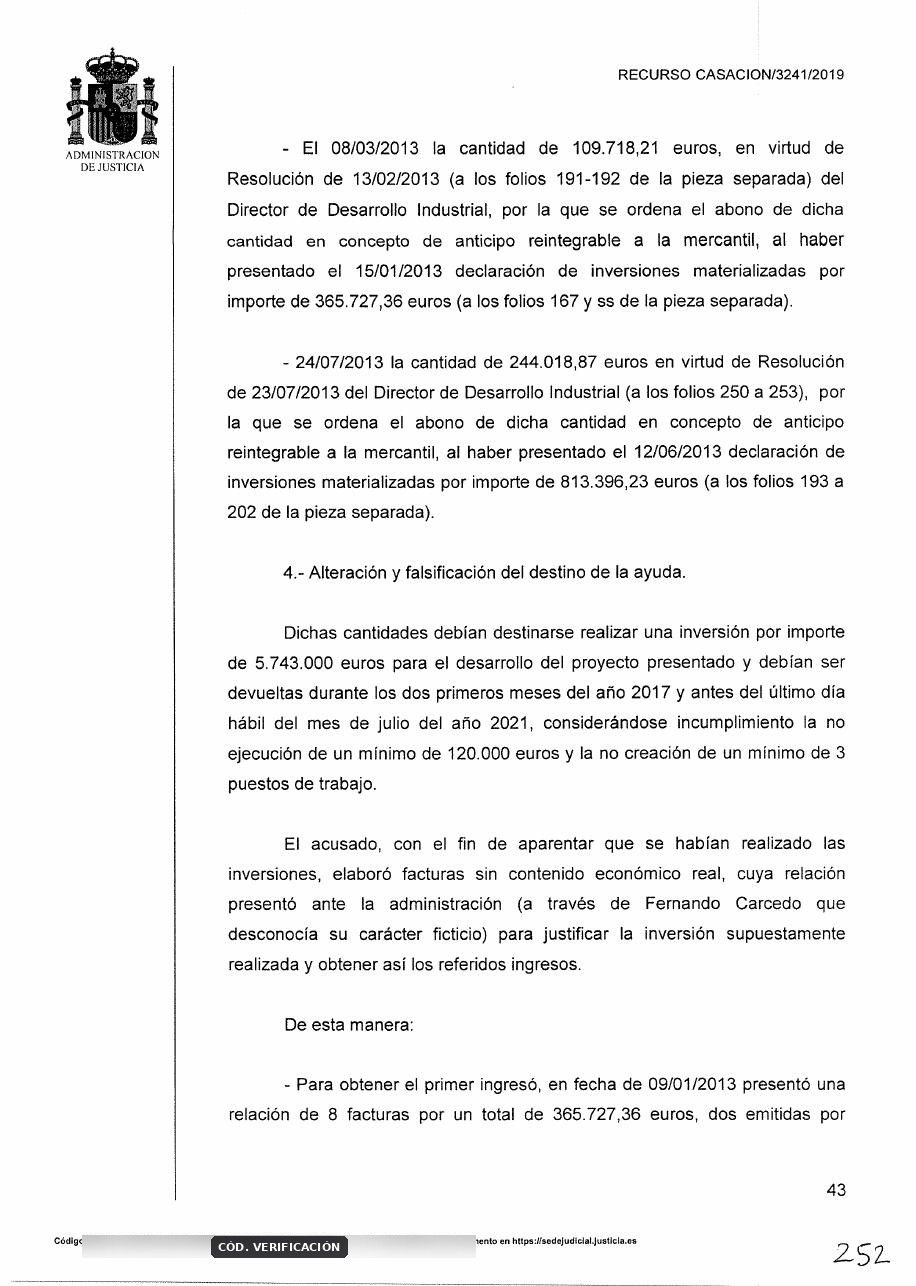
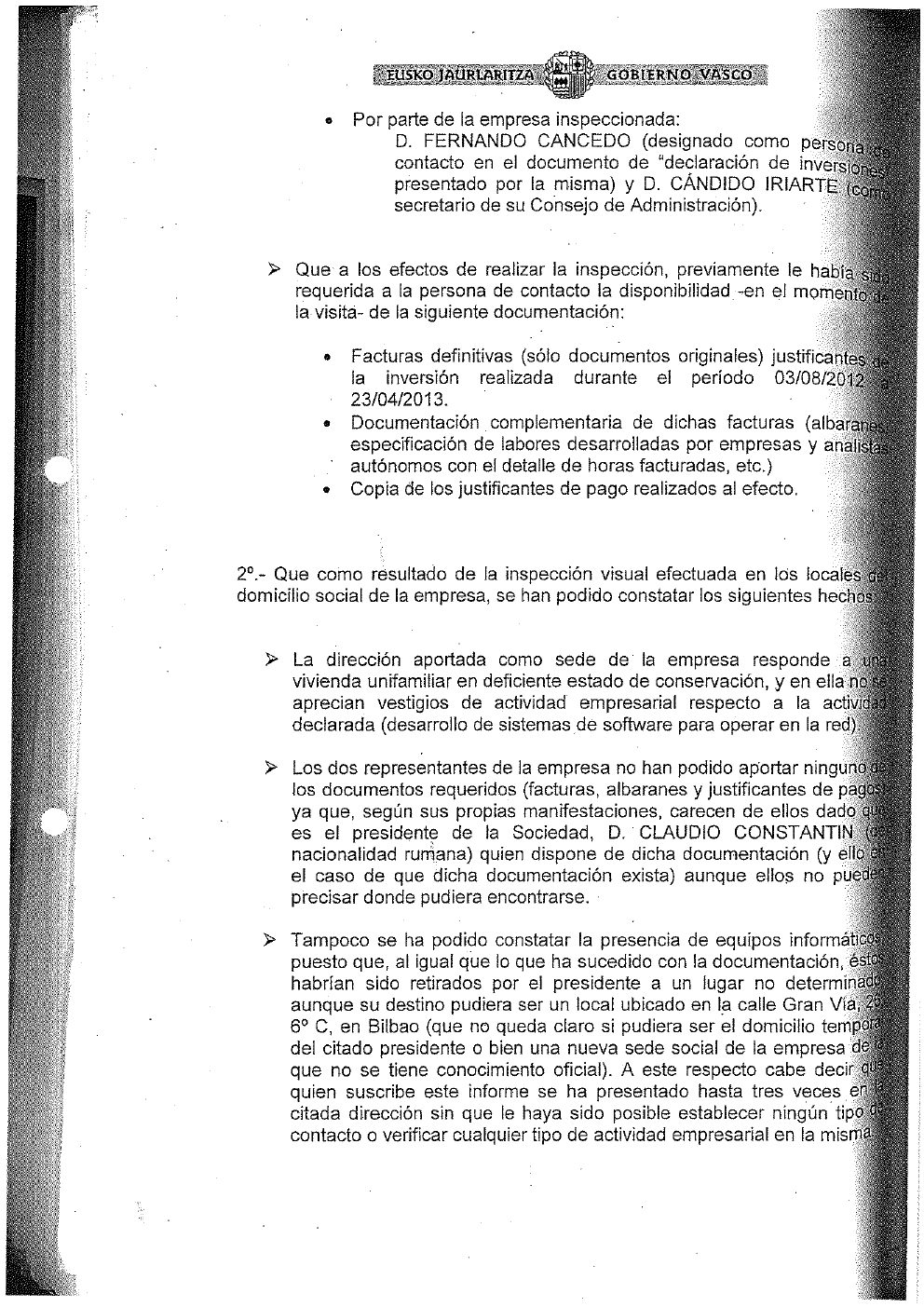
→ 29-10-2012 — resolution GZI-0036-2012: admitted investment €4,845,000 (A.10) → 13-2-2013 — first SPRI audit → 8-3-2013 — payment of €109,718.21 after audit (DOC-0168) → 23-7-2013 — second SPRI audit → 22-10-2013 — non-compliance resolution: certified investment zero (A.6)
The document against the document
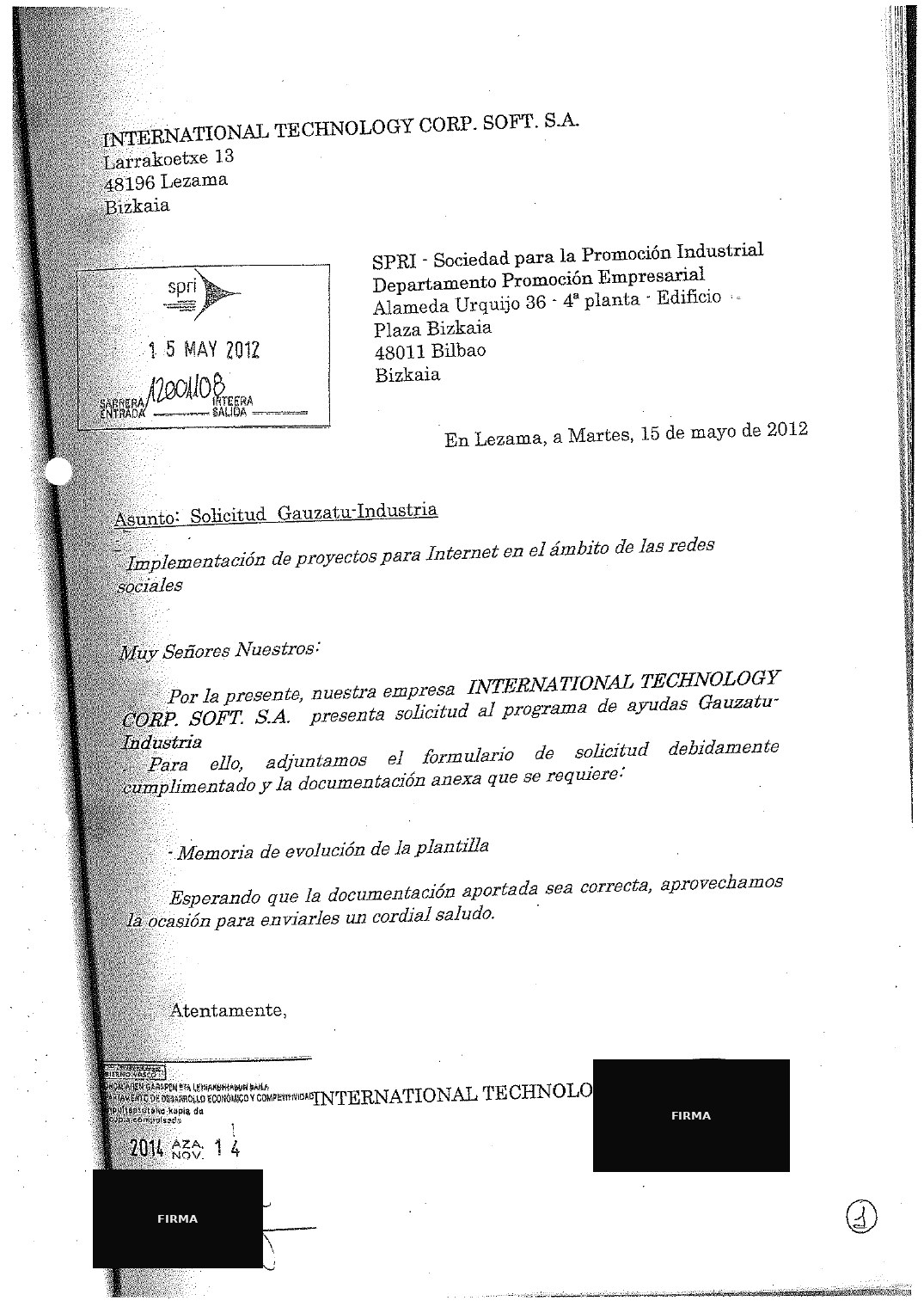
The non-compliance order of October 2013 (A.6) declares that the investments were not made. This annex contains the same Administration's 2012 inspections, audits and payments on the same investments. If the 2013 declaration is true, the legally mandatory controls of 2012 were not carried out — and that omission has perpetrators with an institutional name: the programme managers, not the unsigned designee (A.1, A.4). The later proceedings never explained how the two extremes are reconciled.
How to verify it
Compare the dates and figures of these pages with the non-compliance declaration of A.6, and both with the obligations of the 2007 Order and of Article 60.b) of Regulation 1083/2006. They are acts of the same Administration, on the same project, twelve months apart and with opposite content.
Contrast with the original file
The full GAUZATU administrative file is in Bilbao Original in three parts (DOC-0136, DOC-0137, DOC-0138); the payment of 109,718.21 euros of 8-3-2013, after audit, was also cited in the cassation proceedings (DOC-0168).
Documentary evidence · A.5 · 5 October 2012 · Documentary and registry basis
EuroFraud case file · every statement links to its document (A.X / DOC-XXXX). Evidentiary material; every person named is presumed innocent.