THE COMPLAINT THAT CONFESSES
Apolozan case · ERDF fraud (Bilbao / Alicante / EU)
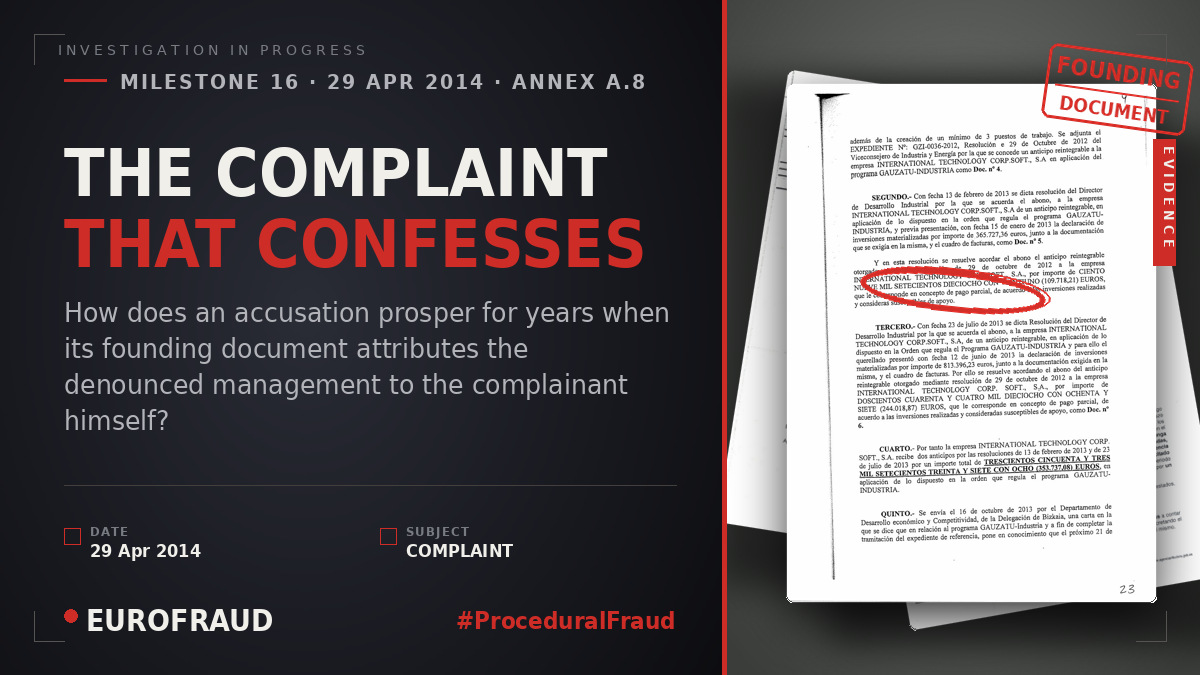
Seven weeks after the repayment resolution, the promoters of the operation made the move that changed the whole board: on 29 April 2014, Fernando Carcedo and Cándido Iriarte filed a criminal complaint in Bilbao against Claudiu Apolozan (A.8; original in DOC-0172). The men who recruited the project, handled the application and signed the documentation became, procedurally, the victims. And the owner of the software, the accused.
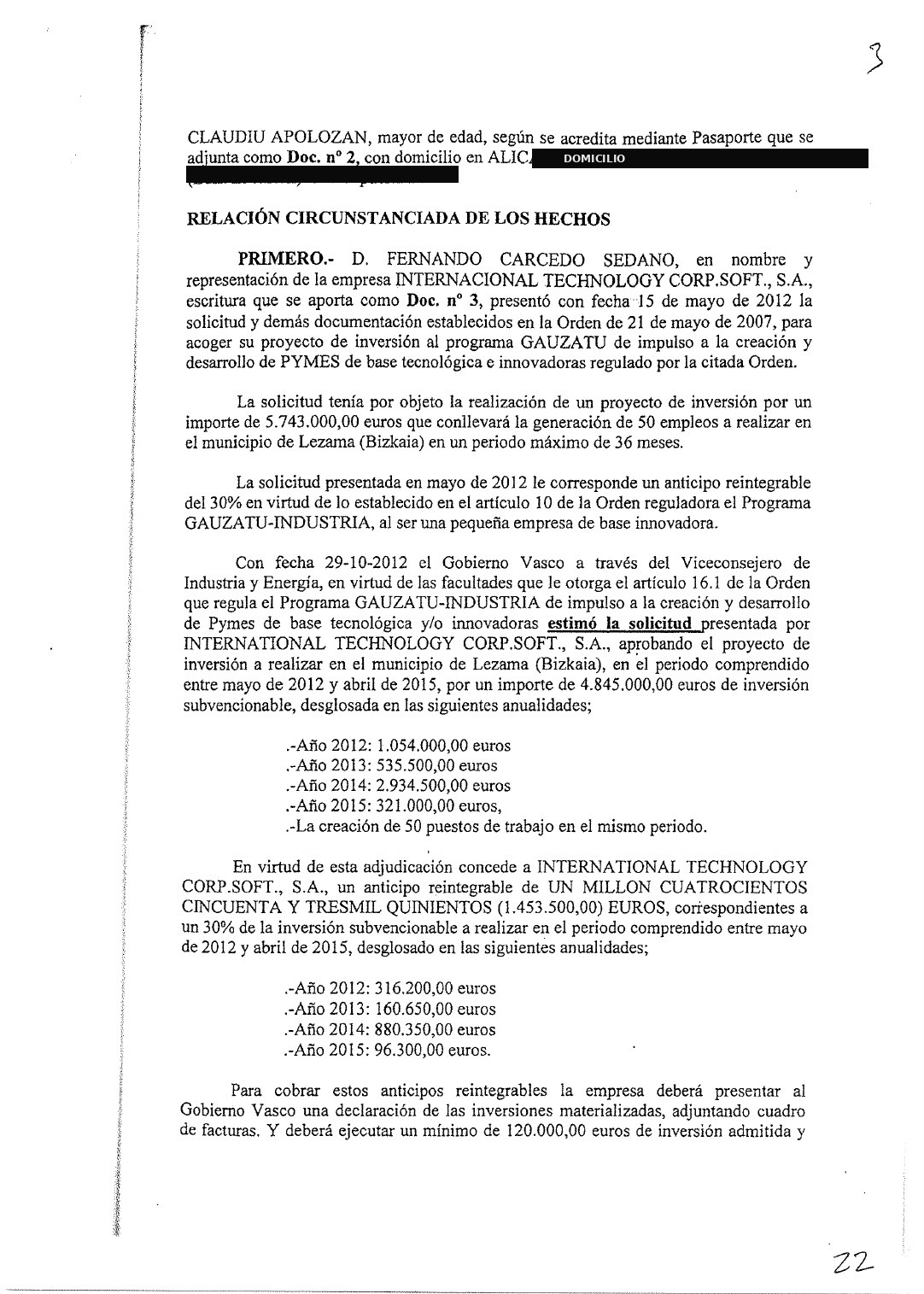
But the complaint contains a sentence its authors should never have written. In relating the facts, the text says — literally — that "Mr Fernando Carcedo Sedano, in the name and on behalf of the company… applied to the Basque Government for the inclusion…". That is: the document accusing Apolozan of the fraudulent management begins by acknowledging that the management was done by the complainant.
In procedural law this has a technical name — an embedded confession —, but the technicality is not needed to grasp its scope: the founding piece of the entire criminal case carries within it, from day one, the exculpatory evidence for the accused and the incriminating evidence against those who accused him. It was there throughout the investigation, throughout the trial and throughout the conviction. One only had to read it.
EuroFraud case file · every statement links to its document (A.X / DOC-XXXX). Evidentiary material; every person named is presumed innocent.