THE ARREST THAT REFUTES THE WARRANT
Apolozan case · ERDF fraud (Bilbao / Alicante / EU)
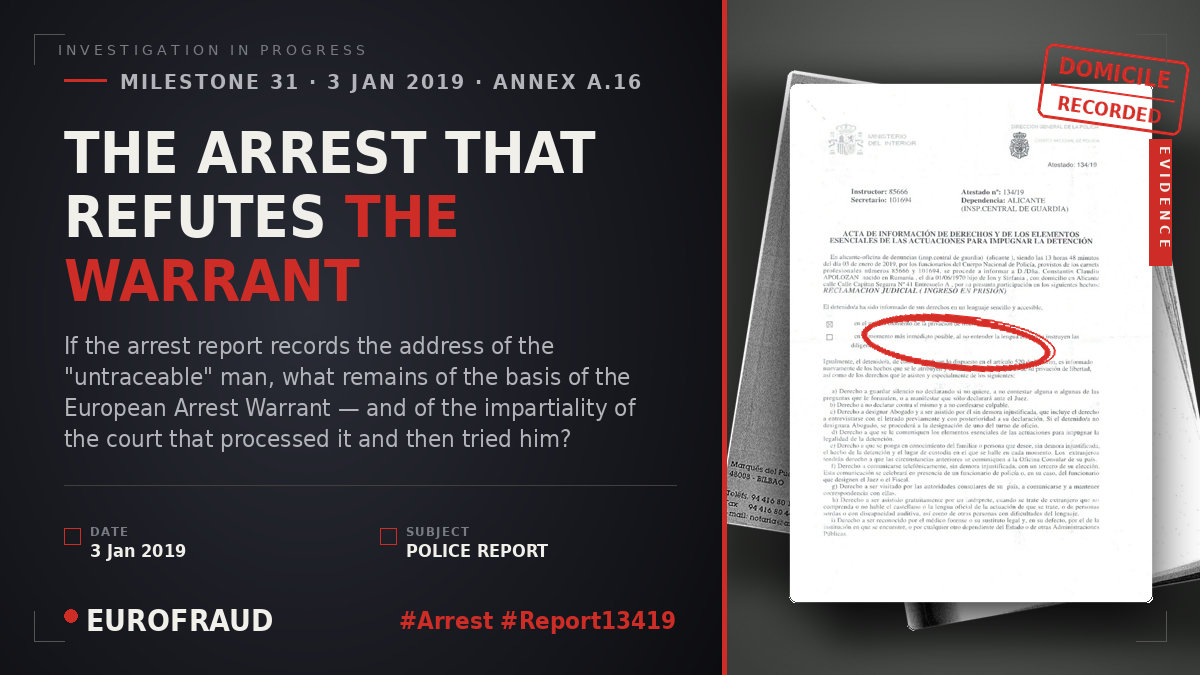
On 3 January 2019, the European Arrest Warrant and the INTERPOL notice produced their result: Apolozan was arrested. The police report 134/19 documenting that arrest (DOC-0139; A.16) is, without its authors intending it, one of the central pieces of evidence in this story.
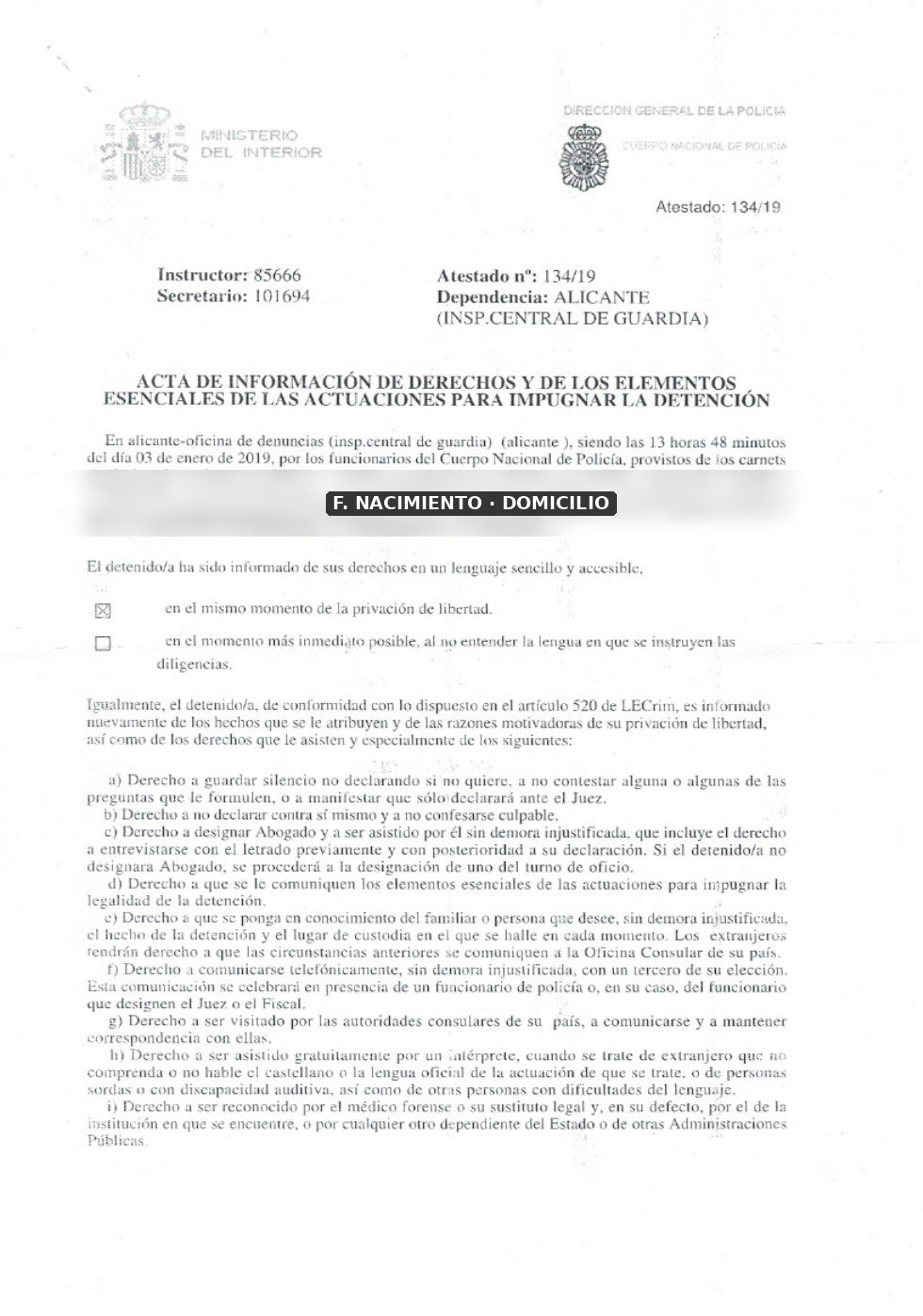
Because the report describes where and how he was found: in his usual environment, with his address recorded in the document itself. There was no pursuit, no border crossed, no hiding place discovered. The police went to where he was — which was where he had always been, where the Tax Office had him certified and where a judge had already found him in 2017 — and arrested him.
The document that executes the warrant refutes the basis of the warrant executed. If he was where his address indicated, the "non-location" that sustained the European Arrest Warrant did not exist; and if the premise did not exist, everything built on it — the default, the international search, what comes now — was born flawed.
What came now was this: remand in custody, ordered by the same court that was going to try him twenty-eight days later. The accused prepared his trial — a trial of corporate, accounting and technological complexity — from a cell, treated as the fugitive his own arrest report proved he never was.
EuroFraud case file · every statement links to its document (A.X / DOC-XXXX). Evidentiary material; every person named is presumed innocent.