"RETURN IT TO THE COMPLAINANT"
Apolozan case · ERDF fraud (Bilbao / Alicante / EU)
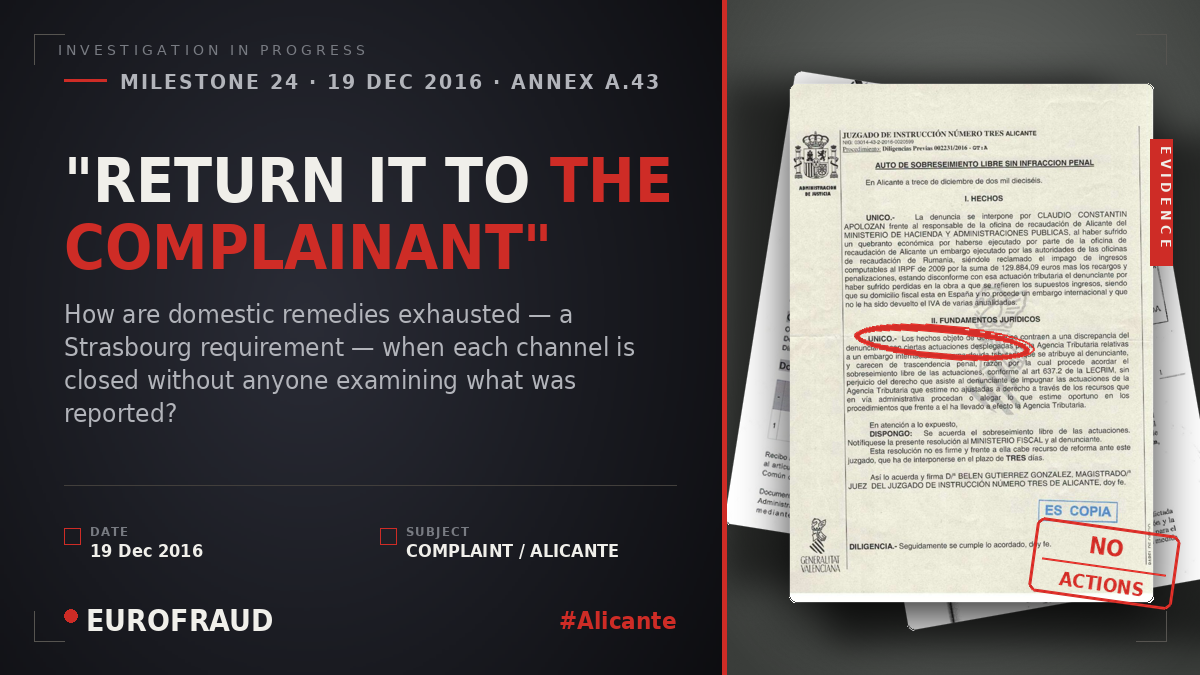
Closing that pincer year of 2016 — the enforcement in Romania on one side, the renamed accusation on the other —, Apolozan turned to the only door that in theory remained: the criminal one. On 19 December 2016 he filed a complaint with the Alicante courts against those responsible for the AEAT file, over the construction of the debt and of the "non-location" (A.43).
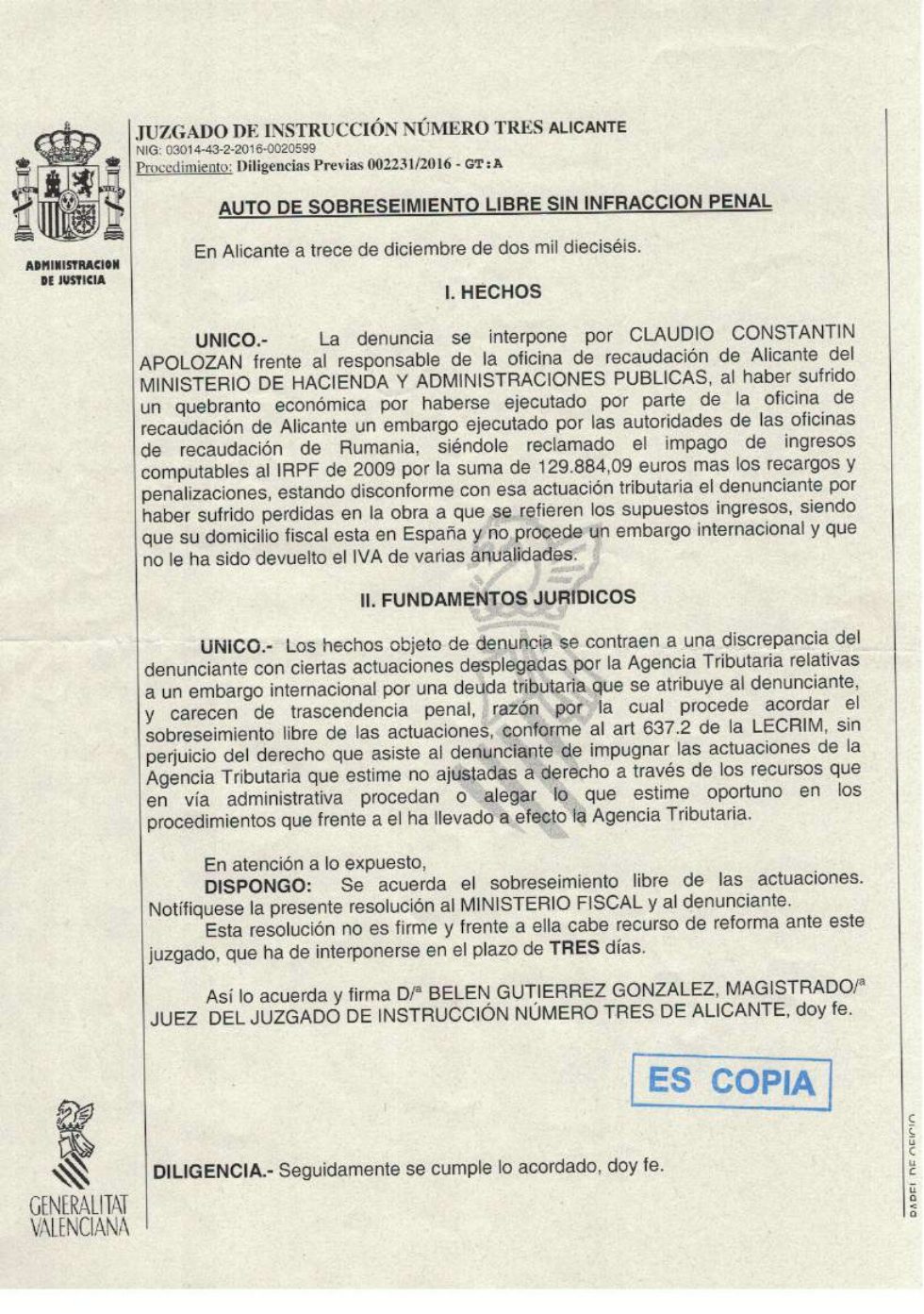
The reply of Investigating Court No. 3 fits in three words, which appear literally in the order: "return it to the complainant". With no investigative steps taken. Without examining the postal series. Without requesting the tax-domicile file that would have confirmed or refuted the complaint in an afternoon.
A returned complaint is not a dismissed complaint: it is an unexamined complaint. The difference matters, because the institutional version of this case will later say that the convicted man's claims "were already seen" by the courts. This order proves the opposite: the first time a court could look at the Alicante postal file, it chose not to open it.
It will be the first link in a series — four complaints in five years, none with investigative steps — that this Story will document in due course. The system that demanded Apolozan exhaust the legal channels was closing them off, one by one, without setting foot in them.
EuroFraud case file · every statement links to its document (A.X / DOC-XXXX). Evidentiary material; every person named is presumed innocent.