Resolution of non-admission handed down by the Supreme Court on 1 February 2024
Apolozan case · ERDF fraud (Bilbao / Alicante / EU)

This is the case's last internal resolution. Its content fits in one line; its meaning, in a tally.
The resolution
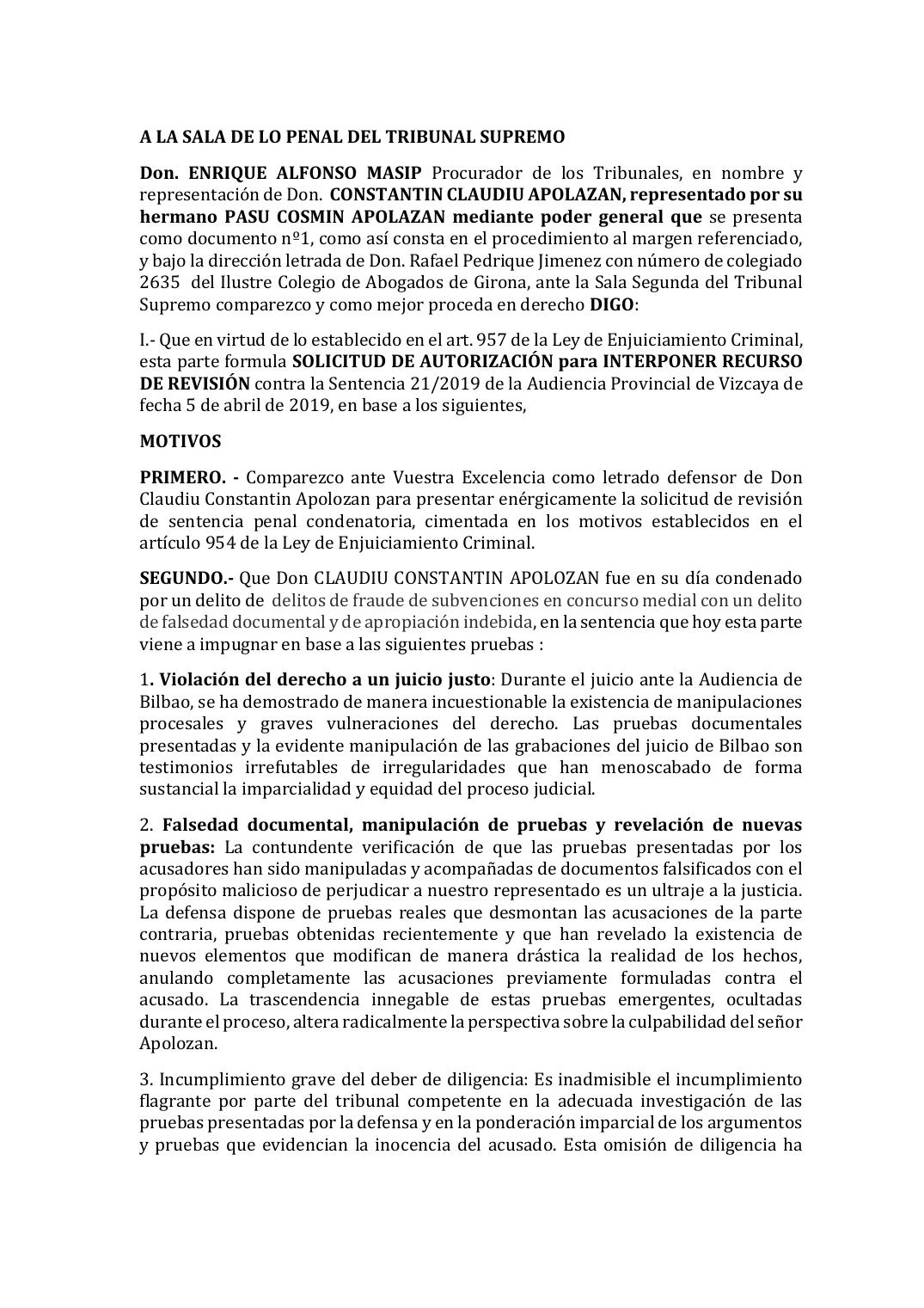
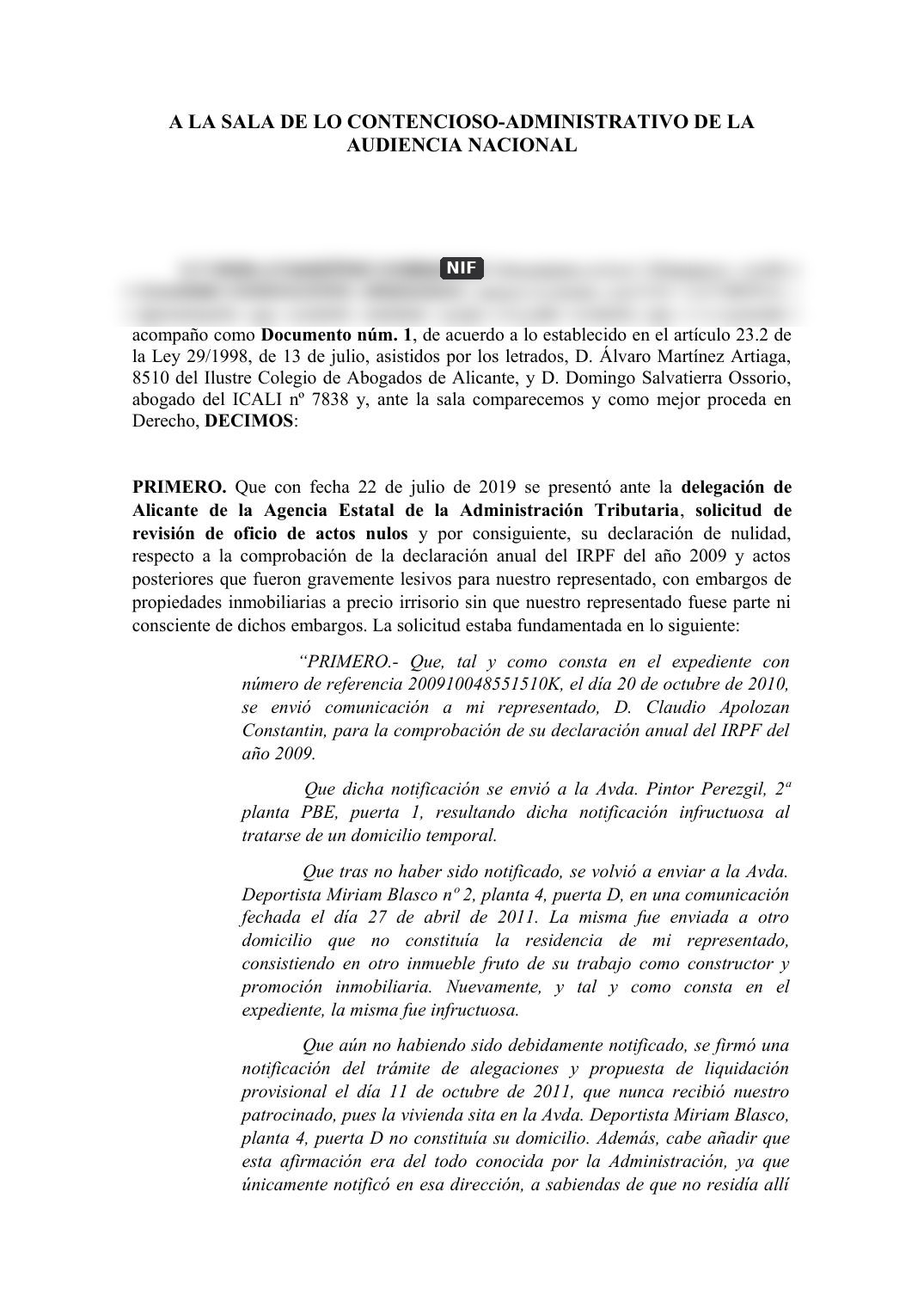
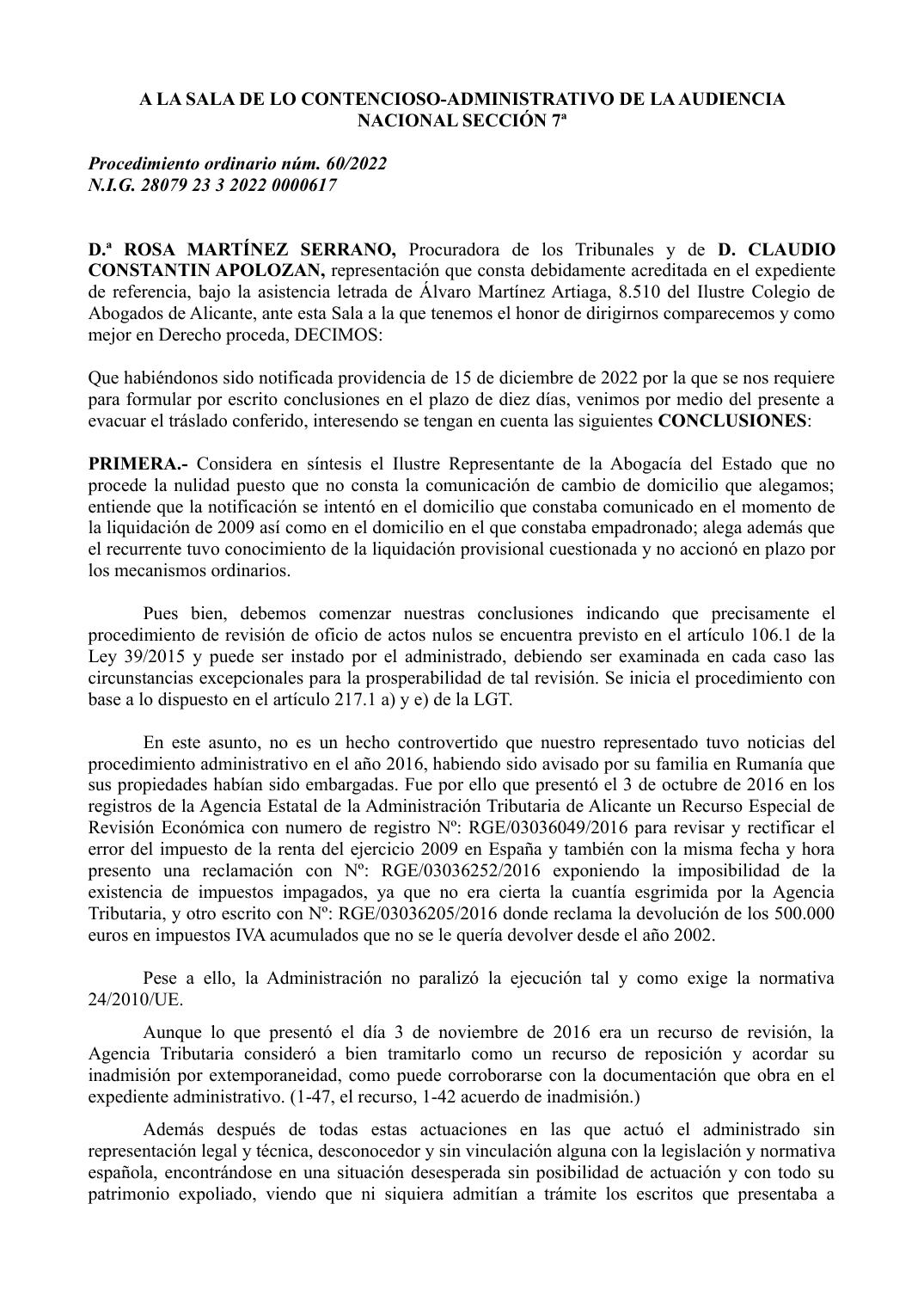
- Handed down on 1 February 2024 by the Criminal Chamber of the Supreme Court, review proceedings 20914/2023.
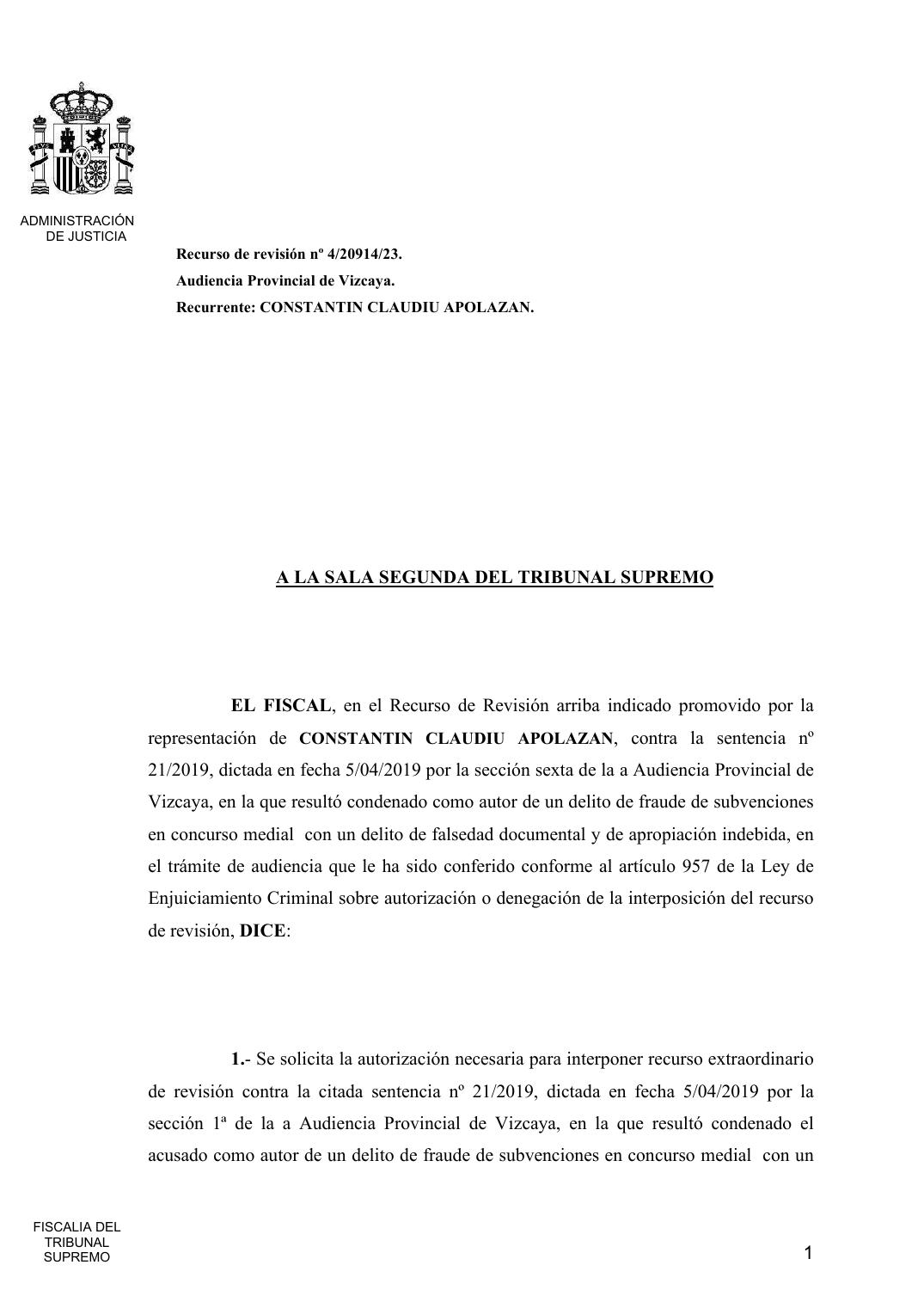
- Tenor: non-admission of the application (A.36), in line with the prosecution's report (A.37).
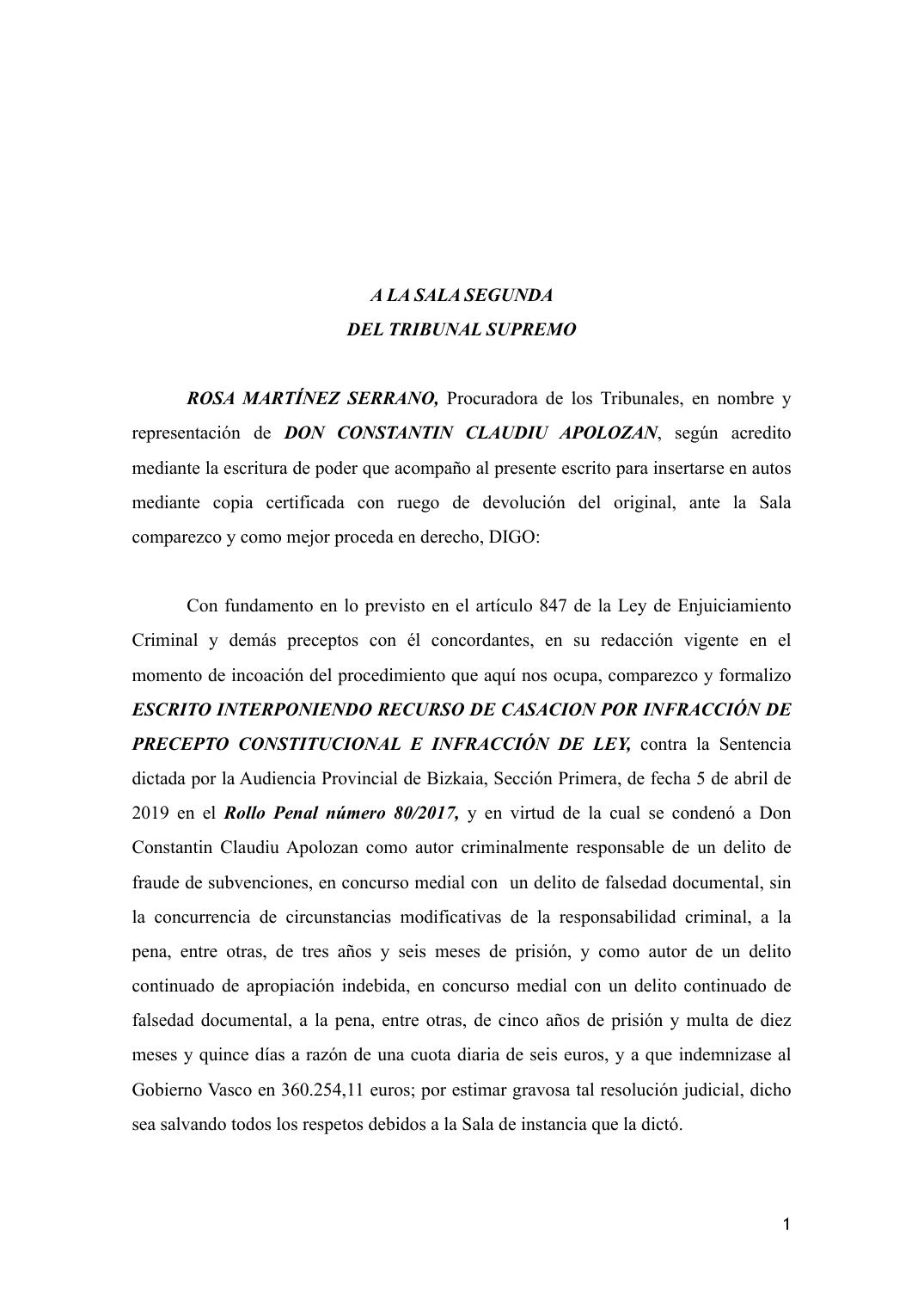
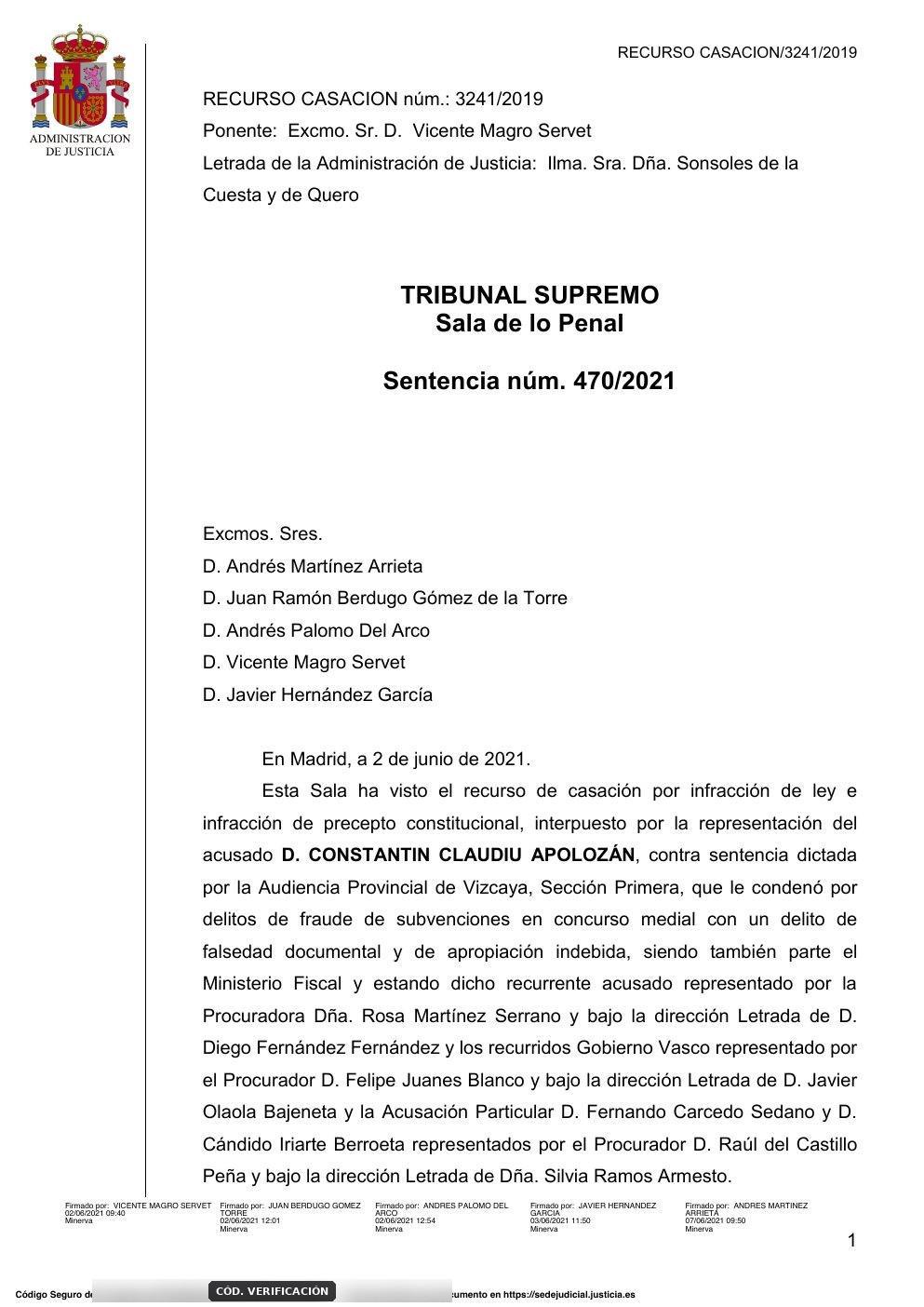
- Processing time: five months — against the twenty-three the cassation took (A.28, A.29).
The tally this resolution closes
- Investigating Court No. 8 of Bilbao (A.9): no registry comparison.
- Provincial Court of Bizkaia (A.26): judgment without weighing deeds, powers or inspections.
- Supreme Court, cassation (A.29): dismissal.
- Constitutional Court (A.31): non-admission without merits.
- ECtHR, first application (A.32): single-judge non-admission.
- Prosecutor's Offices — Anti-Corruption and Bizkaia (A.34, A.35): filing with no steps.
- Supreme Court, review: non-admission, with the forensic expert report on the table.
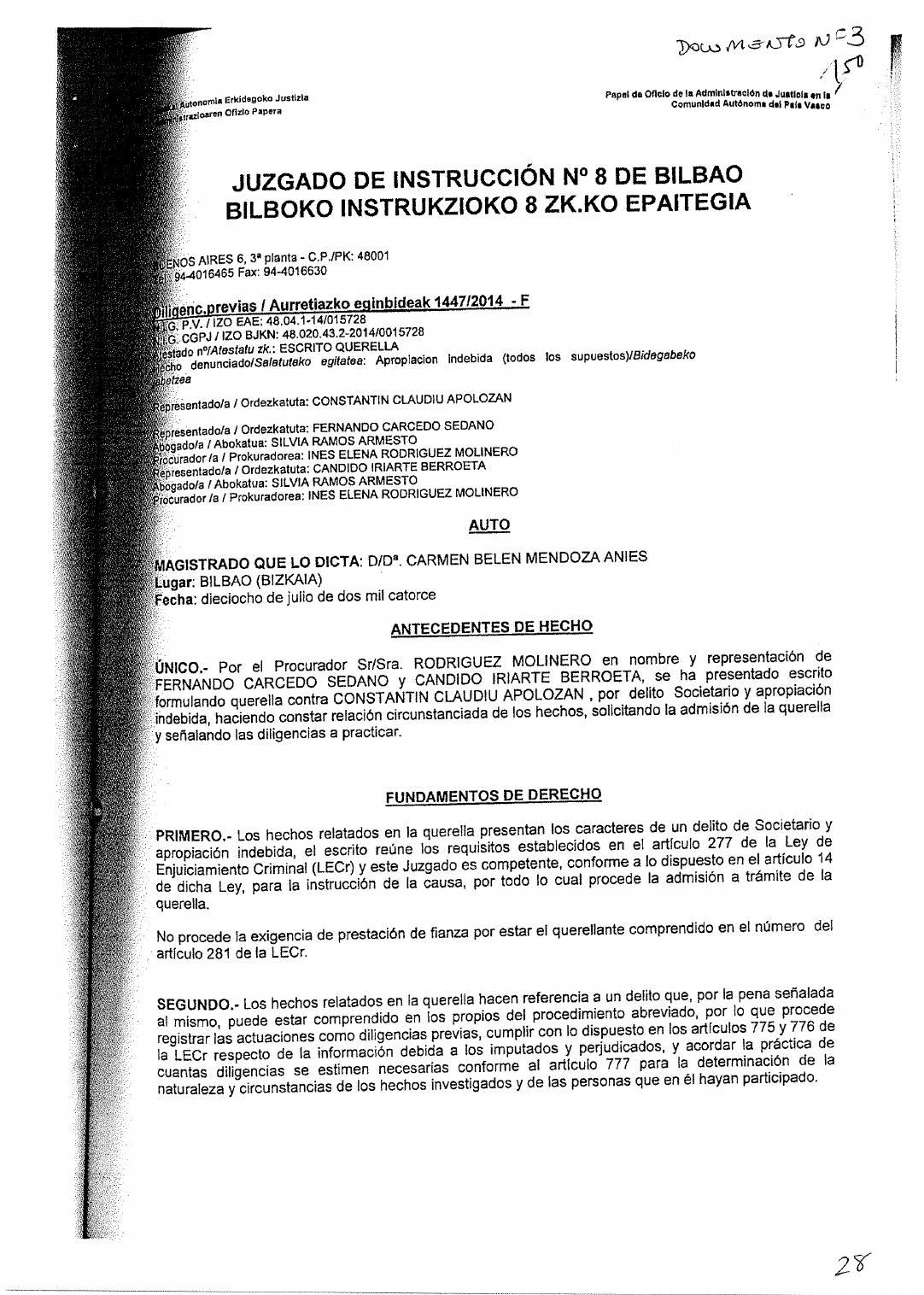
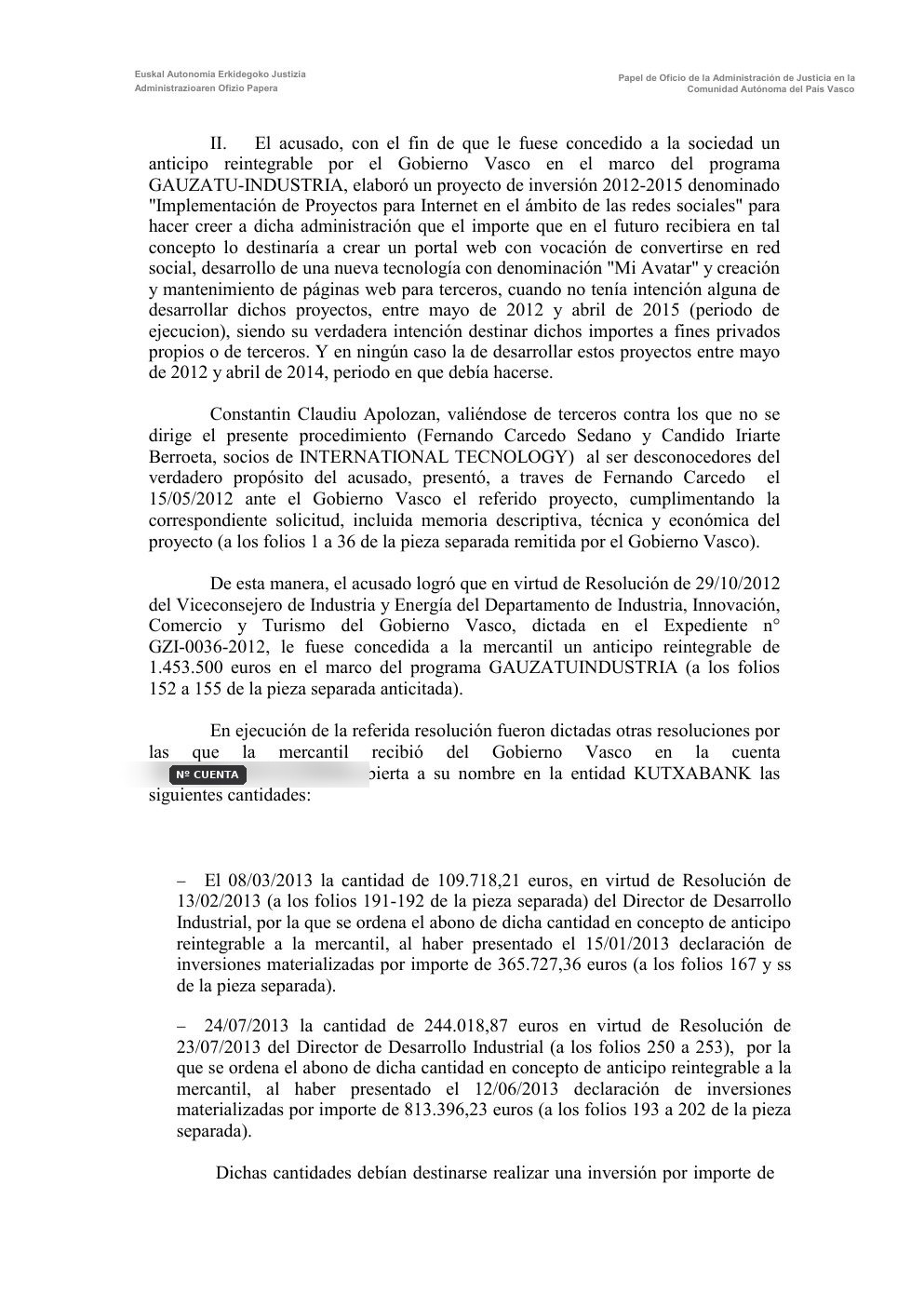
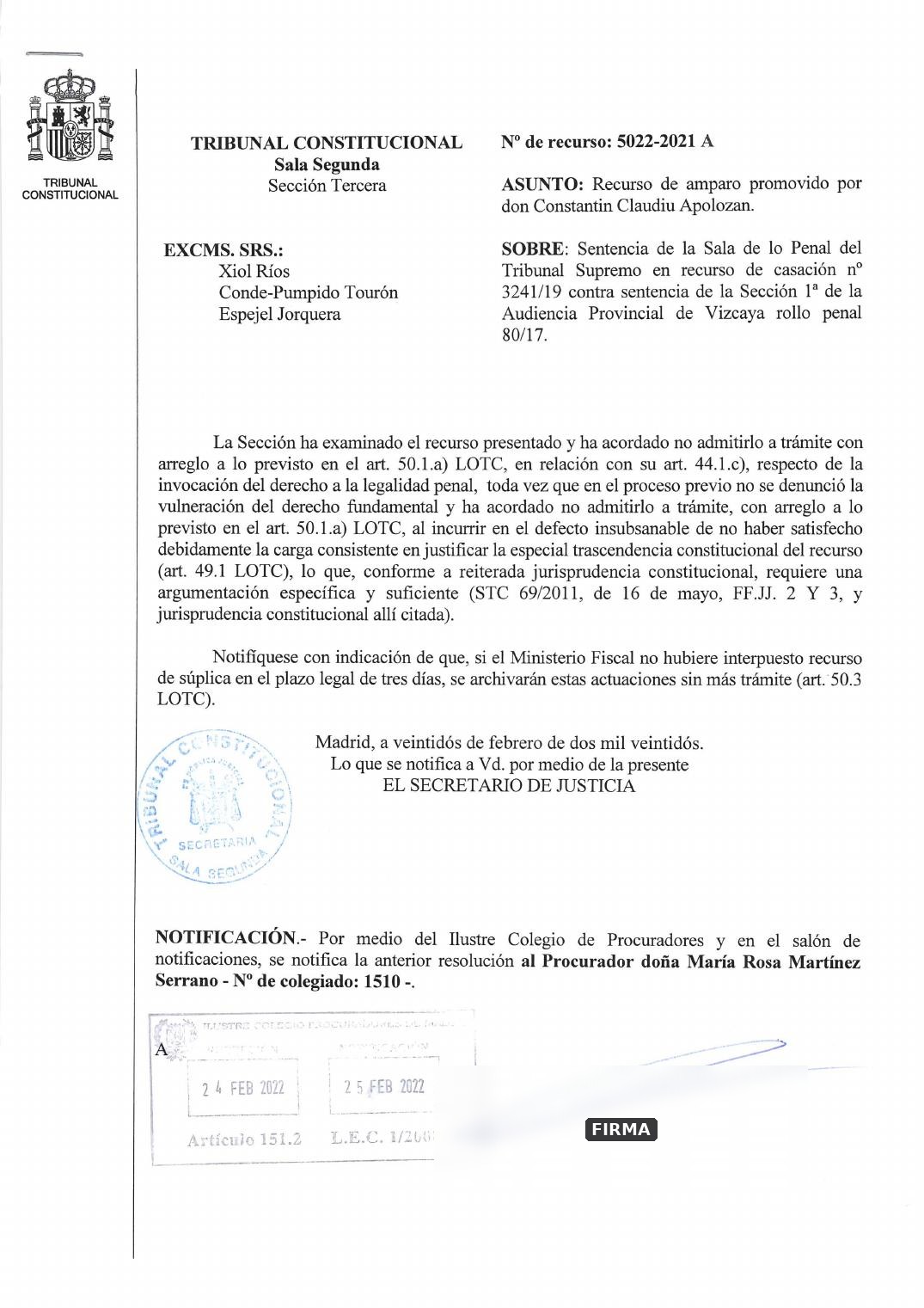
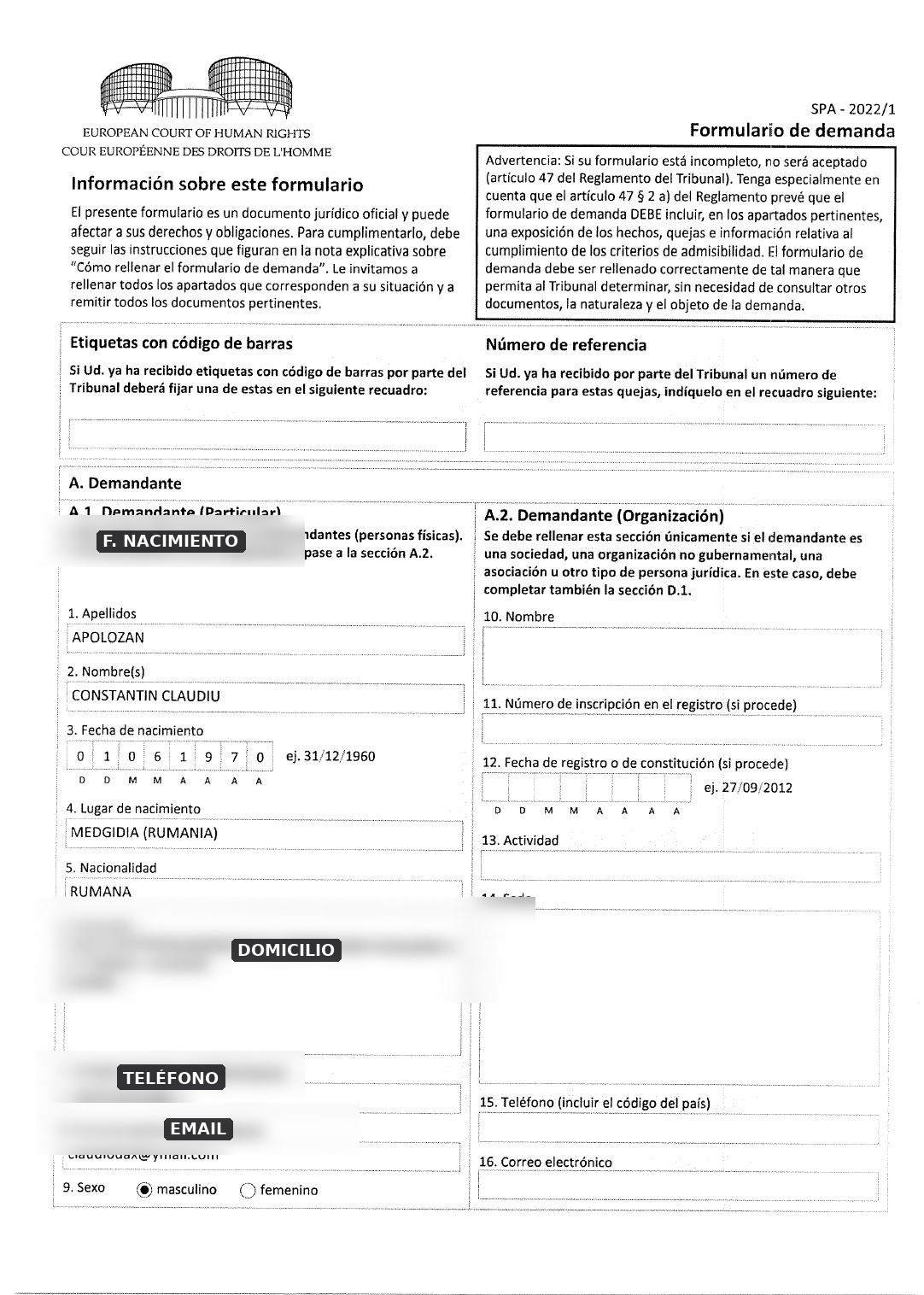
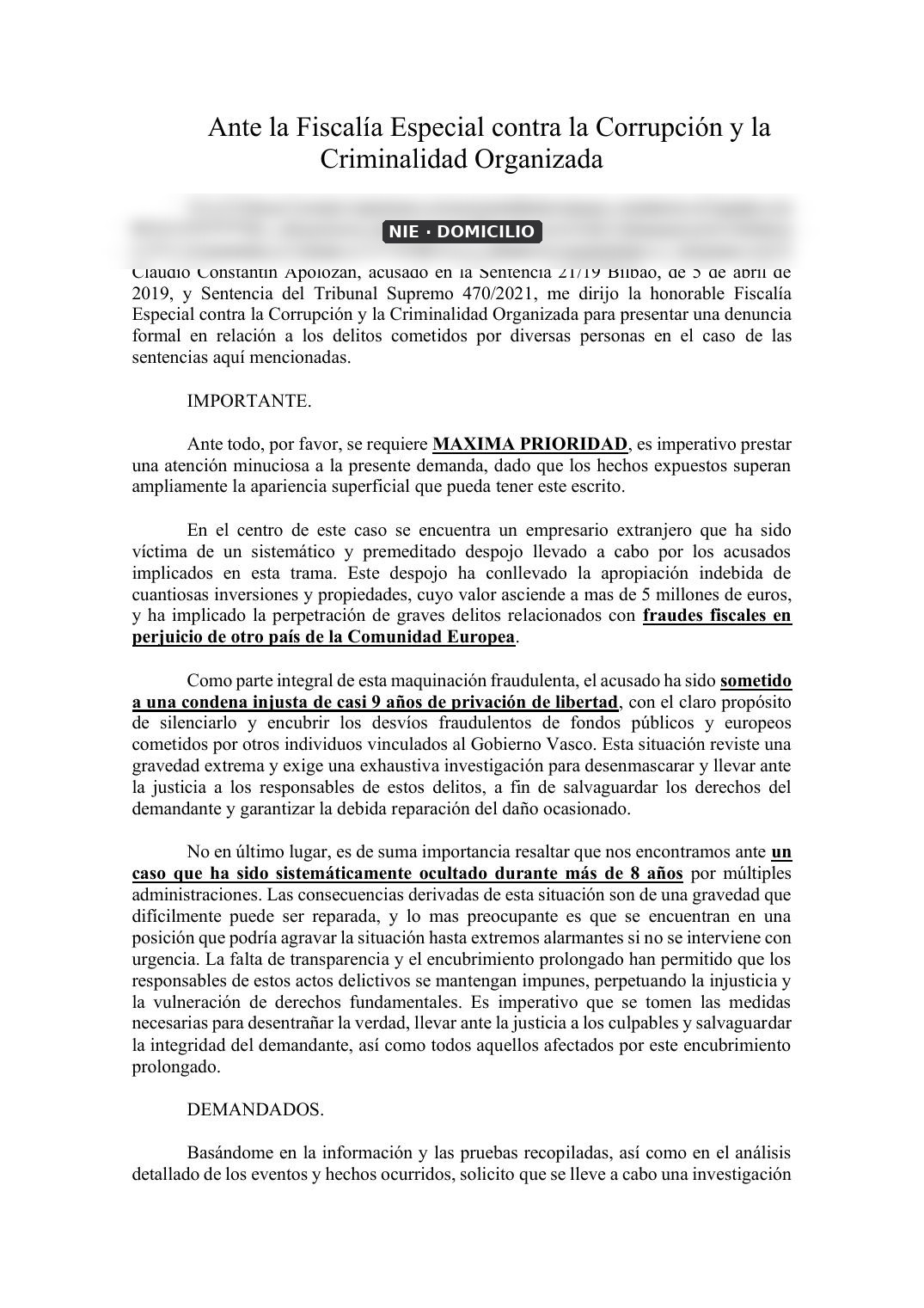
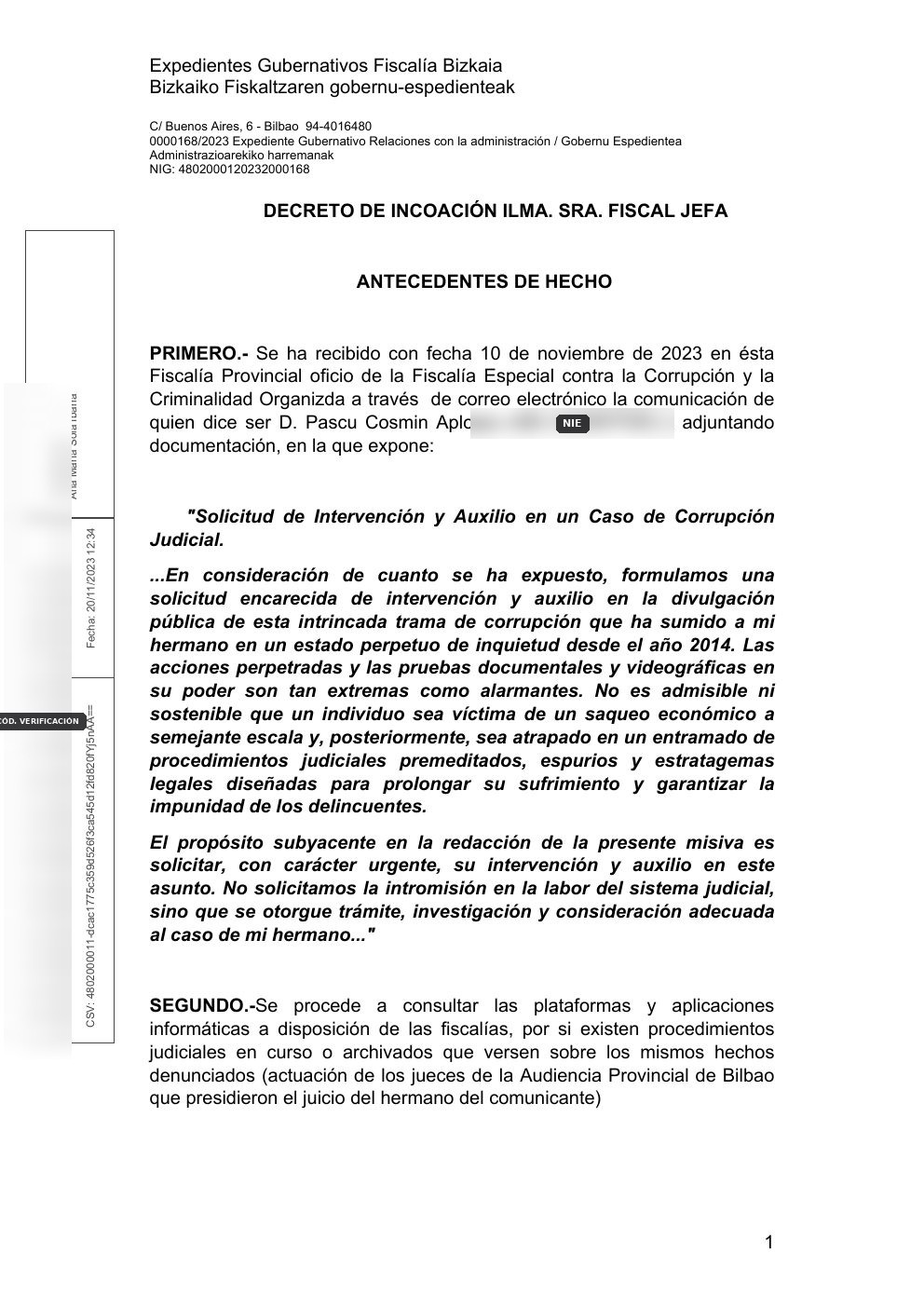
Seven mechanisms. No documented examination of the core comparison.
The review, in dates
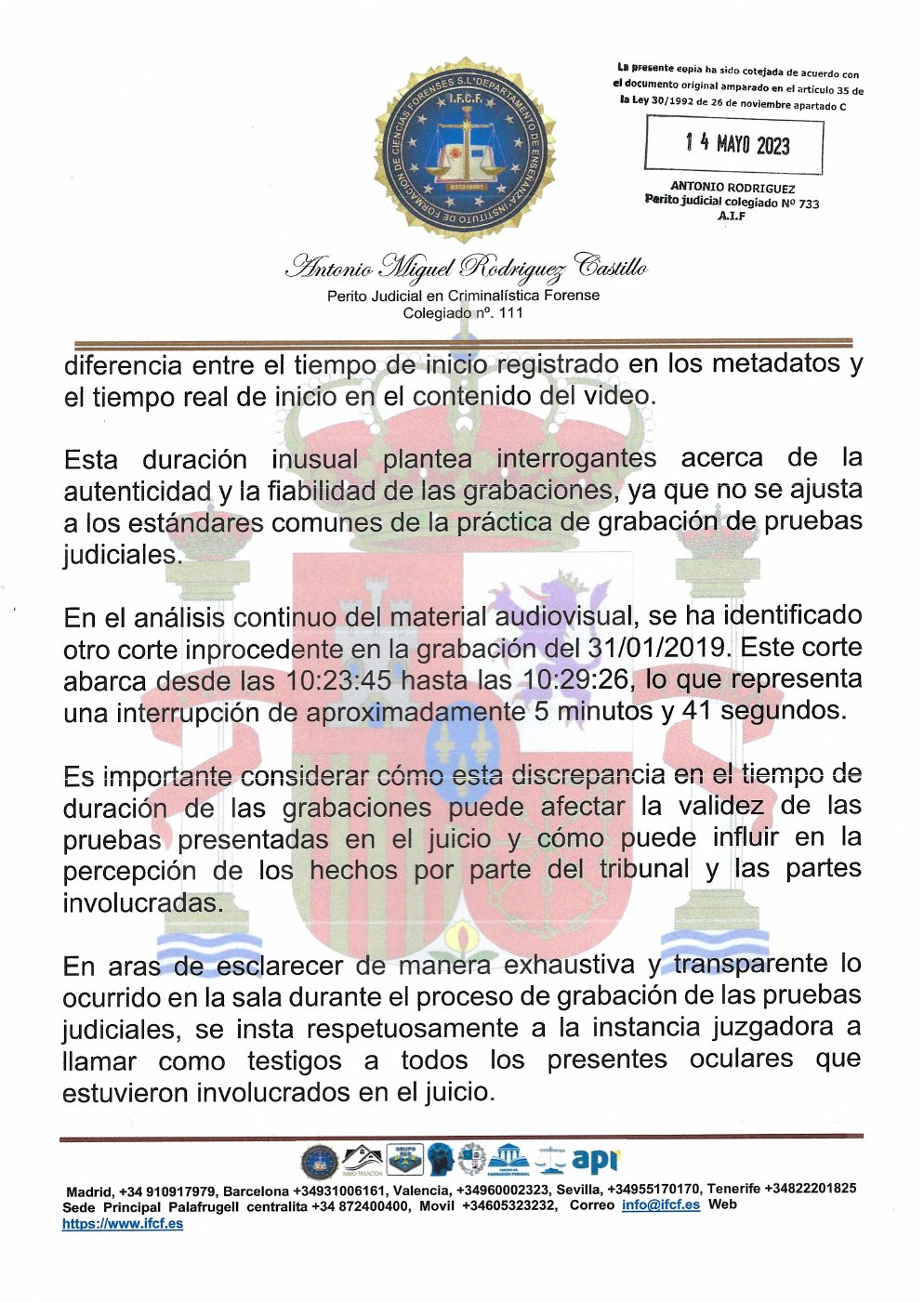
→ 19-7-2023 — forensic expert report: repeated alteration of the record (A.33) → 4-9-2023 — review application before the Supreme Court, Article 954 of the Criminal Procedure Act (A.36) → 15-1-2024 — the Prosecutor's Office of the Supreme Court seeks non-admission (A.37) → 1-2-2024 — this resolution: non-admission in five months — against the 23 the cassation took (A.28)
Is there an ordinary explanation?
Each link, in isolation, has its statistics: constitutional appeals are not admitted, the ECtHR filters, reviews are exceptional. The complete series is another matter: seven independent filters, of four different natures, coinciding in not carrying out a check of two dates — with a forensic expert report also indicating that the trial's record was altered. The ordinary explanation must cover the entire series; this file documents that no one has offered it.
What opens from here
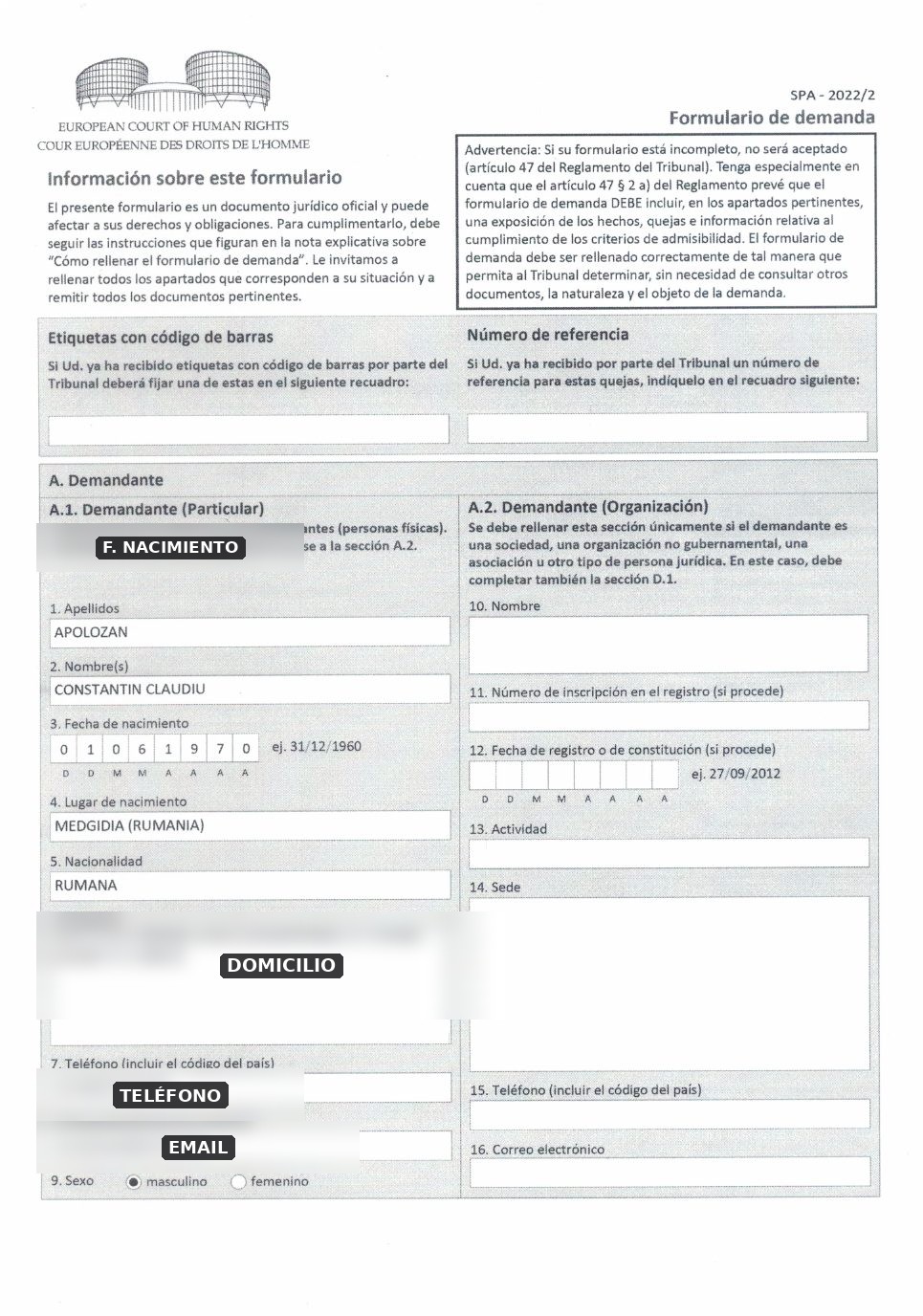
With the internal avenue exhausted, the case belongs to the European plane: the second application to Strasbourg of May 2024 (A.39) and the claim before the Union's jurisdiction over the ERDF funds (A.39.4, A.60–A.63). This file — with each document a click away — is the support for both.

How to verify it
Go through the seven mechanisms with their documents and note, in each, the page where the examination of the documentary comparison appears. That tally of blank pages is the final summary of the internal case.
Documentary evidence · A.38 · 1 February 2024 · Appeals and jurisdictional review
EuroFraud case file · every statement links to its document (A.X / DOC-XXXX). Evidentiary material; every person named is presumed innocent.