Application for Attachments by Fernando and Cándido
Apolozan case · ERDF fraud (Bilbao / Alicante / EU)
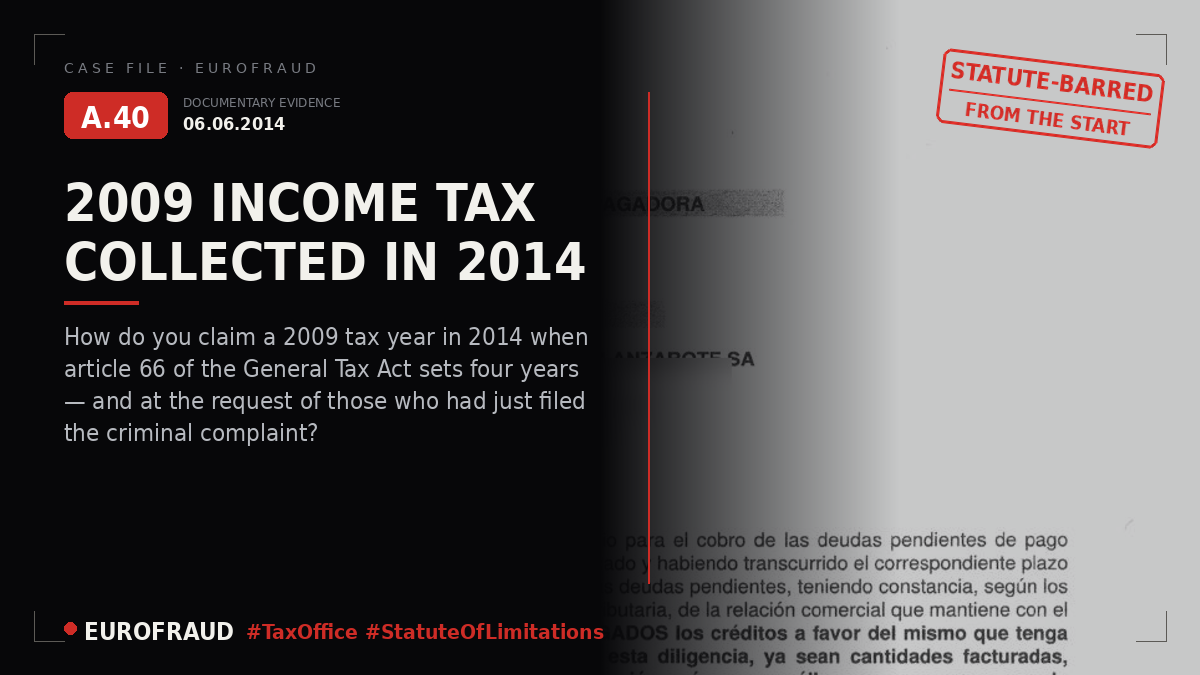
Tax enforcements are usually initiated ex officio. This one has named applicants — and a calendar that the General Tax Act does not accompany.
Who requests and what is activated
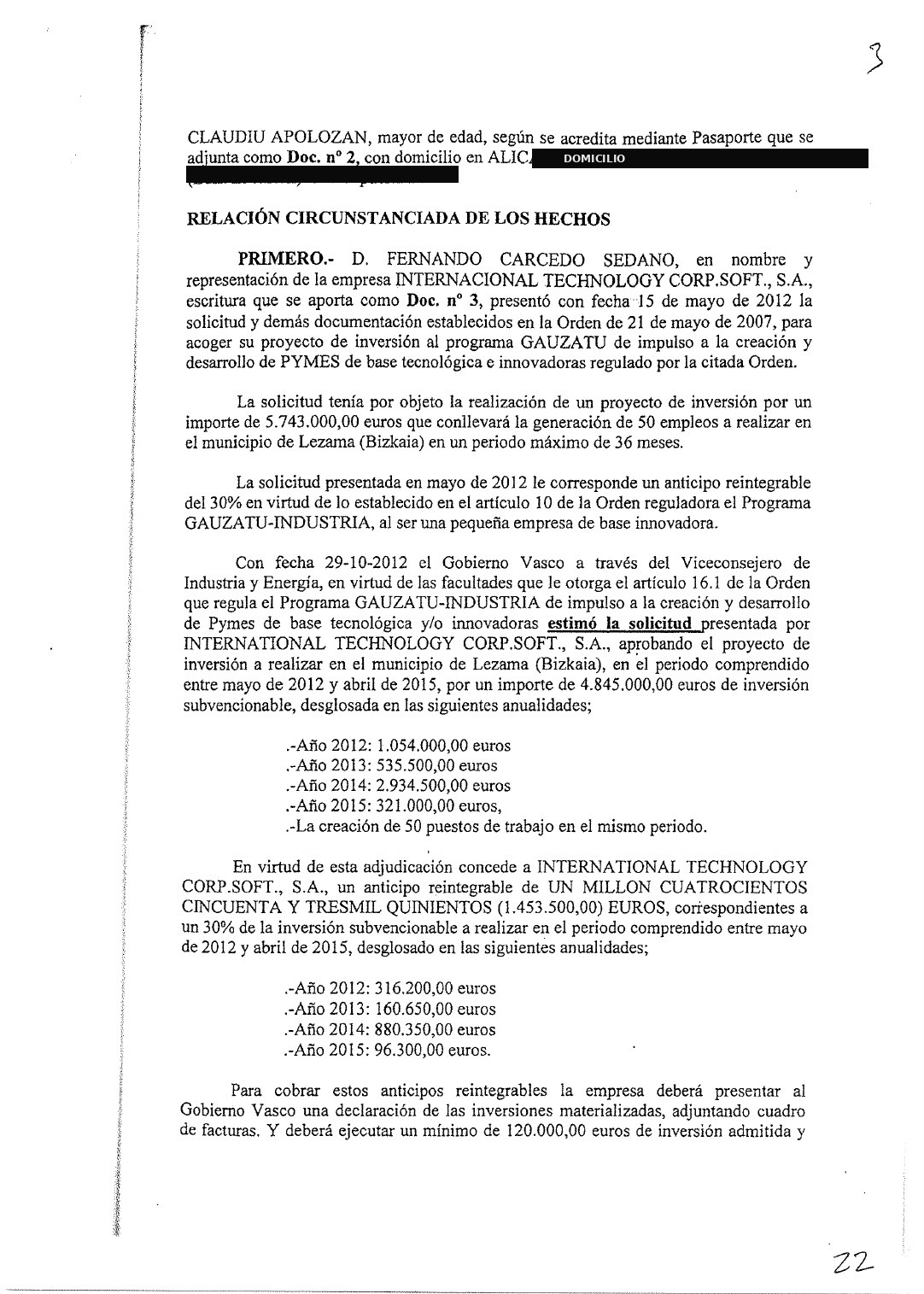
- June 2014: Fernando Carcedo and Cándido Iriarte seek attachments against Apolozan's assets — seven weeks after filing the complaint (A.8).
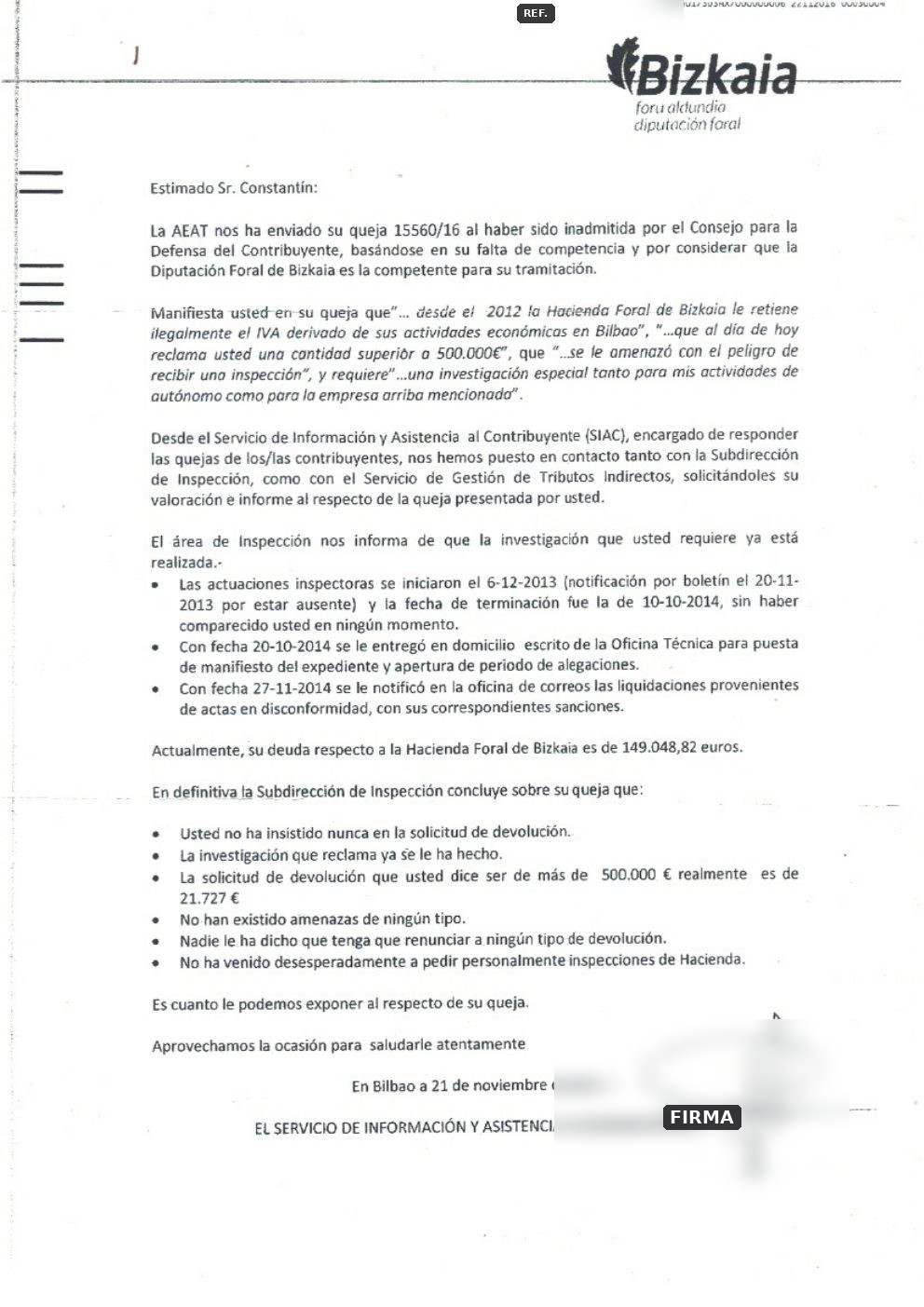
- Basis invoked: the debt of about 150,000 euros generated by the Bilbao Provincial Treasury (A.7) and the existence of the criminal case.
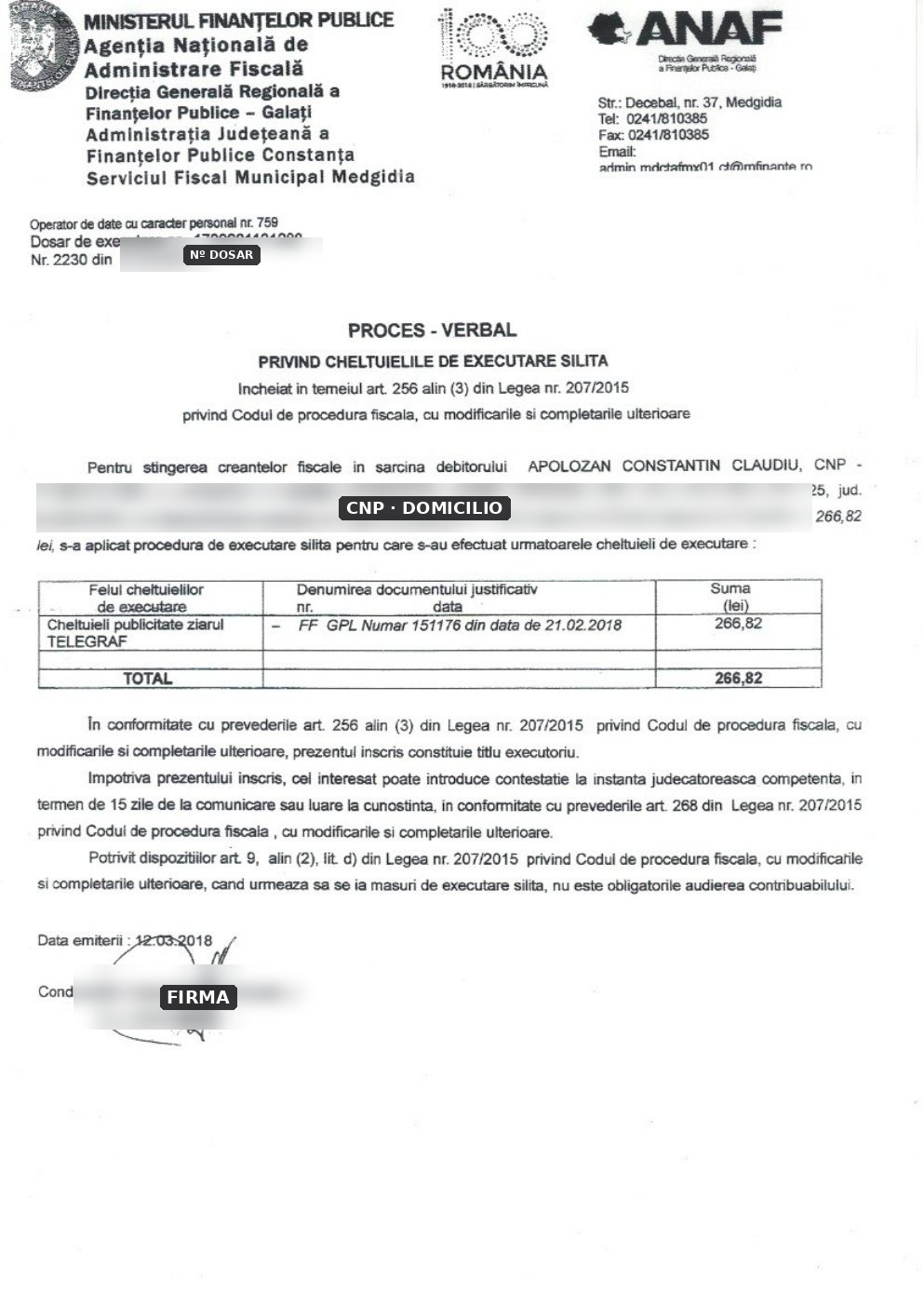
- In its wake, the Alicante AEAT activates a 2009 personal income tax file that leads to the cross-border assessments and attachments (A.41).
The calendar against the law
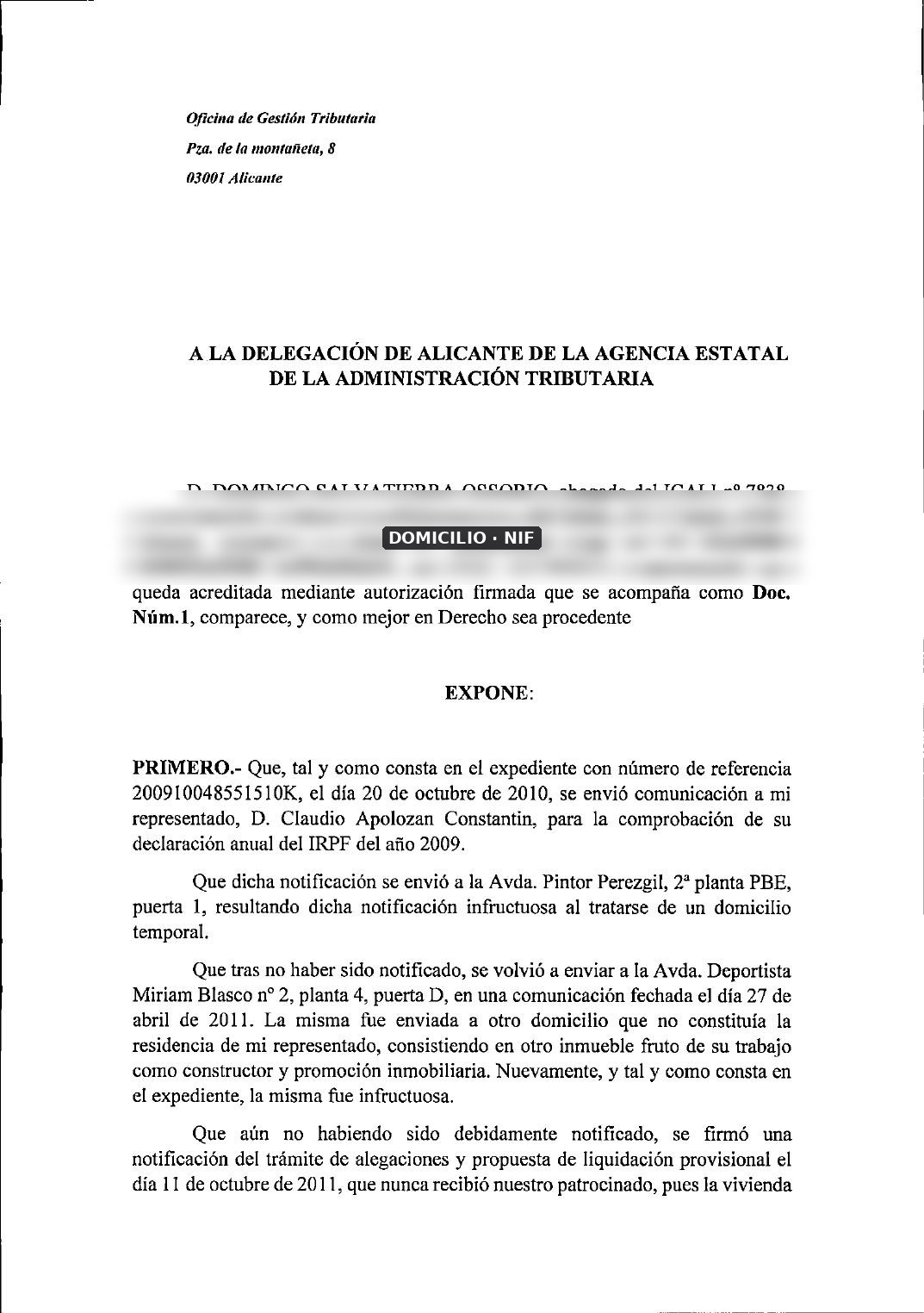
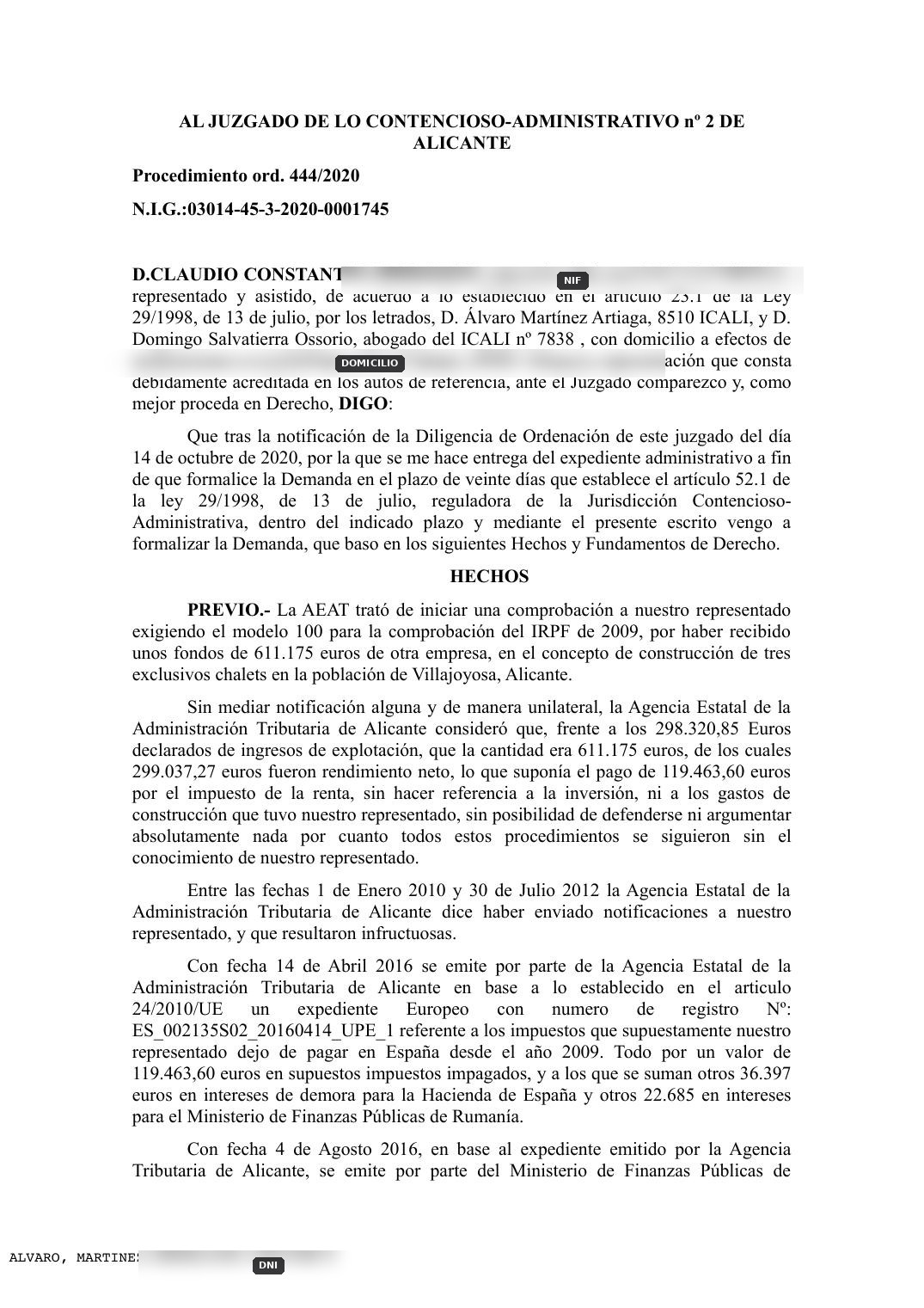
Article 66 of the General Tax Act sets at four years the limitation of the right to determine the tax debt. Tax year: 2009. Documented activation of the file: 2014. Between the end of the voluntary period for the 2009 personal income tax (June 2010) and the activation lie more than four years — the datum around which the application for nullity (A.50) and the contentious proceedings (A.52) revolve.
The synchrony of the three fronts
The 2014 calendar — complaint in April (A.8), application for attachments in June, provincial debt under way (A.7) — concentrates on the same person, in twelve weeks, the criminal, provincial and state fronts. The documents of each front appear in this chronology; the dates allow the sequence to be reconstructed without interpretation.
How to verify it
Note three dates: that of the complaint (A.8), that of this application and that of the tax year claimed. Then apply Article 66 of the General Tax Act to the third. The arithmetic — 2009 plus four — any reader can do.
Contrast with the original file
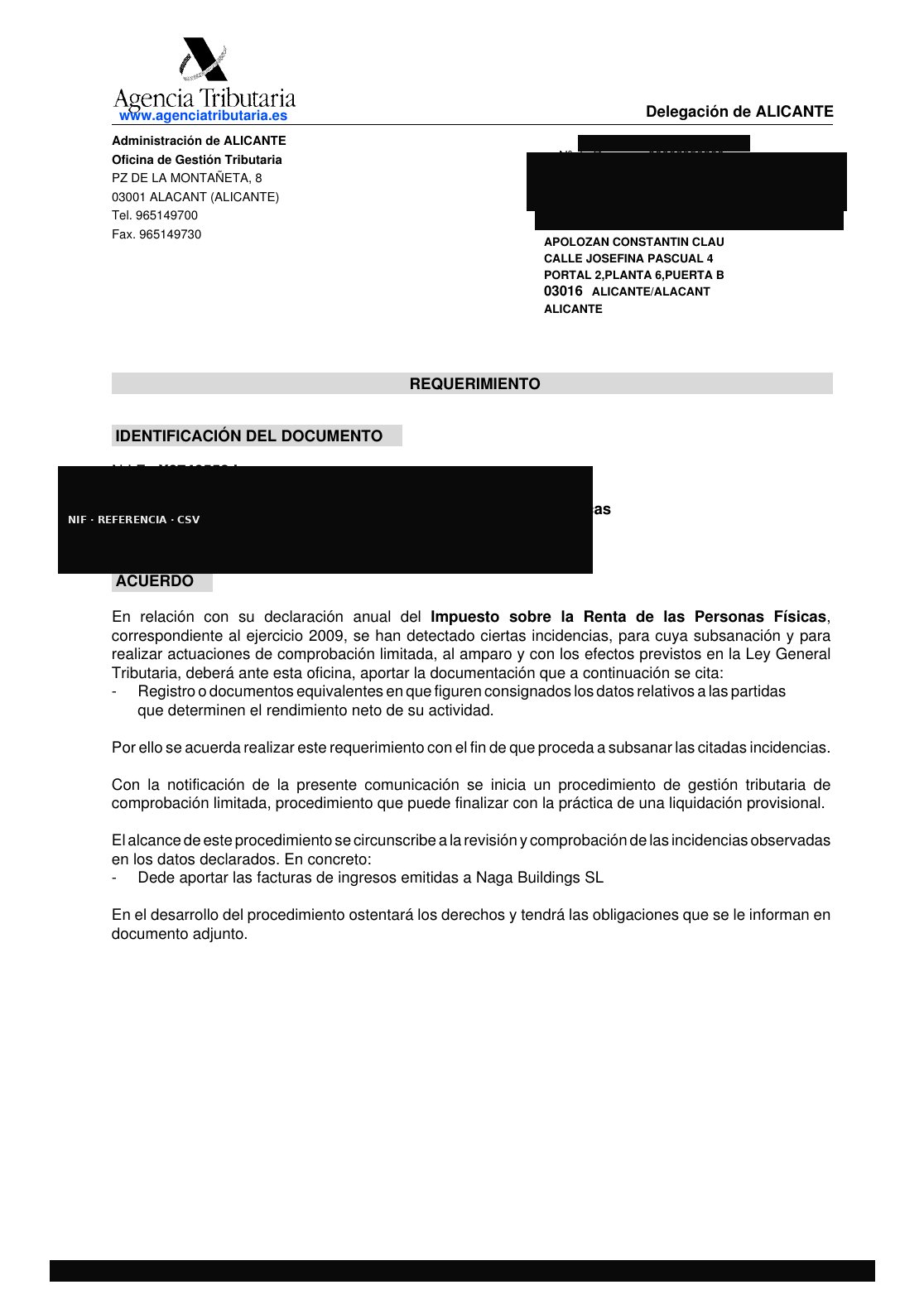
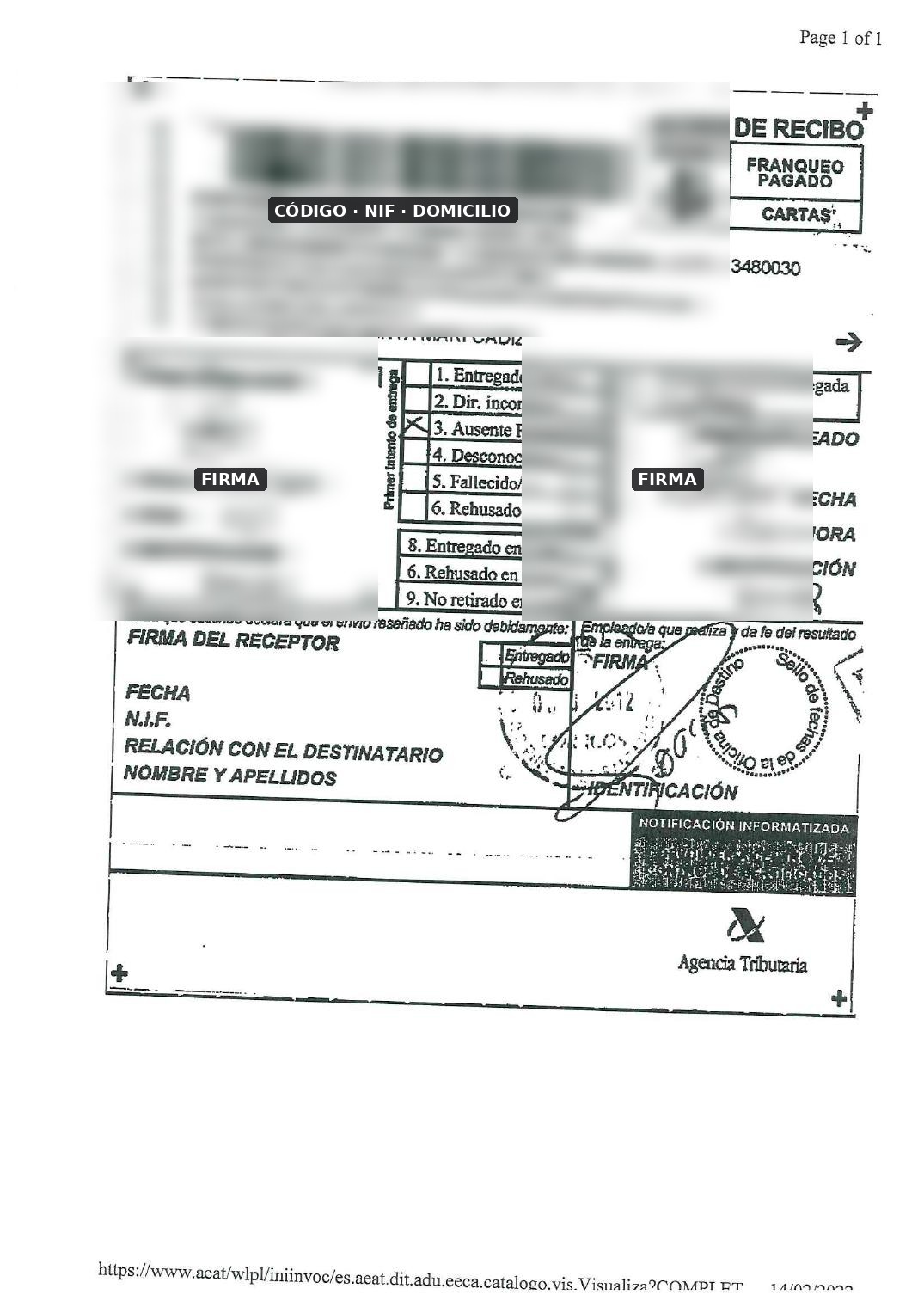
The complete circuit that preceded this application appears in Alicante Original: the self-assessment of the tax year (DOC-0197), the three requirements and four proposals notified to four different addresses (DOC-0198 to DOC-0214) and the resulting provisional assessment (DOC-0215). On that file of notifications was built the finality this application exploited.
Documentary evidence · A.40 · 6 June 2014 · Tax and contentious action
EuroFraud case file · every statement links to its document (A.X / DOC-XXXX). Evidentiary material; every person named is presumed innocent.